
Used Cars Import Surge Threatens Pakistan’s Auto Industry Future
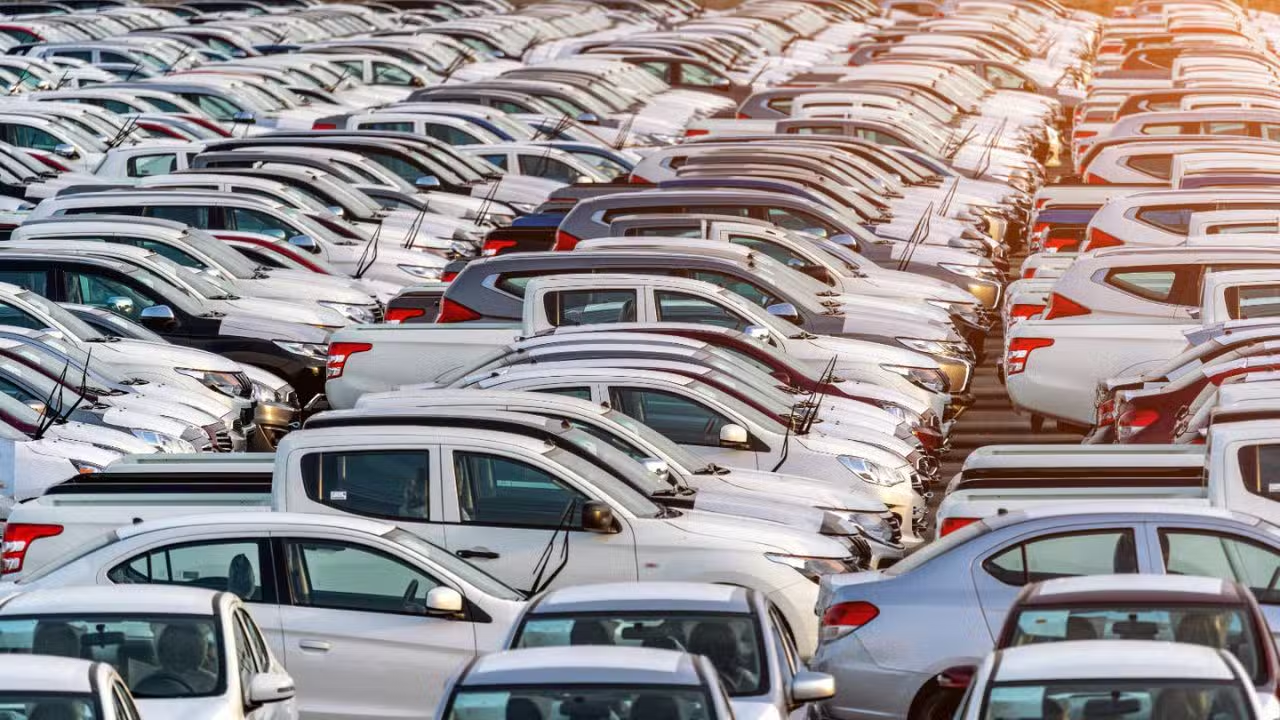
Pakistan’s automobile industry is once again facing a serious challenge as the import of used cars rises sharply. Industry experts warn that this trend—if allowed to continue—may damage Pakistan’s local car manufacturing ecosystem, threaten millions of jobs, and reverse decades of industrial progress. The issue is gaining national attention as companies, policymakers, economists, and consumers debate the future of Pakistan’s auto sector.
This detailed article explains why used-car imports are increasing, how they affect the local industry, what policymakers are planning, and what the future may look like for Pakistan’s auto sector.
Importance of the Auto Industry in Pakistan
Pakistan’s automobile sector is not just a business—it is a pillar of the national economy. The industry contributes nearly 2% of the national GDP, supports over 2.5 million direct jobs, and affects 5 million additional livelihoods through dealerships, vendors, part manufacturers, logistics providers, and service networks.
Massive Contribution to the National Economy
According to recent industry data:
- The auto sector contributed Rs 700 billion to the national exchequer in FY25.
- This accounted for 6% of the federal government’s total revenue collection.
- The sector has attracted around $5 billion in foreign direct investment (FDI) over the past 20 years.
Major global companies from Japan, South Korea, and China have invested in manufacturing plants in Pakistan. This ecosystem supports:
- Car assembly plants
- Motorcycle factories
- Parts and components manufacturers
- Auto service industries
- Thousands of small and medium enterprises (SMEs)
Read Also: Breaking News: DigiSkills Launches 2nd Batch of Free Online Courses 2025 – Apply Before 2 December
Localization Efforts
Local companies have achieved significant localization through joint ventures. Components such as batteries, seats, filters, bumpers, sheet metal parts, tires, and plastic components are now manufactured in Pakistan. This localization:
- Saves $150 million annually in import costs
- Strengthens domestic industries
- Provides direct employment to thousands of workers
These achievements took decades of investment and government policy support.
Why the Government is Allowing More Used Car Imports
Pakistan’s economic pressure has increased due to inflation, low foreign reserves, and IMF program requirements. Under the 2025–26 federal budget, the government is trying to increase revenue collection by introducing new taxes and revising import policies.
IMF Pressure
Pakistan has committed to:
- Increasing tax-to-GDP ratio to 11%
- Achieving 3.5% GDP growth
- Meeting a Rs 13.981 trillion tax target
The IMF believes Pakistan needs structural reforms, including revenue generation through customs and import duties.
Used Car Imports as a Quick Revenue Tool
The government is considering used car imports because:
- They immediately generate import duty revenue
- They satisfy consumer demand for cheaper options
- They require no long-term industrial planning
- They relieve public pressure over expensive locally assembled cars
But industry experts warn that this is a short-term solution with long-term harm.
Read Also: Breaking News: DigiSkills Launches 2nd Batch of Free Online Courses 2025 – Apply Before 2 December
Why Used-Car Imports Are Dangerous for Pakistan’s Auto Sector
The automobile industry argues that excessive used-car imports threaten the survival of local manufacturers. Below are the major concerns:
1. Revenue Loss for Local Manufacturers
According to industry estimates:
- Used car imports caused Rs 45 billion in revenue losses during the first eight months of FY24.
- This forced manufacturers to scale down production, cut shifts, and delay investments.
Factories in Karachi, Lahore, Faisalabad, and Peshawar saw reduced operations as their market share was eaten up by imported used cars.

2. Job Losses Across the Country
Used-car imports do not create local jobs. Instead, they destroy them.
Local manufacturers employ:
- Engineers
- Technicians
- Factory labor
- Vendors
- Transporters
- Dealers
If imports rise further, thousands of these jobs will disappear.

3. Weakening of Local Vendor Ecosystem
Pakistan has over:
- 300 certified auto vendors
- Thousands of small suppliers
These businesses survive on bulk orders from local car companies. When imported used cars dominate the market:
- Vendors get fewer orders
- Factories shut down
- Investments stop
- Export opportunities decline
This has already happened multiple times in Pakistan’s history.

4. Policy Instability Scares Off Investors
Global automakers invest only when:
- Government policy is stable
- Long-term demand is predictable
- Import rules are consistent
Pakistan’s history is filled with sudden policy changes. Every time used-car imports increase, global manufacturers:
- Reduce investment
- Delay new models
- Shift operations to other countries
This instability threatens future expansion plans.
Historical Context: How Past Policies Hurt the Industry
Pakistan’s auto industry has faced instability since the 1980s. Early automobile companies agreed to localize production gradually through CKD kits. However:
- Frequent policy shifts
- Tariff relaxations
- Allowing used-car imports
- Lack of long-term auto policy
All prevented Pakistan from developing a strong automobile base like Thailand, Turkey, or Indonesia.
While local companies tried to grow, policy instability prevented economies of scale, keeping prices high and production limited.
Why Consumers Prefer Used Cars
Despite the downside, many consumers support used car imports. Their reasons include:
1. High Prices of Local Cars
Locally manufactured cars are expensive due to:
- High taxes
- Production costs
- Small market size
- Currency depreciation
2. Better Features in Imported Vehicles
Japanese used cars often have:
- Better safety features
- Advanced technology
- Fuel efficiency
- Better build quality
3. No New Affordable Models
Pakistan lacks cheaper new car options between Rs 1–1.8 million, increasing demand for used imports.
Read Also: Breaking News: NADRA Launches Online Biometric Verification for Islamabad Vehicle Transfers
Industry Recommendations for Auto Policy 2026–31
Industry leaders believe that Pakistan’s next Auto Policy (2026–31) must strike a balance between:
- Consumer needs
- Government revenue goals
- Industrial development
Key recommendations:
1. Improve taxation and customs efficiency
Stop revenue leakage instead of burdening manufacturers.
2. Gradually reduce taxes on local manufacturers
Encourage investment and lower final car prices.
3. Strict regulation of used-car imports
Not a total ban—but controlled imports.
4. Provide incentives for exports
Encourage companies to export automobiles and components.
5. Promote hybrid and electric vehicle manufacturing
Long-term sustainability depends on clean technology.
Read Also: Breaking News: NADRA Launches Online Biometric Verification for Islamabad Vehicle Transfers
Why Protecting Local Auto Industry is Important
A strong automobile industry:
- Creates large-scale jobs
- Encourages technological development
- Supports industrialization
- Attracts foreign investment
- Reduces import bills
- Helps develop export capacity
Countries like India, Japan, Thailand, and China used strict protectionist policies to develop strong automobile industries.
Pakistan now stands at a crossroads:
Should it support domestic manufacturing or depend on imported used cars?

Conclusion About Used Cars Import in Pakistan:
Pakistan’s rising used-car imports pose a serious threat to the country’s auto manufacturing future. While used cars offer short-term relief to consumers and quick revenue for the government, they risk long-term damage to:
- Local factories
- Job creation
- Vendor networks
- Foreign investment
- Industrial growth
Pakistan must carefully balance consumer needs with industrial development. A predictable and stable auto policy is essential to ensure that the country can grow into a competitive automotive hub rather than becoming permanently dependent on imported used cars.
FAQs – Used Cars Import Surge and Pakistan’s Auto Industry
1. Why is the used-car import surge considered a threat to Pakistan’s auto industry?
Used cars reduce the market share of local automakers. This leads to production cuts, job losses, reduced investments, and weakening of Pakistan’s entire automotive ecosystem.
2. How many jobs depend on Pakistan’s auto industry?
The auto sector supports around 2.5 million direct jobs and nearly 5 million livelihoods through parts suppliers, vendors, dealerships, and service centers.
3. Why does the government allow the import of used cars?
The government is facing high revenue pressure and views used-car imports as a quick way to generate taxes. However, experts warn that short-term revenue gains will create long-term damage to the industry.
4. How much revenue loss has the industry faced due to used-car imports?
In the first eight months of FY24, the influx of imported used cars caused an estimated Rs. 45 billion in losses for local manufacturers.
5. How much does the auto industry contribute to Pakistan’s economy?
The auto sector contributes nearly 2% of GDP, adds Rs. 700 billion annually to the national exchequer, and has attracted $5 billion in foreign investment over the past two decades.