UNODC and Rizq Roll Out Social Enterprise Leadership Initiative in Pakistan
In a landmark initiative for Pakistan’s higher education sector, the United Nations Office on Drugs and Crime (UNODC), Rizq, and the Yunus Centre at the Asian Institute of Technology (AIT) have jointly launched a national Social Enterprise Development Leadership Program. The program is designed to strengthen social entrepreneurship education in Pakistan and position enterprise-led development as a tool for peacebuilding, youth empowerment, and sustainable social impact.
This first-of-its-kind collaboration is gaining attention among those searching for social enterprise development program Pakistan, UNODC social entrepreneurship initiative, Rizq leadership program 2026, and Yunus Centre AIT training for Pakistani faculty.
A Major Step for Social Enterprise Education in Pakistan
The Social Enterprise Development Leadership Program represents a significant effort to institutionalize social enterprise education within Pakistan’s public universities. The initiative focuses on building academic capacity so that universities can become hubs for social innovation and impact-driven entrepreneurship.
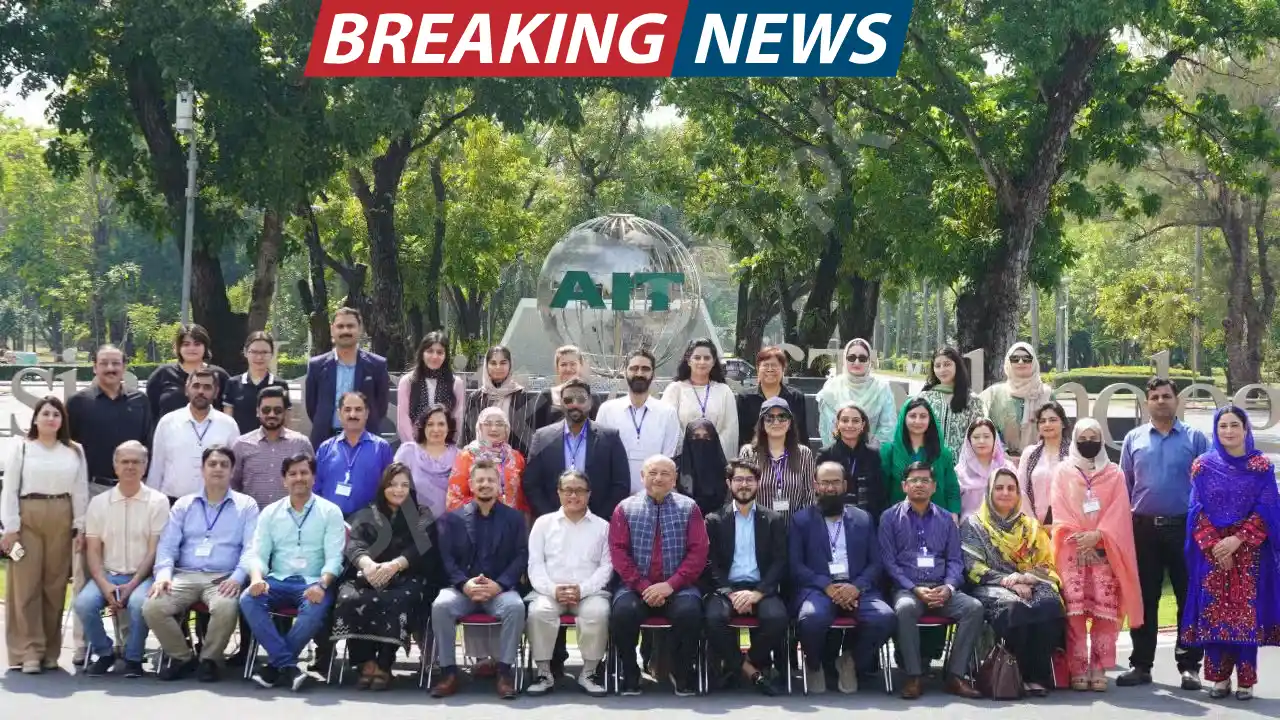
The customized program brought together 26 faculty members from 19 public sector universities across Pakistan. These participants represented diverse academic disciplines, including business, economics, social sciences, public policy, and development studies.
By equipping educators with practical tools and global exposure, the program aims to integrate social enterprise frameworks into university curricula and research agendas.

What Is Social Enterprise and Why It Matters
Social enterprise refers to businesses that prioritize social or environmental impact alongside financial sustainability. Unlike traditional businesses that focus mainly on profit, social enterprises aim to solve societal problems such as poverty, unemployment, food insecurity, and environmental degradation.
In Pakistan, interest in social entrepreneurship is growing rapidly. Keywords such as social business model Pakistan, social enterprise education, youth entrepreneurship Pakistan, and SDG-driven enterprise are increasingly searched online.
Through this leadership program, organizers aim to empower faculty members to guide students toward building mission-driven enterprises.

Immersive Learning Experience at AIT Thailand
The program was delivered through an 11-day immersive learning module at the Asian Institute of Technology in Thailand, held from 15 to 26 January 2026.
The training combined:
Expert-led academic sessions
Applied learning workshops
Field visits to leading social business ventures
Faculty-led project presentations
Peer learning and cross-cultural dialogue
Participants gained international exposure to global social enterprise models, enabling them to adapt best practices within Pakistan’s context.

Field Visits to Social Business Models in Thailand
A key highlight of the program was experiential learning through field visits to innovative social enterprises in Thailand.
Faculty members visited:
STEP Café, which empowers neurodivergent youth by creating inclusive employment opportunities
The Stingless Bee Honey Cooperative, which supports sustainable livelihoods through honey production and education
Wat Chak Daeng, a temple initiative transforming plastic waste into useful materials
The Population and Community Development Association (PDA)
The Embassy of Pakistan in Thailand
These visits provided real-world examples of how social enterprises can create measurable impact while maintaining operational sustainability.
Search interest in Thailand social enterprise models, global social business examples, and experiential entrepreneurship training reflects growing curiosity about such initiatives.

UNODC’s Role in Prevention-Led Development
UNODC has long promoted prevention-led development strategies that address root causes of social challenges, including unemployment, inequality, and marginalization.
Through this initiative, UNODC emphasized the importance of youth engagement and responsible leadership.
Prof. Hussain Haider, Senior Legal Expert at UNODC Pakistan, highlighted that empowering educators is essential to shaping future generations capable of tackling complex societal issues through innovation and compassion.
UNODC’s involvement underscores the connection between social enterprise development and peacebuilding efforts.
Rizq’s Contribution to Social Impact in Pakistan
Rizq, one of Pakistan’s pioneering social enterprises, has more than a decade of experience in designing impact-driven solutions aligned with the Sustainable Development Goals, particularly SDG 2 Zero Hunger.
Rizq has worked extensively with:
Universities
Policy institutions
International development partners
Youth organizations
By co-leading this program, Rizq aims to embed social enterprise thinking within academic and policy frameworks across Pakistan.
Search queries such as Rizq Pakistan social enterprise, SDG 2 initiatives Pakistan, and social innovation Pakistan highlight the growing recognition of Rizq’s work.
Yunus Centre at AIT and Global Social Business Philosophy
The Yunus Centre at AIT plays a crucial role in promoting the social business philosophy of Nobel Laureate Dr. Muhammad Yunus.
The centre serves as a global hub for:
Social business education
Impact research
Capacity-building initiatives
Practical entrepreneurship training
The collaboration provided Pakistani faculty members with exposure to internationally recognized social business models and methodologies.
Strengthening Pakistan’s Higher Education System
One of the key objectives of the Social Enterprise Development Leadership Program is to integrate social entrepreneurship into university systems.
Future plans include:
Curriculum integration of social enterprise modules
Faculty-led social innovation initiatives
Establishment of social enterprise incubation hubs
Expansion of academic networks through UNODC
This structured roadmap aims to create long-term institutional change rather than short-term training outcomes.
Search trends such as social enterprise incubation Pakistan, entrepreneurship education in universities, and innovation hubs in Pakistan show increasing demand for such reforms.
Cross-Cultural Exchange and International Collaboration
The program also fostered cross-cultural exchange between Thai social business practitioners and Pakistani academics.
This collaboration strengthens diplomatic and educational ties between Pakistan and Thailand, while encouraging knowledge sharing across borders.
International exposure enhances the credibility and global competitiveness of Pakistan’s higher education institutions.
Building a Sustainable Social Entrepreneurship Ecosystem
Organizers emphasized that Pakistan holds tremendous potential in social entrepreneurship. With a large youth population and rising digital literacy, the country can harness enterprise-led development for inclusive growth.
By empowering faculty members, the initiative ensures that social enterprise education reaches thousands of students across Pakistan.
The long-term vision is to create a sustainable and locally rooted social entrepreneurship ecosystem that aligns with global standards while addressing local challenges.
Impact on Youth and Future Generations
Youth empowerment remains central to this initiative. Through trained educators, students will gain:
Practical entrepreneurship skills
Awareness of social challenges
Exposure to sustainable business models
Confidence to launch impact-driven ventures
This approach supports both economic growth and social cohesion.
Conclusion
The launch of the Social Enterprise Development Leadership Program by UNODC, Rizq, and the Yunus Centre at AIT marks a historic milestone for Pakistan’s higher education sector.
By combining international expertise, experiential learning, and institutional collaboration, the initiative positions social enterprise as a powerful tool for peacebuilding, youth empowerment, and sustainable development.
As Pakistan continues to explore innovative approaches to social and economic challenges, programs like this provide a strong foundation for long-term transformation.