Trump Attacks Bad Bunny’s Super Bowl Performance & Reposts Vile and Racist Video of the Obamas
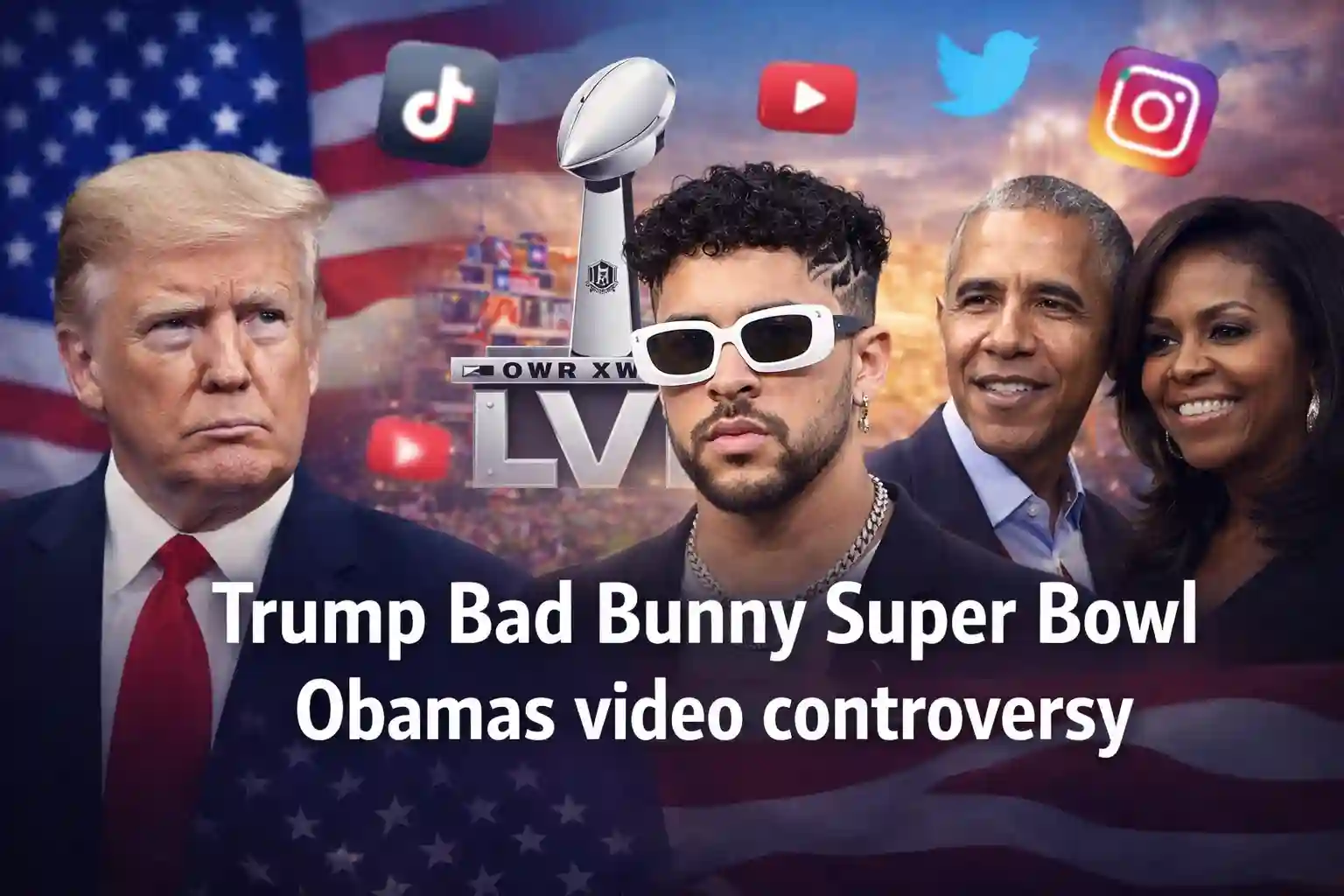
A major controversy has erupted in the United States following former President Donald Trump’s reaction to Bad Bunny’s Super Bowl halftime performance and his sharing of a video widely condemned as racist toward former President Barack Obama and former First Lady Michelle Obama. The incidents have triggered strong reactions across politics, entertainment, and social media, leading to fresh debates about race, culture, and political behavior in the country.
The discussion began after the Super Bowl halftime show, one of the most watched entertainment events in the world. This year’s show was historic because Latin music superstar Bad Bunny headlined the performance, becoming the first solo Latino artist to lead the halftime show. His performance focused heavily on Latin culture and featured songs mostly in Spanish, celebrating diversity and cultural pride.
Many viewers praised the performance for its energy and cultural representation. Fans described it as colorful, powerful, and meaningful, saying it reflected the multicultural reality of modern America. For millions of Spanish-speaking viewers, the show was seen as a proud moment where their language and culture received recognition on a global stage.
However, not everyone shared this positive reaction.
Shortly after the show, Donald Trump publicly criticized the performance on his social media platform. He described the halftime show as terrible and argued that a performance mainly in Spanish was not suitable for a major American sporting event watched by millions of English-speaking viewers. His comments quickly spread online and became a trending topic.
Supporters of Trump agreed with his criticism, saying that the halftime show should appeal to the broadest American audience. Some viewers claimed they felt disconnected from the performance because they did not understand the lyrics.
On the other hand, many people strongly disagreed with Trump’s reaction. Critics argued that the United States is a diverse country with millions of Spanish-speaking citizens and residents. They said the halftime show should reflect this diversity and include different cultural voices. Social media users accused Trump of dismissing Latino culture and ignoring the importance of representation in entertainment.
Comedians, talk show hosts, and cultural commentators also discussed the controversy. Several television hosts mocked the idea that a music performance must be understood by everyone to be enjoyable, pointing out that music often crosses language barriers. Others argued that cultural diversity in entertainment should be celebrated rather than criticized.
Amid the debate, Bad Bunny himself did not respond directly to Trump’s comments. However, fans noticed that he later cleared his social media pages, removing posts and images, which created additional speculation. Some believed this move symbolized a new artistic chapter, while others thought it might be connected to the intense public attention surrounding the performance.
While discussion about the halftime show continued, another controversy involving Trump soon escalated the situation.
Trump shared a video online that portrayed Barack and Michelle Obama in an offensive and racist manner. The video used imagery that critics said echoed racist stereotypes historically used against Black people. The content shocked many viewers and quickly led to widespread criticism from politicians, civil rights groups, and public figures.
Leaders from both major political parties condemned the video. Several Republican politicians also expressed discomfort and disappointment, saying such content should not be promoted by a former president. Civil rights organizations described the imagery as deeply offensive and harmful, especially considering America’s long history of racial discrimination.
After strong backlash, the video was removed from Trump’s social media page. Reports suggested that staff members claimed the post may have been shared without full review. However, critics argued that removing the video did not erase the damage caused by spreading it in the first place.
Trump did not issue a formal apology following the incident, which added fuel to the controversy. Many commentators argued that public figures, especially former national leaders, have a responsibility to avoid spreading content that could encourage racial division or hatred.
The timing of the controversy also intensified reactions, as it occurred during Black History Month in the United States, a period dedicated to honoring the contributions and history of African Americans. Critics said sharing such content during this time was especially inappropriate.
Media analysts say these two events, though separate, reveal deeper cultural and political divisions within the country. The argument over Bad Bunny’s performance shows ongoing debates about national identity and cultural inclusion. Meanwhile, the video incident raises concerns about racism, political communication, and the influence of social media.
Supporters of cultural diversity argue that events like the Super Bowl should represent the evolving population of the United States. Latino communities have grown significantly in recent decades, and their music and culture now play a major role in mainstream entertainment. For many viewers, the halftime show symbolized progress toward greater representation.
At the same time, critics say some Americans feel rapid cultural changes are happening too quickly, leaving them feeling disconnected from national traditions they once recognized. Political leaders often reflect these concerns in their public statements, which sometimes deepen divisions rather than reduce them.
Experts say social media also plays a big role in amplifying conflicts. Political comments, celebrity reactions, and viral videos spread instantly, making controversies escalate faster than in the past. Once public outrage builds, it becomes difficult to control the conversation.
The controversies also highlight how entertainment and politics increasingly intersect. Music performances, award shows, and sporting events are no longer just about entertainment. They often become platforms for cultural or political messages, whether intentionally or not.
Trump Bad Bunny Super Bowl Obamas video controversy
In the end, the debates surrounding Bad Bunny’s performance and the offensive video demonstrate how culture, politics, and race remain sensitive topics in the United States. Supporters and critics on all sides continue to argue about what public events should represent and how leaders should behave in public spaces.
While opinions remain divided, one thing is clear: both incidents have sparked national and international discussions about inclusion, respect, and responsibility in public life. As social and cultural changes continue, such debates are likely to remain part of the public conversation.
The coming weeks will show whether these controversies fade or continue shaping political and cultural discussions in America. For now, they serve as another reminder of how powerful entertainment and social media can be in influencing public opinion and political narratives.