Traffic Courts & E-Challan Fast Decisions Announced – Full Update
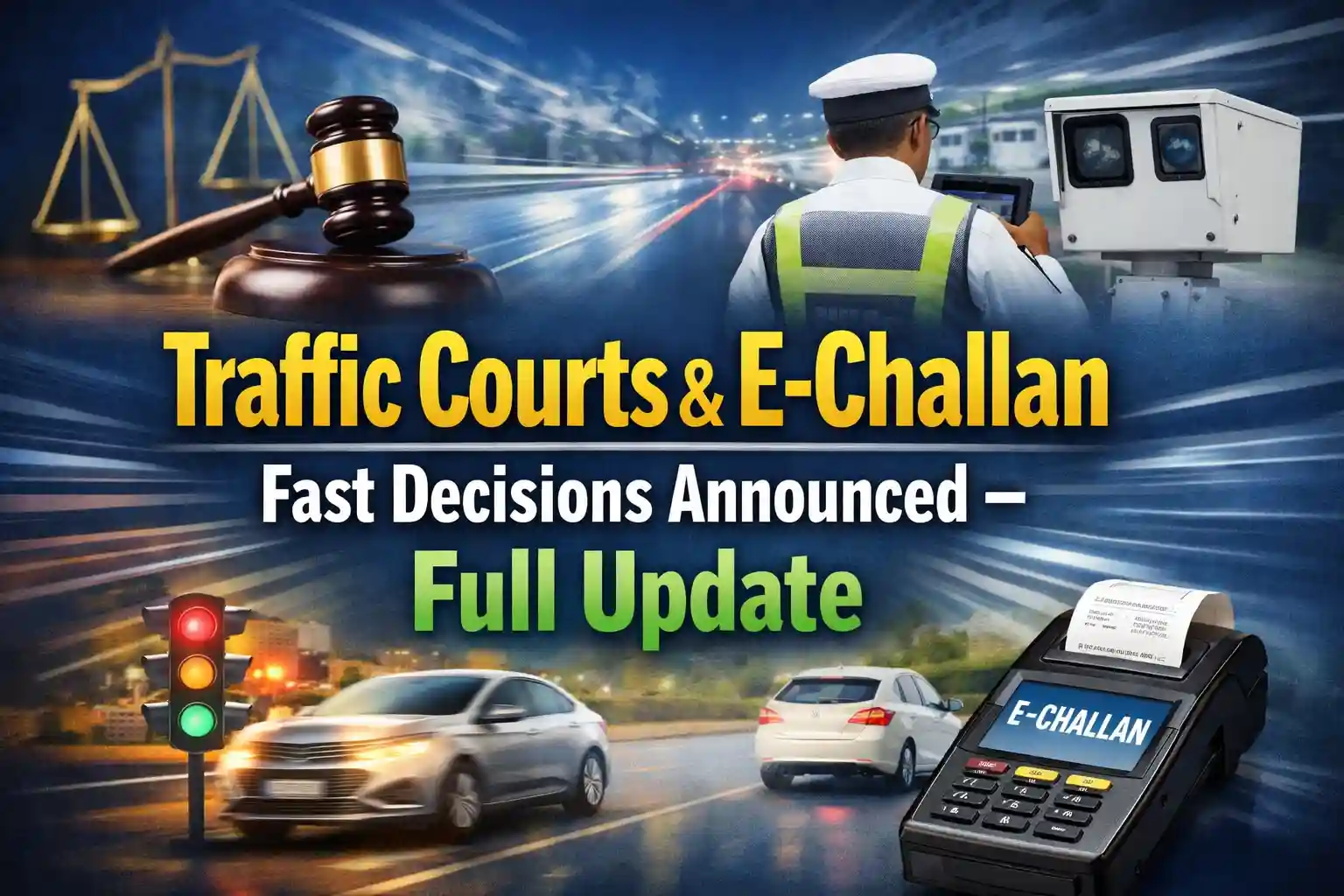
The government has officially announced major reforms in Traffic Courts and the E-Challan system, aiming to ensure fast decisions, transparency, and quicker dispute resolution for citizens. These changes are part of a broader strategy to modernize traffic law enforcement, reduce case backlogs, and improve road safety across the country.
With the rapid expansion of digital surveillance systems and smart traffic cameras in major cities, the number of electronic traffic fines—commonly known as E-Challans—has significantly increased. However, delays in case hearings and confusion regarding appeals had created frustration among motorists. The new fast-track decision system is designed to address these concerns effectively.
In this detailed guide, we will cover everything you need to know about the latest Traffic Court reforms, the updated E-Challan dispute process, fast decision timelines, and what these changes mean for drivers in 2026.
What Are Traffic Courts and E-Challan Systems?
Traffic Courts Explained
Traffic Courts are special judicial bodies that handle traffic-related violations, including:
- Over-speeding
- Signal violations
- Wrong parking
- Driving without a license
- Driving without registration or insurance
- Reckless or dangerous driving
These courts are responsible for hearing disputes, issuing penalties, and deciding appeals related to traffic violations.
E-Challan System Explained
The E-Challan system is a digital traffic fine system that uses smart cameras and automated monitoring devices to detect violations. Once a violation is recorded:
- The vehicle number is identified through automated number plate recognition (ANPR).
- The fine is generated electronically.
- The challan is sent to the registered vehicle owner via SMS, online portal, or postal delivery.
- The driver can pay online or contest the fine in Traffic Court.
The system reduces physical interaction with traffic police and promotes transparency.

Why Were Fast Decisions Needed in Traffic Courts?
Over the past few years, traffic cases increased rapidly due to:
- Installation of new AI-based traffic cameras
- Strict enforcement of road safety rules
- Automatic digital fine generation
- Increase in vehicle registration
This led to:
- Backlog of cases in traffic courts
- Long waiting times for hearings
- Delays in appeal decisions
- Confusion among citizens regarding the dispute process
To resolve these issues, authorities have introduced fast-track Traffic Court procedures and digital hearing mechanisms.

Key Highlights of Traffic Courts & E-Challan Fast Decisions Reform
Here are the major updates announced:
1. Fast-Track Traffic Courts
Special fast-track benches have been established to decide minor traffic violations within a limited time frame. These courts will:
- Dispose of simple cases within days
- Reduce backlog
- Provide quicker justice
Minor violations such as signal jumping, over-speeding, or lane violations will now be decided much faster.
2. Online Dispute & Hearing System
Drivers can now:
- File online appeals against E-Challans
- Upload evidence (photos, dashcam footage, documents)
- Attend virtual hearings (in selected cities)
This reduces the need to physically visit the court unless required.
3. Decision Timeline Announced
Under the new policy:
- Simple cases: Decision within 7–15 days
- Moderate disputes: 15–30 days
- Complex cases: Based on investigation
This is a significant improvement compared to earlier long delays.
4. Automatic Case Review Mechanism
Some E-Challans will now be automatically reviewed if:
- The vehicle was reported stolen
- Registration data mismatch is detected
- Camera error is identified
- Multiple challans were mistakenly generated
This ensures fairness and reduces unnecessary penalties.

How the New Fast Decision System Works
Here is a step-by-step explanation:
Step 1: Violation Detection
Smart cameras detect a violation and generate an E-Challan.
Step 2: Notification Sent
The registered owner receives:
- SMS notification
- Online portal update
- Postal notice (if applicable)
Step 3: Payment or Dispute
The citizen can:
- Pay the fine online
- File an appeal within the given timeframe
Step 4: Digital Scrutiny
The traffic department reviews the appeal digitally.
Step 5: Court Decision
- If evidence supports the driver → Fine canceled
- If violation confirmed → Fine upheld
Decision is communicated digitally.
Benefits of Fast Decisions in Traffic Courts
The reform offers multiple advantages:
1. Quick Justice
Citizens no longer have to wait months for a decision.
2. Reduced Court Burden
Fast disposal reduces case backlog and administrative pressure.
3. Increased Transparency
Digital records minimize corruption and manual manipulation.
4. Better Road Discipline
Quick enforcement encourages compliance with traffic rules.
5. Convenience for Citizens
Online appeals save time and travel expenses.
Impact on Drivers and Vehicle Owners
The fast decision system impacts motorists in the following ways:
- Drivers must respond quickly to notices.
- Ignoring E-Challans can lead to penalties or vehicle blocking.
- Digital tracking means repeat violations are easily identified.
- Honest drivers benefit from quick correction of wrong fines.
The system aims to strike a balance between strict enforcement and fairness.
Common Reasons for E-Challan Disputes
Many citizens file appeals for the following reasons:
- Wrong vehicle number captured
- Vehicle sold but not transferred
- Emergency situations
- Camera malfunction
- Duplicate challans
The new system allows drivers to upload proof such as:
- Sale agreement
- Transfer documents
- FIR copy (if vehicle stolen)
- Dashcam footage
Penalties for Ignoring E-Challan
Authorities have also clarified strict measures for unpaid fines:
- Late payment penalties
- Vehicle registration suspension
- Denial of vehicle transfer services
- Blocking during annual token renewal
Therefore, checking E-Challan status regularly is recommended.
Digital Transformation in Traffic Law Enforcement
The move towards fast Traffic Court decisions is part of broader digital reforms, including:
- Smart traffic management systems
- AI-powered surveillance
- Automated number plate recognition
- Online fine payment portals
- Integration with vehicle registration databases
This digital transformation aligns with modern governance standards.
Challenges in Implementation
Despite improvements, some challenges remain:
- Internet access issues in rural areas
- Technical errors in camera systems
- Lack of public awareness
- Digital literacy concerns
Authorities are working on awareness campaigns and system upgrades to address these issues.
Future Plans Announced
Officials have hinted at further improvements:
- Mobile app for real-time challan tracking
- SMS-based appeal filing
- AI error detection system
- Integration with driving license penalty points
- Expansion of virtual hearings nationwide
These initiatives aim to make traffic law enforcement more efficient and citizen-friendly.
Frequently Asked Questions (FAQs)
1. What is the new decision time for Traffic Court cases?
Minor cases will be decided within 7–15 days, while moderate disputes may take up to 30 days.
2. Can I attend Traffic Court online?
Yes, virtual hearings are being introduced in selected cities.
3. How can I check my E-Challan status?
You can check through the official traffic police online portal by entering your vehicle number or CNIC.
4. What happens if I ignore an E-Challan?
Ignoring a challan may result in late penalties, vehicle blocking, or suspension of registration services.
5. Can wrong E-Challans be canceled?
Yes, if you provide valid evidence during appeal, the fine can be canceled.
6. Is online appeal filing available everywhere?
Currently, it is available in major cities and gradually expanding nationwide.
Conclusion
The announcement of Traffic Courts & E-Challan Fast Decisions marks a significant step toward modernizing traffic law enforcement. With digital hearings, strict timelines, and automatic review systems, the government aims to ensure transparency, fairness, and efficiency.
For drivers, this means faster dispute resolution, reduced waiting time, and improved convenience. However, it also means stricter enforcement and less room for ignoring fines.
As traffic systems continue to digitize in 2026, motorists must stay informed, follow road rules, and regularly check their E-Challan status to avoid complications.