
Breaking News: Sugarcane Crushing Season to Begin This Month Across Pakistan
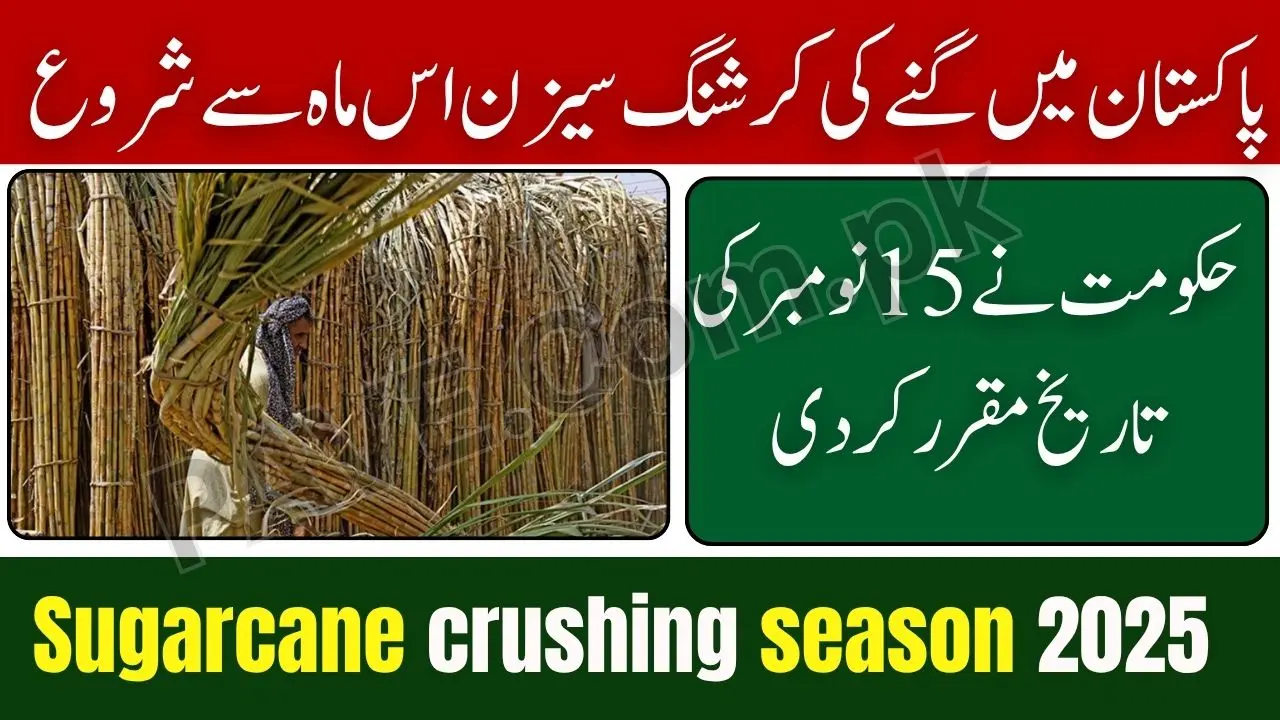
The Sugarcane Crushing Season 2025 is officially set to begin across Pakistan this month, marking an important milestone for farmers, sugar mills, and the entire agricultural economy. According to Federal Minister for National Food Security and Research Rana Tanveer Hussain, the crushing season will start from November 15, following a unanimous decision of the Sugar Advisory Board (SAB).
This decision comes after weeks of consultation between provincial governments, the Pakistan Sugar Mills Association (PSMA), and representatives of the Ministries of Industries, Commerce, and Agriculture. The goal is to ensure a smooth and timely start to the crushing operations — preventing payment delays to farmers and ensuring a stable supply of sugar in the local market.
Why the Sugarcane Crushing Season Matters
Sugarcane is one of Pakistan’s largest cash crops, supporting millions of families directly and indirectly. Every year, the start date for the crushing season becomes a topic of national discussion because it affects:
- Farmer income and crop management
- Mill operations and sugar production
- Market prices and consumer affordability
Delays in the crushing season can cause serious issues for growers, as sugarcane loses its sucrose content if not crushed in time. This also delays payments, reduces yields, and disturbs the sugar market equilibrium.
This year’s early announcement gives farmers enough time to plan harvesting, ensuring they receive fair and timely payments.

Decision by the Sugar Advisory Board (SAB)
The Sugar Advisory Board meeting, chaired by Minister Rana Tanveer Hussain, finalized November 15, 2025, as the nationwide start date for sugarcane crushing. The meeting was attended by:
- Provincial cane commissioners
- Senior officials from the ministries of industries, production, and commerce
- Representatives of the Pakistan Sugar Mills Association (PSMA)
- Federal and provincial agriculture departments
The board reached this decision after reviewing the sugarcane crop data, weather patterns, and mill readiness. The minister warned that strict action will be taken against mills that fail to begin operations on schedule.

Estimated Sugarcane Production for 2025–26
According to initial reports shared during the meeting, Pakistan’s sugarcane production for the 2025–26 season is expected to reach around 85 million tonnes, slightly higher than last year’s 84 million tonnes.
| Year | Production (Million Tonnes) | Area Cultivated (Million Hectares) | Change (%) |
|---|---|---|---|
| 2024–25 | 84 | 1.192 | — |
| 2025–26 | 85 | 1.213 | +1.7% |
The cultivated area under sugarcane has increased by 1.7 percent, reflecting the positive outlook and confidence among growers. Experts attribute this to favorable weather conditions, improved irrigation management, and farmer incentives in Punjab and Sindh.

Rana Tanveer Hussain’s Statement
While addressing the meeting, Minister Rana Tanveer Hussain highlighted that the government will not tolerate any delay by sugar mills in starting operations or making payments to farmers.
“The timely start of the crushing season will ensure that growers are not exploited. Mills delaying operations will face strict action, including suspension of licenses,”
he stated.
He further assured that the government is fully committed to safeguarding the rights of farmers and maintaining a stable supply of sugar for the local market.

Key Highlights of the Sugar Advisory Board Meeting
- Crushing Start Date: November 15, 2025, across all provinces.
- Payment Monitoring: Mills must clear all payments to farmers within the legally mandated time.
- Action Against Delays: Strict penalties for mills that fail to start operations on time.
- Data Transparency: Provincial governments will report crushing and payment data weekly.
- Price Stability: The board will review sugar prices regularly to prevent hoarding or artificial inflation.
Provincial Implementation Plans
Punjab
Punjab, which produces nearly 60% of Pakistan’s total sugarcane, has already issued directives to all mills to begin crushing on time. The Punjab Cane Commissioner warned that late start mills will face fines, and the department will ensure farmer payments through a digital monitoring system.
Sindh
Sindh, the second-largest sugar-producing province, will also begin crushing from mid-November. The Sindh Agriculture Department has established a provincial committee to oversee the process, ensuring fair payments and addressing farmer complaints.
Khyber Pakhtunkhwa & Balochistan
Although smaller contributors, both provinces have confirmed their readiness for the upcoming season. Mills in these areas are being inspected for machinery maintenance and environmental compliance.
Impact on Farmers and the Sugar Industry
The sugarcane crushing season directly impacts more than 1.5 million farmers and supports hundreds of thousands of workers in the sugar industry.
Timely crushing ensures that:
- Growers receive quick payments for their crops.
- Mills run efficiently and reduce wastage.
- The sugar market remains stable and free from artificial shortages.
Early crushing also helps farmers prepare their land for the next wheat crop, which is crucial for maintaining Pakistan’s food security balance.
Government’s Efforts for Farmer Protection
To strengthen transparency, the government has developed a digital payment tracking system for sugar mills. This system allows the Cane Commissioner’s Office to monitor transactions and verify that growers are paid within the legal time frame.
Officials have also warned that mills found underpaying or delaying payments will face strict penalties, including suspension of operations and legal action under the Punjab Sugar Factories Control Act.
Sugar Market and Price Outlook
The start of the crushing season is expected to stabilize sugar prices across Pakistan. Currently, sugar prices in the wholesale market are around Rs.160–165 per kg, but with new supply entering the market by late November, prices could fall to Rs.135–145 per kg.
| Stage | Sugar Price (Rs/kg) | Market Status |
|---|---|---|
| Before Crushing | 160–165 | High due to limited stock |
| During Crushing (Nov–Dec) | 135–145 | Gradual decrease |
| Post-Crushing (Jan–Feb) | 130–140 | Stable prices expected |
Officials say the Sugar Advisory Board will monitor both wholesale and retail markets to prevent profiteering or artificial shortages during the upcoming season.
Economic and Energy Contributions
The sugar industry plays a dual role — it contributes significantly to Pakistan’s GDP and supports the energy sector through the use of bagasse (a sugarcane byproduct) for electricity generation.
With the timely start of crushing, mills can generate more bagasse-based power, which reduces the country’s dependence on imported fuel and supports renewable energy initiatives.
Challenges Facing the Sugar Sector
Despite the positive outlook, the sugar industry continues to face several challenges:
- Disputes over sugarcane pricing between mills and farmers.
- High transportation and fuel costs affecting crop delivery.
- Smuggling and hoarding creating artificial market shortages.
- Climate variability affecting sugarcane quality and yield.
To address these issues, the government plans to strengthen enforcement laws, improve logistics, and promote mechanized harvesting across sugarcane-growing regions.
Expert Opinion
Agriculture experts have welcomed the timely announcement, saying it will bring stability to the rural economy. According to Dr. Zahid Mahmood, a senior economist:
“A synchronized start to crushing across provinces will not only benefit growers but also help control sugar prices. The key is strict implementation by provincial authorities.”
Future Outlook
Looking ahead, the government is considering introducing minimum support prices (MSP) for sugarcane on a uniform basis nationwide. This would help eliminate regional disparities and encourage long-term investment in sugarcane farming.
Additionally, efforts are being made to promote biofuel production using sugarcane molasses — an initiative that could diversify the sector and reduce Pakistan’s energy import bill.
FAQs About Sugarcane Crushing Season 2025
1. When will the sugarcane crushing season start in Pakistan?
It will officially begin on November 15, 2025, across all provinces.
2. What is the expected sugarcane production for 2025–26?
Approximately 85 million tonnes, slightly above last year’s 84 million tonnes.
3. Who announced the crushing season schedule?
The announcement was made by Federal Minister Rana Tanveer Hussain after the Sugar Advisory Board meeting.
4. What action will be taken against mills delaying operations?
Strict legal and administrative action, including fines and suspension, will be imposed.
5. How will the government ensure timely farmer payments?
Through a digital monitoring system operated by the Cane Commissioners in each province.
6. Will sugar prices decrease after crushing begins?
Yes, prices are expected to stabilize once new production enters the market.
7. Which provinces are the main sugar producers?
Punjab is the largest, followed by Sindh, KPK, and Balochistan.
8. What benefits will timely crushing bring to the economy?
It will ensure stable sugar prices, timely payments, and increased rural income.
Conclusion – Sugarcane Crushing Season to Begin This Month Across Pakistan
The decision to begin the Sugarcane Crushing Season 2025 this month is a welcome step toward protecting farmers, ensuring market stability, and strengthening Pakistan’s agro-economy. With government oversight, strict enforcement, and digital monitoring, this season could mark a turning point for the sugar industry.
Farmers, mill owners, and consumers all stand to benefit from this timely and coordinated start — ensuring that Pakistan’s sugar sector continues to grow sustainably.