Punjab Sets New Guidelines for Government Vehicles 2026 – Complete Policy Update
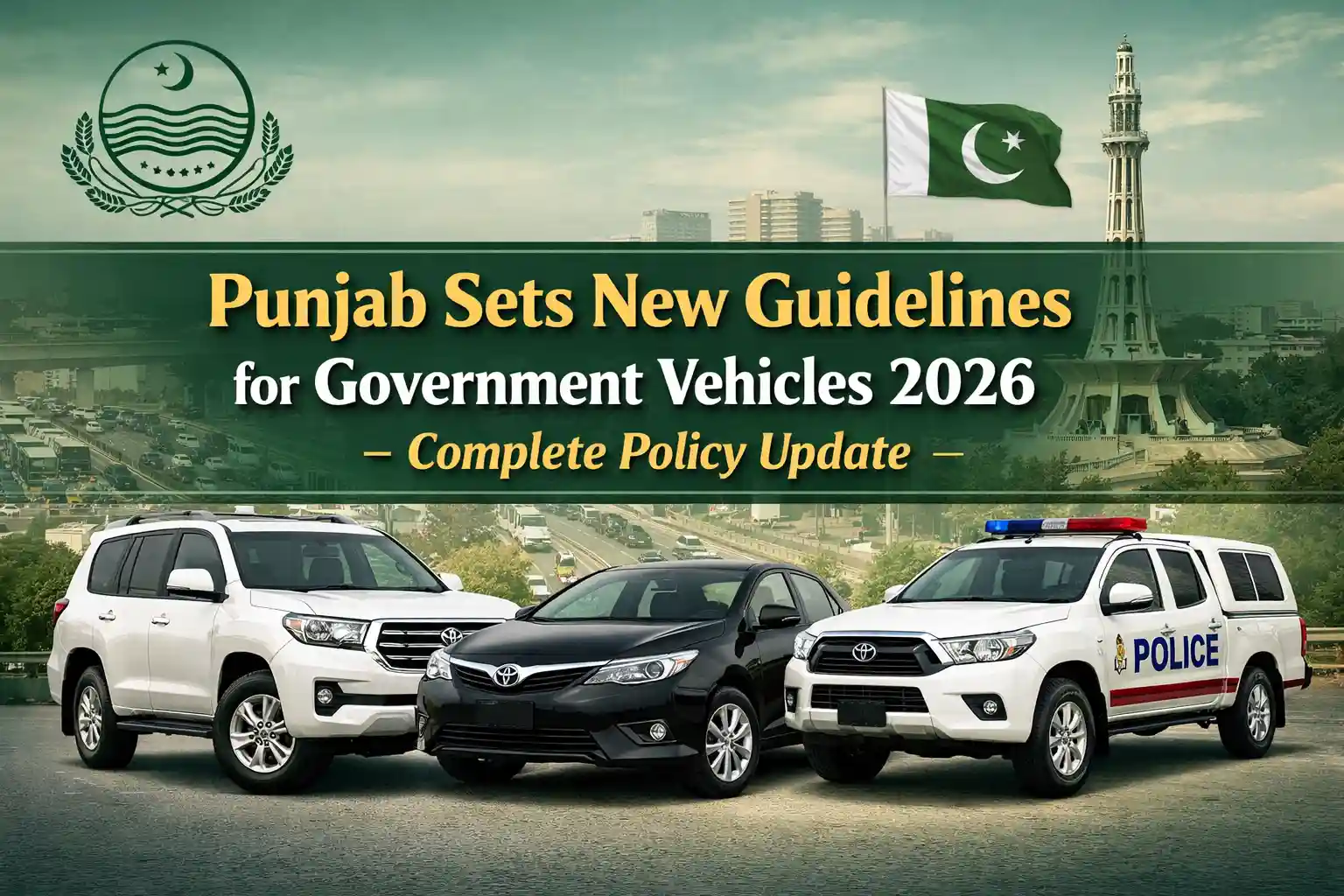
The Government of Punjab has introduced new Government Vehicles Policy 2026 to improve transparency, reduce unnecessary expenses, and ensure responsible use of official vehicles. The updated guidelines aim to control fuel costs, prevent misuse of state vehicles, and introduce modern tracking systems for better monitoring.
This latest Punjab Government Vehicles 2026 policy update affects ministers, senior officers, government departments, and field staff across the province. In this detailed article, we will explain the new rules, eligibility criteria, vehicle limits, fuel regulations, monitoring systems, penalties, and how this policy will impact public administration in Punjab.
Why Punjab Introduced the Government Vehicles Policy 2026
The Punjab government has faced increasing criticism over excessive use of official vehicles, high fuel consumption, and maintenance expenses. According to official estimates, millions of rupees are spent annually on government transport.
To address these issues, the new Punjab official vehicle guidelines 2026 focus on:
- Reducing fuel and maintenance costs
- Ending misuse of government vehicles
- Introducing digital monitoring systems
- Promoting transparency and accountability
- Encouraging eco-friendly vehicle adoption
The policy is part of broader administrative reforms aimed at improving governance efficiency.

Key Highlights of Punjab Government Vehicles Policy 2026
Here are the main features of the new policy:
1. Vehicle Entitlement Based on Rank
Under the Punjab Government Vehicles entitlement rules 2026, vehicles will now be allocated strictly according to officer grade and designation.
- Grade 22–21 officers: 1800cc–2000cc vehicles
- Grade 20 officers: 1600cc vehicles
- Grade 19 and below: 1300cc vehicles or shared transport
This step prevents unnecessary allocation of luxury vehicles to lower-ranking officials.
2. Strict Ban on Personal Use
The updated policy clearly states that official vehicles must only be used for government duties. Personal use, family use, or political activities are strictly prohibited.
If any officer is found violating these rules, disciplinary action will be taken, including:
- Vehicle withdrawal
- Salary deduction
- Departmental inquiry
This move ensures proper use of public resources.
3. Fuel Limit Regulations 2026
One of the biggest changes in the Punjab fuel policy for government vehicles 2026 is the introduction of monthly fuel limits.
- Fixed monthly fuel quota for each grade
- Digital fuel cards for tracking consumption
- No reimbursement without official approval
This system helps reduce fuel misuse and unnecessary travel expenses.
4. GPS Tracking System Implementation
The Punjab government has announced the installation of GPS tracking devices in all official vehicles.
Benefits of GPS tracking:
- Real-time monitoring of routes
- Prevents unauthorized travel
- Tracks fuel efficiency
- Reduces misuse
Departments will now be able to monitor vehicle movement through a centralized digital dashboard.
5. Vehicle Pool System for Departments
Instead of allocating vehicles individually, some departments will operate under a Vehicle Pool System.
This means:
- Vehicles will be shared among officers
- Central booking system will be introduced
- Reduces the number of cars assigned
This change aims to minimize government fleet size and cut costs.
6. Transition Toward Hybrid & Electric Vehicles
The Punjab eco-friendly government vehicle initiative 2026 promotes the use of hybrid and electric vehicles.
Key goals:
- Reduce fuel dependency
- Lower carbon emissions
- Support green governance
Future vehicle purchases will prioritize environmentally friendly models.
Maintenance and Repair Guidelines
The 2026 policy also updates maintenance procedures:
- Annual vehicle inspection mandatory
- Service record documentation required
- Repair costs above a certain limit need approval
- Old vehicles beyond economic repair to be auctioned
This ensures proper fleet management and prevents wasteful spending.

Vehicle Auction & Disposal Rules
Government vehicles that are:
- More than 10 years old
- Frequently requiring repairs
- Not cost-effective
Will be auctioned publicly under transparent procedures.
The new Punjab vehicle disposal policy 2026 ensures accountability and revenue recovery.

Impact on Government Officers
The new rules may initially feel strict for some officials, but they offer long-term benefits:
- Clear entitlement structure
- Reduced administrative confusion
- Transparent system
- Digital accountability
Officers will now be required to maintain logbooks and justify travel records.
Benefits of Punjab Government Vehicles Policy 2026
The new policy provides several advantages:
Financial Savings
Reduced fuel consumption and maintenance costs will save public money.
Transparency
Digital monitoring reduces corruption and misuse.
Environmental Protection
Shift toward hybrid vehicles supports climate goals.
Efficient Administration
Structured vehicle allocation improves operational efficiency.
Public Reaction to the New Policy
Public response has been largely positive. Citizens believe that strict regulation of official vehicles shows seriousness in governance reform.
Many experts say that this policy reflects responsible leadership and financial discipline.
Challenges in Implementation
Although promising, implementation may face challenges:
- Resistance from some officials
- Technical issues in GPS tracking
- Monitoring enforcement consistency
- Budget for electric vehicle transition
Proper oversight and regular audits will be required to ensure success.
Comparison with Previous Vehicle Policy
Before 2026, the policy allowed more flexibility in vehicle allocation. Fuel tracking was manual, and monitoring was limited.
Now:
| Feature | Old Policy | 2026 Policy |
|---|---|---|
| Fuel Monitoring | Manual logs | Digital fuel cards |
| Vehicle Tracking | Limited | GPS tracking mandatory |
| Entitlement | Less structured | Rank-based strict rules |
| Eco Initiative | Minimal | Hybrid priority |
This comparison clearly shows a major reform.
How This Policy Affects Punjab’s Budget 2026
Experts estimate that the new Punjab transport reform policy 2026 could reduce annual vehicle-related expenses by up to 20–30%.
Savings can be redirected toward:
- Education projects
- Healthcare facilities
- Infrastructure development
This makes the policy economically beneficial.
Future Outlook of Punjab Government Transport System
The Punjab government plans to:
- Fully digitize vehicle records
- Introduce centralized fleet management software
- Expand electric vehicle adoption
- Conduct regular compliance audits
This long-term vision aims to modernize public sector transportation.
Frequently Asked Questions (FAQs)
1. What is Punjab Government Vehicles Policy 2026?
It is a new set of official guidelines regulating allocation, fuel usage, monitoring, and maintenance of government vehicles in Punjab.
2. Are government vehicles allowed for personal use?
No. The 2026 policy strictly bans personal use of official vehicles.
3. Will all government vehicles have GPS tracking?
Yes, GPS tracking devices will be installed in all official vehicles.
4. What happens if an officer misuses a government vehicle?
Disciplinary action will be taken, including vehicle withdrawal and salary deduction.
5. Does the policy include electric vehicles?
Yes. The government plans to prioritize hybrid and electric vehicles in future purchases.
Conclusion – Punjab Government Vehicles Policy 2026
The Punjab Sets New Guidelines for Government Vehicles 2026 – Complete Policy Update marks a significant reform in public administration. By introducing fuel limits, GPS tracking, strict entitlement rules, and eco-friendly vehicle initiatives, the government aims to reduce expenses and ensure responsible governance.
If implemented effectively, this policy could become a model for other provinces. It reflects a modern, accountable, and financially disciplined governance approach in Punjab.