Punjab Imposes Section 144: What’s Banned, What’s Allowed? Check Govt Rules
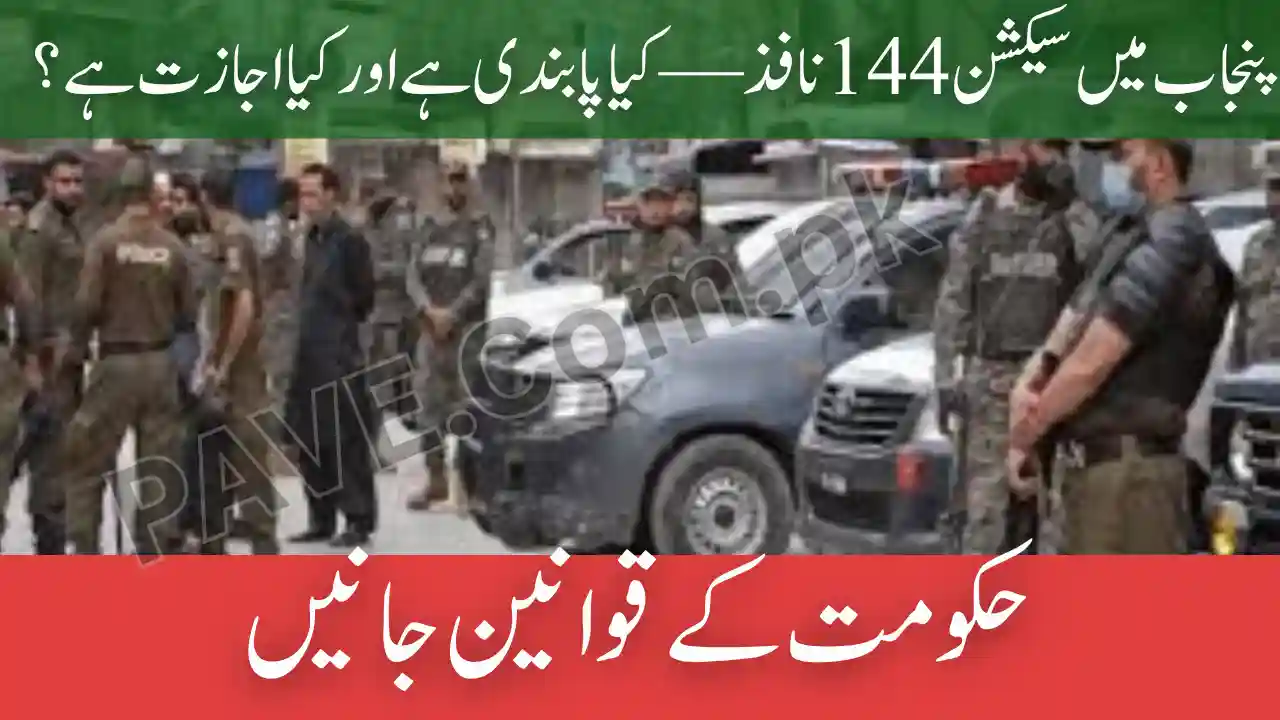
The Punjab Section 144 Rules 2025 has officially enforced Section 144 across the province, raising important questions among citizens: What exactly is banned, and what is still allowed? Many people are unsure whether normal daily activities like travelling, shopping, or attending private functions are affected by this law. While Section 144 is a strict legal measure, it is not meant to create panic. Instead, it is introduced to prevent disorder, control crowds, and protect public peace in sensitive situations.
Section 144 is typically imposed when authorities believe that large gatherings, protests, rallies, or public processions could disturb law and order. It gives temporary powers to the administration to restrict movement, limit assemblies, and ban certain activities without prior permission. Unlike curfews or full lockdowns, Section 144 does not confine people to their homes. Instead, it is a preventive measure to stop trouble before it begins.
In recent times, Punjab has witnessed a rise in political tensions, religious processions, and public demonstrations. To avoid any clash between groups or misuse of public spaces, authorities chose to implement Section 144. The law is not permanent — it stays only for a limited period and may be extended if needed. However, many people fear arrest or fines simply because they do not understand what is allowed under this law.
This article explains in simple and clear language exactly what activities are banned, what is legal, who is exempted, and what penalties exist for violations. If you live in Punjab or are planning to travel within the province, it is important to know your rights and responsibilities.
Let’s explore what Section 144 really means for ordinary citizens.
What is Section 144?
Section 144 of the Code of Criminal Procedure (CrPC) allows the government or district administration to prohibit public gatherings and control activities that may lead to disturbance or violence. It is a preventive law, not a punishment.
Under this law, no group of four or more people can gather in public without official permission. It also allows authorities to ban protests, rallies, sit-ins, weapon displays, and loud public announcements to stop unrest before it begins.
Read More: PM Electric Bike and Rikshaw Scheme

Why Has Punjab Enforced Section 144?
The government usually enforces Section 144 in the following situations:
- Possibility of political protests or clashes
- Religious events or processions where security concerns may arise
- Public safety threats, including terrorism alerts
- Danger of mob gatherings or social media calls for agitation
- Large-scale events without prior approval
Instead of waiting for violence or chaos to break out, Section 144 is used as a shield to protect public peace.

Official Guidelines Under Section 144 (General Rules):
Even though different districts issue slightly different notifications, most Section 144 orders include the same rules:
Read More: CM Maryam Nawaz Inaugurates DG Khan Electric Bus 2025

✅ What’s Banned Under Section 144?
| Activity | Status | Details |
|---|---|---|
| Public gathering of more than 4 people | ❌ Banned | Unless permission is granted |
| Political rallies or protests | ❌ Not allowed | Prior NOC required |
| Religious processions without approval | ❌ Restricted | Must be planned with law enforcement |
| Display or carrying of weapons | ❌ Banned | Even licensed arms restricted in public |
| Use of loudspeakers or megaphones | ❌ Prohibited | Except in mosques or permitted events |
| Road blockades or sit-ins | ❌ Not permitted | May lead to arrest |
| Setting up camps or banners on public roads | ❌ Disallowed | Requires government approval |
✅ What’s Allowed Under Section 144?
| Activity | Status | Details |
|---|---|---|
| Daily travel for work or study | ✅ Allowed | No restriction on movement |
| Shopping, markets, and business activity | ✅ Open | As long as no crowd formation |
| Educational institutions | ✅ Operational | Schools, colleges, universities continue |
| Indoor private events (weddings, functions) | ✅ Allowed | Provided no public disturbance |
| Religious prayers in mosques/churches | ✅ Allowed | Without loud procession |
| Emergency services, hospitals, ambulances | ✅ Fully exempted | No restriction |
Who Is Exempted?
The following people and services are usually exempted from Section 144:
- ✅ Ambulance and medical staff
- ✅ Police and law-enforcement officials
- ✅ Media journalists (with accreditation)
- ✅ Government officers on duty
- ✅ Funeral processions (with dignity and limited people)
- ✅ Registered NGOs offering emergency support
What Are the Penalties for Violating Section 144?
Violation of Section 144 is considered a criminal offense under Section 188 of the Pakistan Penal Code.
| Violation | Possible Penalty |
|---|---|
| Disobeying police orders | Fine or short-term imprisonment |
| Participating in illegal protest | Immediate detention |
| Carrying weapons in public | Seizure of arms + legal case |
| Blocking roads or public spaces | Arrest and prosecution |
Even if you believe you are protesting peacefully, entering a restricted zone without permission can lead to arrest.
Public and Legal Response
People often have mixed reactions to Section 144. Some view it as an essential step to maintain order, while others consider it a tool used to silence voices. Legal experts believe that while Section 144 is a protective law, it must not be used to suppress fundamental rights.
Citizens still have the right to apply for permission to hold an event, but any unannounced or chaotic gathering will be stopped immediately.
Read More: Punjab Rozgar Support Programme October 2025 – A Lifeline for Youth Employment
FAQs Punjab Section 144 Rules 2025:
Q1: Can I travel freely during Section 144?
Yes, individual movement is allowed. Section 144 only restricts group gatherings, not personal travel for work, study, or emergencies.
Q2: Are weddings or private functions allowed?
Yes, indoor private events like weddings are usually allowed, as long as they do not block public roads or turn into public processions.
Q3: Can I carry my licensed weapon under Section 144?
No, public display or carriage of weapons — even if licensed — is strictly prohibited to prevent misuse or panic.
Q4: Can I organize a peaceful protest?
Only if you take written permission (NOC) from the district administration. Unauthorized protests will lead to arrest under Section 188 PPC.
Q5: What happens if someone violates Section 144?
They may face immediate arrest, fines, or legal charges under the Pakistan Penal Code.
Conclusion:
Punjab Section 144 Rules 2025 is not a punishment — it is a temporary safety shield. The primary goal is to prevent chaos, violence, and unregulated gatherings that could endanger lives. Instead of causing fear, it should be seen as a protective tool to maintain peace and discipline in society.
However, citizens must also ensure that their fundamental rights are respected. If someone wants to organize a peaceful event, they can simply apply for permission instead of breaking the law. Responsible civil behavior is the key to ensuring trust between people and the administration.
In peaceful societies, security and freedom go hand in hand. Section 144 only becomes strict when people misuse public spaces. If citizens cooperate, this law remains invisible. But if crowds turn aggressive, it becomes necessary to restore order.
The real question is not whether Section 144 is good or bad. The question is: Are we ready to act responsibly as a community? A society that values peace will always understand the importance of temporary discipline.
In conclusion, follow the rules, avoid confrontations, and stay informed. Punjab’s safety is a shared responsibility, and Section 144 is just one part of that journey toward stability.