Punjab Govt Introduces Apna Khet, Apna Rozgar Program for Farmers and Youth
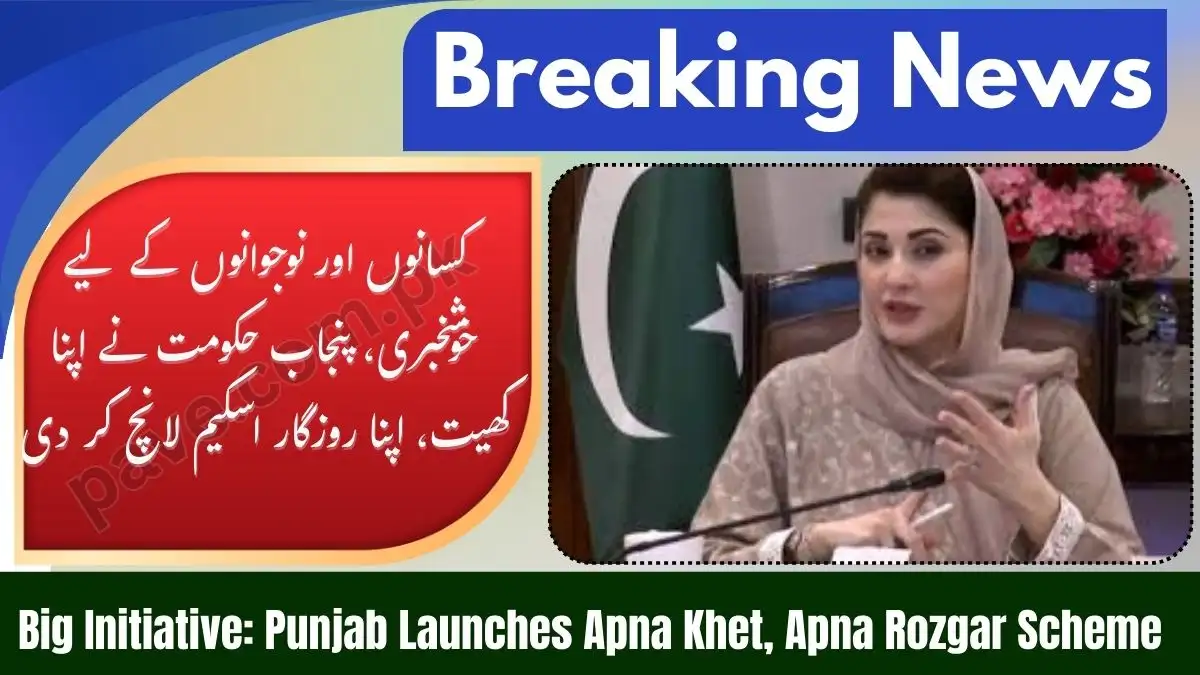
The Punjab government has unveiled one of its most ambitious livelihood and food-security initiatives in decades: “Apna Khet, Apna Rozgar”. The program marks a clear policy shift—away from an overreliance on public-sector jobs and toward productive, land-based self-employment, especially for the province’s educated but unemployed youth.
At its core, the initiative is about reviving agriculture as a modern, profitable career, while simultaneously strengthening Punjab’s crop output and long-term food security.
Core Objective: Jobs Through Land, Not Offices
The central aim of Apna Khet, Apna Rozgar is to provide a sustainable source of income by allocating state-owned agricultural land to citizens who are currently landless.
Rather than pushing youth toward saturated clerical or office roles, the government is promoting a “return to the soil” philosophy—one that:
- Boosts provincial agricultural productivity
- Reduces rural unemployment
- Anchors food security in local production
This approach positions farming as enterprise, not subsistence.

Key Features of the Scheme
🌾 Land Allocation at Scale
- 50,000 eligible citizens across Punjab will receive agricultural land
- All land is sourced from state-owned holdings, ensuring no displacement
🎓 Youth-Centric Design
- Primary focus on unemployed youth and university graduates
- Preference for applicants with interest in modern farming, agribusiness, or agri-tech
💳 Integrated Support via Kissan Card
All allottees will be enrolled in the Chief Minister Kissan Card program, providing:
- Subsidized seeds
- Discounted fertilizers
- Affordable pesticides
- Easier access to agri-credit and inputs
🚜 Emphasis on Modernization
The program is tightly linked with Punjab’s mechanization drive:
- Access to the Green Tractor Scheme
- Encouragement of precision farming, better irrigation, and yield optimization
The goal is high-output farming, not traditional low-yield practices.

📋 Eligibility & Selection: Who Can Apply?
While the full digital application portal is still being finalized, early eligibility guidelines have been outlined.
Basic Eligibility Criteria
- Residency: Permanent resident of Punjab (verified through CNIC)
- Age Bracket: Primarily 18–45 years
- Land Ownership: Priority to landless individuals
- Employment Status: Unemployed or underemployed youth
Selection Process
- Allocation will be done through a transparent electronic balloting system
- This ensures merit-based distribution and eliminates political discretion

🚀 Economic Impact: More Than Just Farming
The Punjab Cabinet, led by Maryam Nawaz, sees Apna Khet, Apna Rozgar as a pillar of its employment strategy, aligned with the broader target of creating 1 million jobs within two years.
Direct & Indirect Employment
- 50,000 direct beneficiaries through land allotment
- Thousands of secondary jobs expected in:
- Rural logistics
- Input supply chains
- Equipment servicing
Administrative & Security Spillover
To support expanding rural activity, additional employment is expected in:
- CCD (Crime Control Department)
- Excise Department
- Tourism Police
This reflects a holistic approach to rural infrastructure and governance.
🐎 Culture, Livestock & Tourism Integration
The cabinet has also directed districts to revive and expand Horse & Cattle Shows, linking agriculture with:
- Livestock promotion
- Rural heritage
- Cultural tourism
By integrating farming with local culture and tourism, the program aims to diversify rural incomes, not limit them to crops alone.
🏘️ Part of Punjab’s 2026 Flagship Vision
Apna Khet, Apna Rozgar is not a standalone project. It runs parallel to other major flagship initiatives launched in 2026, forming a unified development roadmap:
- Apni Chhat, Apna Ghar
👉 Target: 160,000 houses for homeless families - Electric Bus Service
👉 1,000 green buses rolling out from March 2026 - Laptop Scheme
👉 112,000 laptops for students across Punjab
Together, these programs address employment, housing, mobility, and education—the four pillars of social stability.
Final Analysis: A Structural Shift in Youth Policy
“Apna Khet, Apna Rozgar” represents a structural rethink of how governments engage with unemployed youth. Instead of short-term stipends or low-impact schemes, Punjab is offering:
- Assets (land)
- Inputs (subsidies & technology)
- Opportunity (self-employment at scale)
If implemented transparently and supported consistently, this program could redefine rural employment, revive agriculture as a respected profession, and turn Punjab’s youth into producers rather than job-seekers.