Breaking News: Punjab Govt Announces Final Decision on Increasing Electric Bus Ticket Price
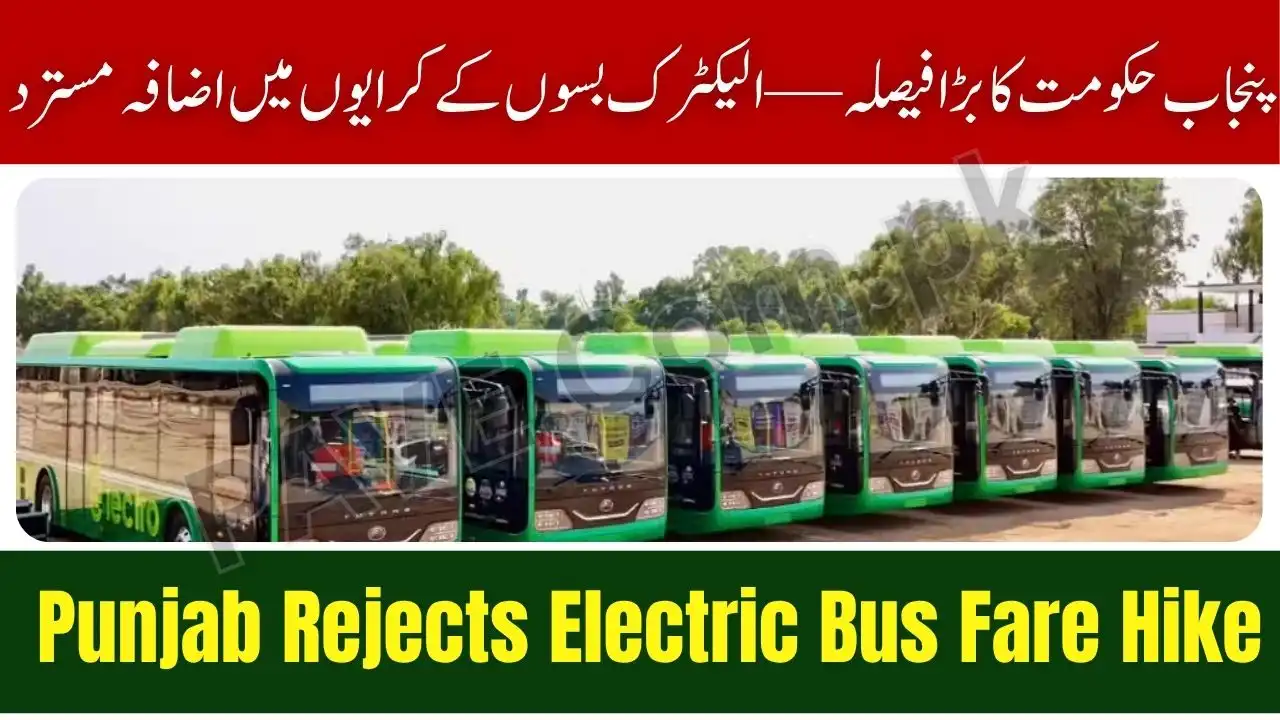
The Punjab Government, led by Chief Minister Maryam Nawaz Sharif, has officially announced its final In a crucial move aimed at protecting the public from rising costs, the Punjab Government has officially announced its Final Decision on Increasing Electric Bus Ticket Prices across the province. The decision came after the 30th cabinet meeting held under the leadership of Chief Minister Maryam Nawaz Sharif in Lahore.
The cabinet rejected the proposal to raise fares for electric buses operating in Lahore, Multan, and Rawalpindi, providing relief to thousands of daily commuters. This announcement ensures that passengers can continue to benefit from affordable, eco-friendly, and modern transport services without any increase in ticket prices.
Background of the Proposal
The Transport Department had recently submitted a summary proposing an increase in electric bus ticket prices, citing reasons such as:
- Rising electricity and maintenance costs
- Higher demand for replacement batteries
- Increased service expansion expenses
However, the cabinet members reviewed the report and concluded that the fare hike would directly affect citizens, especially low-income workers, students, and daily travelers who depend on the electric bus service. The government decided that public convenience outweighs financial concerns, prioritizing people over profits.
Check Also: Breaking: Rawalpindi Electric Bus Service Launching in November 2025 – 102 Buses Approved
Maryam Nawaz’s Leadership and Stance
Chief Minister Maryam Nawaz Sharif has been clear in her policy direction — every government initiative must focus on public comfort, affordability, and environmental protection.
During the meeting, she emphasized:
“Electric buses were launched to make public transport cheaper, safer, and greener. Any proposal that burdens the people goes against our purpose.”
She added that the government’s vision is to make Punjab a model of clean and inclusive mobility, where every citizen can travel conveniently without worrying about rising costs. Her firm rejection of the fare hike reinforced her image as a people-first leader who listens to public concerns.
Why the Decision Matters
This decision carries significant importance for several reasons:
- Public Relief Amid Inflation – The economy has already put pressure on the working class. Keeping transport affordable protects their monthly budgets.
- Encouragement for Green Mobility – By maintaining low fares, the government continues to promote the use of eco-friendly electric buses instead of fossil fuel vehicles.
- Boost to Ridership – Stable fares attract more commuters, improving the overall efficiency and sustainability of the bus system.
- Political Commitment – The move reflects the government’s dedication to pro-public policies and environmental responsibility.
With this decision, the Punjab government shows that affordability and sustainability can go hand in hand.
Electric Bus Operations Across Punjab
Currently, the electric bus fleet operates in three major cities of Punjab under the Green Mobility Project. Each city caters to tens of thousands of passengers daily, helping reduce congestion and pollution.
| City | Main Routes Covered | Average Daily Passengers | Fare Status (2025) |
|---|---|---|---|
| Lahore | Metro feeder routes, Canal Road, Thokar corridor | 45,000+ | Unchanged |
| Multan | Inner-city routes and Bahauddin Zakariya corridor | 25,000+ | Unchanged |
| Rawalpindi | Twin City Expressway & Saddar–Islamabad route | 30,000+ | Unchanged |
According to the Transport Department, despite the operational costs, ridership and energy savings have balanced the system’s finances. The government subsidy and efficient planning make it possible to keep fares stable.
Current Fare Structure (Unchanged After Decision)
The Punjab Government confirmed that no change has been made to the current ticket rates. The average fares remain as follows:
| Category | Distance Range (km) | Ticket Price (PKR) | Remarks |
|---|---|---|---|
| Short Route | 0 – 10 km | Rs. 20 | No change |
| Medium Route | 10 – 20 km | Rs. 30 | No change |
| Long Route | 20 – 35 km | Rs. 40 | No change |
| Student Card Users | All routes | Rs. 15 | Discount continues |
This table reflects the public-friendly transport pricing model that will remain in force after the cabinet’s latest decision.
Public Reaction to the Decision
The announcement has received a positive response from the public. Many citizens expressed gratitude to CM Maryam Nawaz on social media platforms, praising her for prioritizing common people’s needs.
Daily commuters in Lahore and Multan said that freezing ticket prices was a “great relief” amid rising food and fuel costs. Students and female passengers, in particular, welcomed the move as it allows them to travel comfortably without financial strain.
Transport experts also supported the decision, noting that keeping fares constant encourages the use of public transport, which ultimately reduces traffic congestion and carbon emissions.
Statements from the Transport Department
A senior official from the Punjab Transport Department briefed the media after the meeting, confirming that operational adjustments will be made to manage costs internally rather than passing the burden to passengers.
“The Chief Minister has directed us to ensure maximum efficiency, regular maintenance, and better energy utilization. No fare increase will be implemented this year,” said the official.
He also revealed that the department is planning to introduce more electric buses by mid-2026, expanding routes to Faisalabad, Gujranwala, and Sialkot. The aim is to build a province-wide electric mobility network by 2030.
Green Transport Vision 2025
The decision is part of Punjab’s broader Green Transport Vision 2025, which focuses on:
- Reducing carbon emissions through electric vehicles
- Promoting renewable energy in public transport
- Enhancing urban air quality
- Building smart mobility infrastructure
The electric bus project, introduced under this vision, has already replaced a significant number of diesel-based buses. Officials estimate that Punjab’s electric fleet has saved over 30% in fuel costs and reduced annual emissions by more than 25,000 tons since its launch.
Challenges Behind the Scenes
While the public will not face higher fares, the government does face certain challenges in maintaining the project’s sustainability:
- Battery replacement costs remain high due to global lithium prices.
- Charging infrastructure requires expansion to handle increased bus numbers.
- Maintenance cycles are shorter for electric buses compared to diesel fleets.
However, the Punjab government has allocated special maintenance grants and signed partnerships with private firms for technical support. These measures will help sustain the project without affecting ticket prices.
Economic and Environmental Impact
The economic impact of keeping fares stable is twofold. First, it directly supports household savings for working families. Second, it indirectly strengthens small businesses, as affordable transport helps workers and students commute efficiently.
From an environmental perspective, maintaining low fares boosts ridership, leading to fewer private vehicles on roads, less traffic, and lower pollution levels.
The government’s data shows that electric buses have:
- Reduced city fuel consumption by up to 40%
- Lowered maintenance costs per kilometer
- Enhanced passenger satisfaction ratings
These outcomes make Punjab’s electric bus project one of the most successful clean-mobility programs in South Asia.
Future Plans and Expansion
Following this decision, the Punjab Government plans to expand the electric bus fleet across additional districts.
Upcoming phases will include:
- Faisalabad Electric Bus Launch (2026)
- Gujranwala Urban EV Route (2026)
- Sialkot-Narowal Corridor Service (2027)
The Transport Department is also developing smart ticketing systems, allowing passengers to pay via mobile apps and digital Kisan Cards. This modernization is expected to make Punjab’s public transport one of the most technologically advanced in Pakistan.
Conclusion – Final Decision on Increasing Electric Bus Ticket Price
The Punjab Government’s final decision to reject the electric bus ticket price increase has reaffirmed its commitment to public welfare and sustainable progress. By choosing not to burden commuters, the administration has struck the right balance between financial management and social responsibility.
Chief Minister Maryam Nawaz Sharif’s leadership continues to reflect a clear vision: a modern, green, and people-friendly Punjab. With this move, the province sets an example for other regions to follow — proving that clean energy, affordability, and compassion can go together in public governance.
Punjab’s electric buses will continue to move thousands daily — quietly, cleanly, and now, at the same affordable price.
Check Also: Latest Update: 15 New Electric Buses Start Service on Karachi’s Gulshan-i-Maymar to Tower Route
FAQs – Punjab Electric Bus Ticket Price Decision 2025:
Q1. Did Punjab increase the electric bus ticket prices in 2025?
No. The Punjab Government rejected the proposal to raise electric bus fares in Lahore, Multan, and Rawalpindi.
Q2. Why did CM Maryam Nawaz reject the fare hike?
She emphasized protecting citizens from inflation and maintaining affordability in public transport.
Q3. Which cities operate electric buses under Punjab’s transport program?
Currently, Lahore, Multan, and Rawalpindi have operational electric bus networks.
Q4. What other decisions were made during the cabinet meeting?
Recruitment of School Teacher Interns, launch of sugarcane crushing season, and approval of new farm subsidies.