Punjab Bans Petrol Bikes – Government Announces Major Shift Toward Electric Vehicles
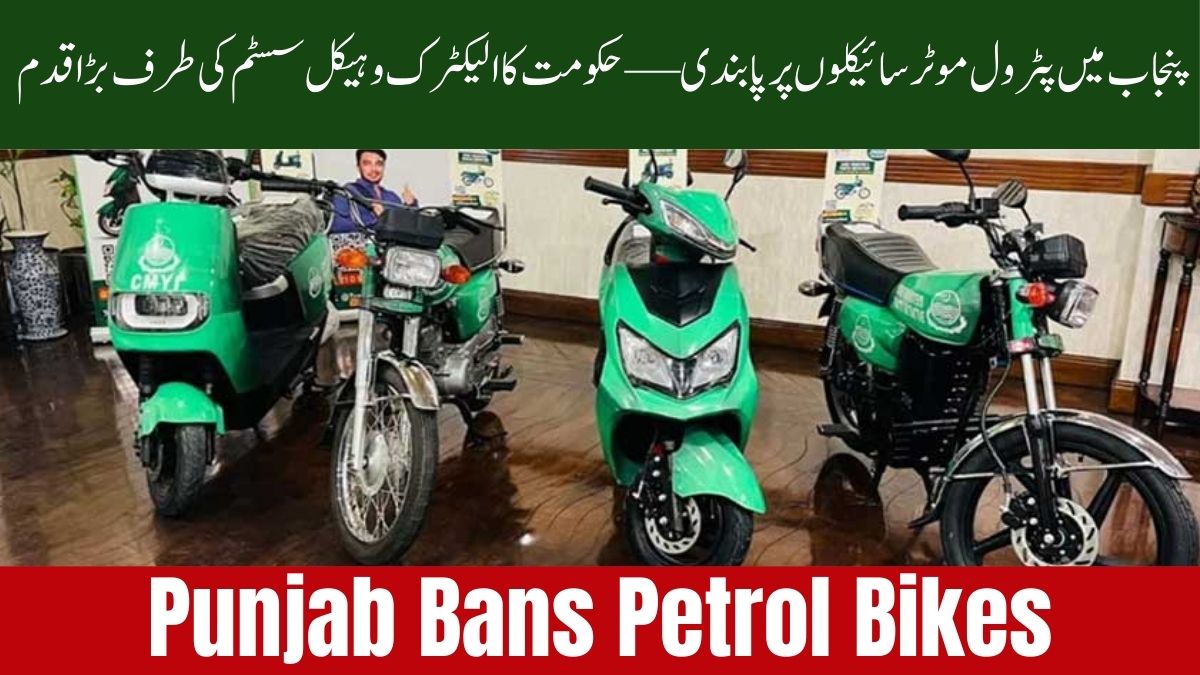
Punjab has officially taken one of the biggest policy decisions in Pakistan’s environmental history. In an unprecedented move, the Punjab Bans Petrol Bikes and rickshaws, launching a firm transition toward electric vehicles (EVs). This historic step, announced in Lahore during a special anti-smog cabinet meeting chaired by Chief Minister Maryam Nawaz Sharif, is expected to change the future of urban mobility, environmental safety, and public health across the province.
The decision comes at a time when cities like Lahore, Gujranwala, and Faisalabad are repeatedly ranked among the most polluted cities in the world. Transport emissions—especially from two- and three-wheelers—are a major contributor to this crisis. By shifting away from petrol bikes, the provincial government aims to create a cleaner, greener, and significantly healthier environment for millions of citizens. The policy has been welcomed by environmental experts, EV manufacturers, and climate advocates across Pakistan.
Why Punjab Has Banned Petrol Motorbikes
For years, experts have warned that petrol bikes are one of the largest sources of harmful emissions. With nearly 80% of Punjab’s road traffic made up of motorbikes, their contribution to air pollution and smog is extremely high. Petrol bikes emit carbon monoxide, nitrogen oxides, hydrocarbons, and ultra-fine particulate matter, all of which directly impact human health and visibility on roads.
The Punjab government has now decided to stop this pollution at its source. The new policy mandates a structured, phased ban on the production of petrol-powered motorbikes and rickshaws. Although the ban will not immediately stop existing vehicles on the road, it will prevent new petrol models from entering the market, shifting manufacturers toward electric alternatives.
This bold move shows the government’s long-term vision: a Punjab where the streets are populated with zero-emission electric bikes, drastically reducing smog and improving air quality by the end of the decade.

Only Electric and Hybrid Vehicles Allowed for Government Use
Under the new rules, all government departments in Punjab will now shift to electric or hybrid vehicles. Petrol cars, bikes, and rickshaws will be gradually phased out from official use.
This includes:
- Government motorbikes
- Official rickshaws used for municipal duties
- Departmental transport fleets
- Field officers’ motorbikes
- Vehicles used by local bodies and authorities
This shift will not only reduce fuel consumption and air pollution but also lower maintenance costs. Electric motorbikes require far less servicing and offer long-term savings for government departments.

Car Washing at Home Now Banned Across Punjab
As part of the same policy package, Punjab has also banned car washing at home, a practice that wastes thousands of liters of water every day. Instead, vehicle owners must use licensed washing stations equipped with recycling systems to conserve water.
This decision supports two major goals:
- Preventing water wastage
- Stopping detergent-filled wastewater from damaging drains and soil
The government aims to protect Punjab’s groundwater levels, which have been steadily declining.

Strict Penalties for Burning Plastic and Hazardous Waste
The cabinet has approved zero-tolerance enforcement against the burning of plastic, rubber, and other harmful materials. Anyone caught violating these rules—whether individuals, factories, or workshops—will face strict penalties, fines, and legal action.
To support this, Punjab will strengthen field inspections and on-ground environmental monitoring. Authorities will also use drones to track illegal waste burning in rural and industrial areas.

Smoke Testing of Vehicles Through Public–Private Workshops
The government has partnered with private workshops to conduct smoke-emission tests for all vehicles. These tests will identify high-emission petrol bikes, old rickshaws, and vehicles that must undergo repairs or be removed from the road.
This initiative will create a cleaner transport ecosystem and ensure compliance with the new environmental standards.
Punjab Launches Its First Air Quality Monitoring Network
One of the biggest achievements under the new anti-smog plan is the launch of Punjab’s Air Quality Monitoring Network, which includes:
- 41 real-time AQI sensors installed in 18 districts
- A modern AQI Forecasting System that predicts smog levels
- 100 additional sensors planned for installation next year
- A new public air quality dashboard
- Pakistan’s first eco-chatbot for weather and AQI updates
These digital tools will help citizens track pollution levels in real time while giving the government early warnings to impose smog-related restrictions before conditions worsen.
Drone Surveillance and Smog Guns to Control Smog
To enforce the anti-smog strategy, Punjab will deploy several modern technologies:
1. Drone Surveillance of Crop Burning
Farmers who illegally burn crop residue will be monitored through aerial drones. Images and videos collected will be used for legal follow-ups.
2. Smog Guns in High-Traffic Zones
Smog guns will spray fine mist in polluted areas to settle dangerous particles temporarily.
3. Quick Response Centres for Smog Emergencies
The government has established rapid response teams to handle smog peaks, respond to public complaints, and take action against polluters.
4. 8,500 CCTV Cameras for Environmental Monitoring
These cameras will help identify smoke-emitting vehicles, garbage burning, and other environmental violations.
Impact of the Petrol Bike Ban on Citizens and Manufacturers
The shift will affect:
- Motorbike manufacturers
- Rickshaw makers
- Fuel consumption patterns
- Repair workshops
- Daily commuters
- Delivery riders and gig workers
However, the government plans to encourage EV manufacturing, offer incentives, and support local companies in producing affordable electric bikes. With operational costs as low as Rs. 1 per km, EV bikes can eventually become cheaper than petrol bikes.
This transition could also create new job opportunities in battery manufacturing, EV assembly lines, charging stations, and maintenance centres.
Conclusion – Punjab Bans Petrol Bikes
Punjab’s decision to ban petrol motorbike production is a landmark step toward a cleaner, healthier future. By pushing electric vehicles, strengthening environmental enforcement, installing real-time AQI systems, and introducing modern smog-control technologies, the government has set a new direction for Pakistan’s environmental policy.
This is more than a ban—it is the beginning of a green transformation. With the right implementation, Punjab could soon become the leading EV province in South Asia.