Punjab Bans Motorcycle Rickshaws to Curb Smog – Govt Shifts to Hybrid & EV Fleet
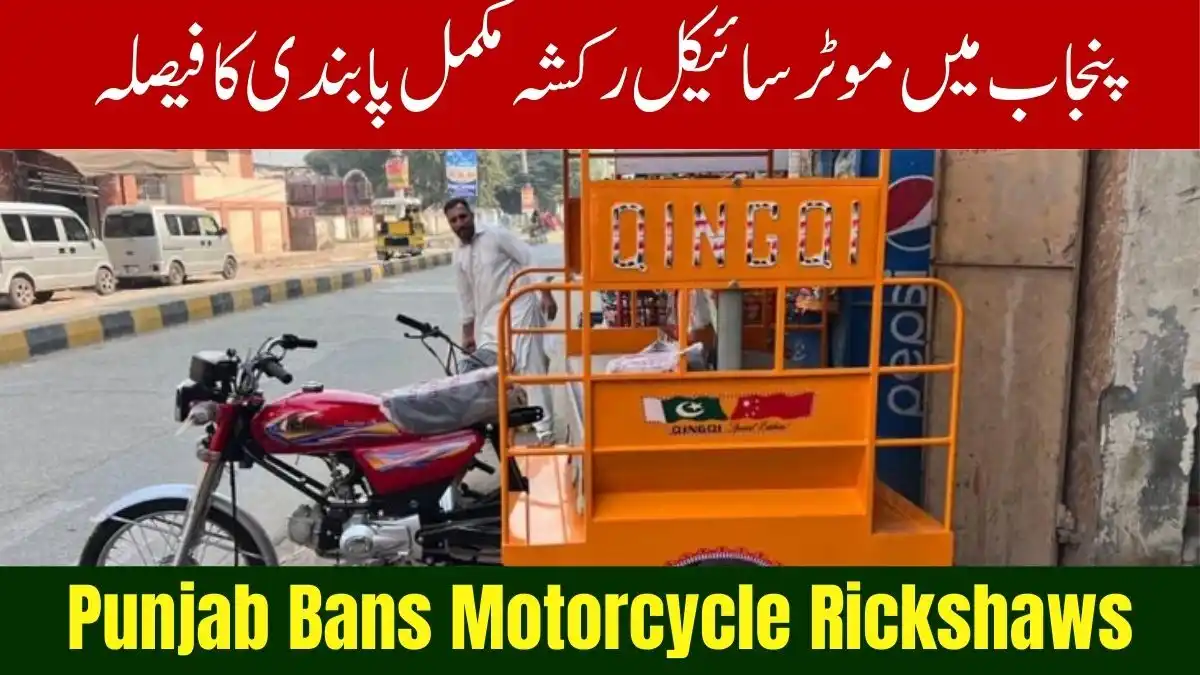
Punjab has announced one of its strongest anti-smog measures yet by imposing a complete Bans Motorcycle Rickshaws across the province. The decision was approved during a special meeting of the Cabinet Committee on Anti-Smog, chaired by Chief Minister Maryam Nawaz, as Punjab faces another winter of severe pollution and dangerously high AQI levels.
The meeting, held on 27th November, focused on accelerating environmental reforms to counter the province’s rising smog crisis. Many major cities in Punjab consistently remain above AQI 200 during the smog season, making it one of the worst-affected regions in South Asia. To combat this, the government has decided to transform its transportation policies with an immediate shift toward cleaner mobility.
Maryam Nawaz directed all government departments to purchase only electric or hybrid vehicles moving forward. This includes electric motorbikes and official vehicles used by provincial departments. No new petrol-powered vehicles will be purchased by the government unless they fall under the hybrid-electric category. This marks a major shift in the province’s fleet management and supports Pakistan’s broader goal of adopting environmentally friendly mobility solutions.
Alongside these measures, the highlight of the meeting was the complete ban on manufacturing motorcycle rickshaws, commonly known as Qingqi. These low-cost three-wheelers rely on small motorcycle engines and are widely used for short-distance transport in urban and semi-urban areas. Authorities argued that motorcycle rickshaws contribute significantly to emissions, noise pollution, and traffic congestion due to their outdated engine technology, weak maintenance, and high operational mileage.
However, the decision has also sparked discussions among transport experts and the public. Many question why the government has chosen to ban motorcycle rickshaws specifically when other vehicles—such as motorcycles, cars, buses, and trucks—collectively contribute far more to emissions. Punjab has millions of 70cc and 125cc motorcycles on the roads, yet these vehicles have not been prohibited despite using similar or older engine technologies.
Critics argue that motorcycle rickshaws are a primary source of income for thousands of low-income drivers across Punjab. They fear that the sudden ban on production may affect livelihoods unless proper alternatives and financial support are provided. Suggestions include offering subsidized electric rickshaws, low-interest financing, and incentives under the PAVE EV program to help drivers transition to cleaner options.
Government officials, however, emphasize that the ban targets long-term emission reduction, noting that motorcycle rickshaws often have poorly maintained engines, rely on aftermarket modifications, and operate for long hours daily. This results in disproportionately high emissions of particulate matter, hydrocarbons, and carbon monoxide. The government believes that targeting this sector first will lead to immediate improvements in air quality, especially in densely populated cities.
Punjab Bans Motorcycle Rickshaws Smog EV Shifts:
Additionally, Punjab has announced several other environmental actions, including a restriction on purchasing traditional internal combustion engine (ICE) vehicles for government departments, expansion of the electric vehicle infrastructure, and stricter monitoring of factories and smoke-emitting vehicles. These steps align with the province’s broader environmental vision and its commitment to reducing pollution through sustainable transport solutions.
The upcoming months will reveal whether the ban and associated reforms will deliver the expected environmental benefits. Still, the announcement marks a significant moment in Punjab’s efforts to modernize transportation and prioritize public health by shifting toward hybrid and electric mobility.