Proposal to Add 26th Column in Nikah Nama – Legal Experts Suggest Dowry Disclosure to End Court Disputes
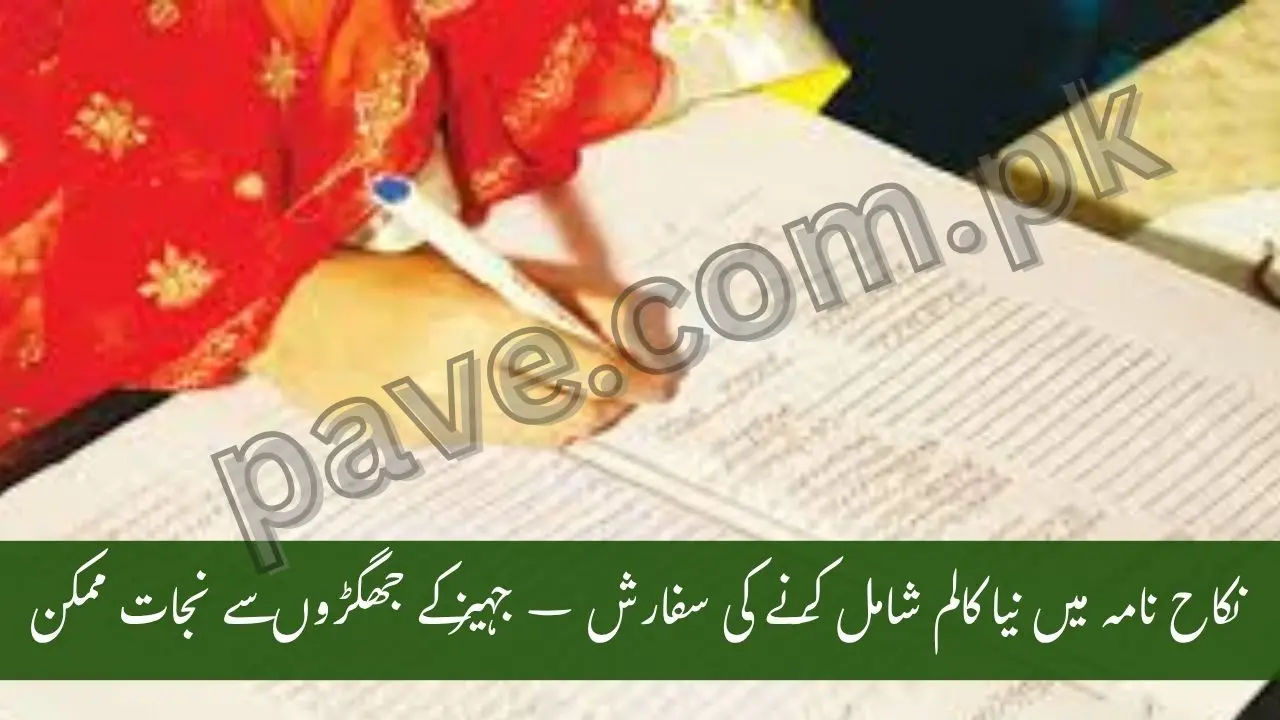
Proposal to Add 26th Column in Nikah Nama has sparked widespread debate across Pakistan as legal experts and civil society members call for greater transparency in marriage documentation. The suggested amendment would require couples to declare whether any dowry was given at the time of marriage, and if so, its approximate value and details.
This proposal, though seemingly simple, has the potential to revolutionize Pakistan’s family law system, ensuring fairness, reducing fake claims, and minimizing years of courtroom delays. Experts believe that documenting dowry details at the time of marriage could prevent countless disputes that arise after divorce or khula proceedings.
⚖️ Background: The Structure of the Current Nikah Nama
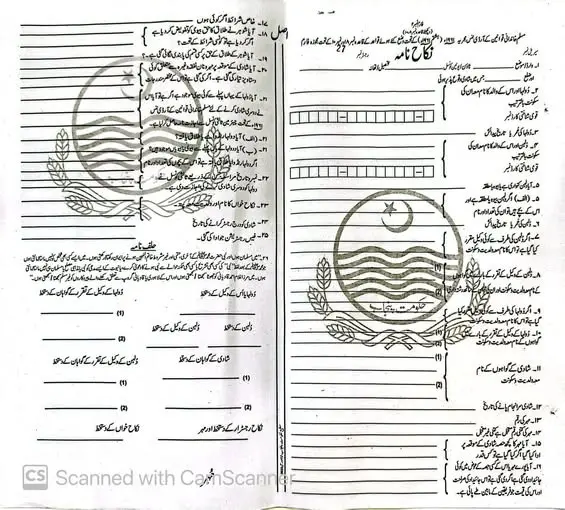
The Nikah Nama currently used in Pakistan — particularly in Punjab — consists of 25 columns that document the essential details of a marriage contract. These include the names and addresses of the bride and groom, the haq mehr (dower), the witnesses, and the signatures of all parties involved.
However, there is no section that records dowry details, despite dowry being one of the most controversial and litigation-prone aspects of marital life in Pakistan.
In many cases of divorce or khula, the issue of dowry return (jahaz) becomes a long, painful legal battle, with both sides claiming ownership over items or disputing the value of gifts. Since there is no formal record, judges rely on verbal testimonies, receipts, and witness statements — all of which take years to verify.
Check Also: Google Offers Free 1 Year Gemini AI Pro Plan 2025 for Pakistani Students

📜 The Proposed 26th Column: What It Will Include
Under the new proposal, an additional 26th column would be inserted into the Nikah Nama, asking:
“Was any dowry (jahaz) provided by the bride’s family at the time of marriage? If yes, what was the total estimated value or list of items provided?”
This declaration would be signed by both the bride and groom — making it a legally recognized statement that could later be used as documentary evidence in family courts.
In essence, the proposal seeks to transform verbal customs into written law, creating accountability and protecting the rights of both sides.
🧑⚖️ Why Legal Experts Are Supporting This Proposal
Legal analysts and family court lawyers have welcomed the idea, calling it “a much-needed reform for family justice.”
Below are some of the reasons why experts strongly support this new column:
1. Transparency at the Time of Marriage
Both families will be required to openly declare if dowry was exchanged, eliminating ambiguity and false claims in the future.
2. Reduction in False Allegations
In many divorce or khula cases, one side claims dowry that never existed. Having a written declaration can prevent misuse of the law.
3. Swift Court Decisions
With documentary proof already part of the Nikah Nama, judges won’t need to rely on years of witness testimonies. Family disputes could be resolved within one or two hearings.
4. Balanced Legal Protection
Both the bride’s and groom’s families benefit — if dowry was not given, the bride’s family cannot falsely claim it later; if dowry was given, the groom’s side must legally return it in case of separation.
Check Also: Breaking News: CM Punjab Launches Green Credit Program 2025 Plant 10 Trees and Get Rs 20000 Reward

🏛️ Legal Implications and Framework
For this reform to be implemented, the Punjab Local Government Department, along with NADRA and the Council of Islamic Ideology (CII), would have to amend the official Nikah Nama format.
Legal experts suggest the following procedural steps:
- Approval from the provincial cabinet.
- Consultation with religious scholars to ensure compliance with Islamic principles.
- Notification and publication of the revised Nikah Nama format for all registrars.
- Mandatory use of the new form for every registered marriage across the province.
According to Advocate Usman Nazir, a family law specialist,
“This is a necessary modernization of an outdated system. The law should evolve to prevent disputes, not just resolve them. Adding a dowry column will ensure fairness from the very beginning.”

🗣️ Reaction from Civil Society and Women’s Rights Activists
The proposal has received strong support from civil society organizations, women’s rights groups, and social media activists.
🌸 Women’s Rights Advocates’ Perspective
Women’s organizations believe this change would be a powerful step toward gender equality.
“Dowry often becomes a weapon against women after marriage. Documenting it will help protect their financial rights,” says Dr. Ayesha Saeed, director of the NGO Women First Pakistan.
📢 Social Activists’ View
Some activists see this proposal as a social awareness tool that will gradually discourage the practice of extravagant dowries. If people know that the amount and value will be officially recorded, they may avoid excessive demands.
Check Also: Sindh Govt Warns Against Fake Pink Scooty Scheme Ads – SMTA Issues Official Clarification 2025
🛑 Potential Challenges in Implementation
While the idea is widely appreciated, experts point out that the practical application will not be without challenges:
1. Cultural Sensitivity
Dowry discussions are considered taboo in many families. Asking them to declare dowry value officially may initially face resistance.
2. Defining the Value of Dowry
Since dowry consists of multiple items — jewelry, furniture, electronics — calculating its total “value” could lead to disputes.
3. Legal Consistency Across Provinces
Marriage documentation is a provincial subject, but Pakistan needs uniformity. If Punjab introduces the new format, other provinces should follow to maintain consistency nationwide.
4. Verification and Record Keeping
Proper mechanisms must be developed to ensure that the data is genuine and accessible for legal verification when needed.
📱 Public Response on Social Media
Following the news, hashtags like #NikahNamaReform, #DowryDisclosure, and #FamilyLawUpdate have trended on Pakistani social media platforms.
Users have largely welcomed the move, calling it a “smart and sensible legal reform.”
However, some critics argue that this could increase tension between families during the wedding process, or be used to pressure brides into declaring lower dowry values.
Despite these concerns, a majority of users believe that legal clarity outweighs social discomfort.
🕊️ Broader Social Impact of the Proposal
Beyond its legal implications, this reform has the potential to reshape societal norms around marriage in Pakistan.
- Reduces Dowry Pressure: When dowry becomes an officially recorded legal element, it may discourage the culture of excessive expectations from the bride’s family.
- Protects Women’s Property Rights: Documenting dowry ensures that women can reclaim their rightful belongings in the event of divorce or domestic abuse.
- Encourages Honesty in Marriages: Both sides begin their marital life with transparency and trust, fostering a sense of equality.
📈 Economic and Legal Benefits
According to a 2024 report by the Punjab Law Reform Commission, nearly 30% of family court cases are related to dowry disputes. Most of these cases drag on for five years or more.
By introducing a written dowry record, courts could save thousands of hours and millions in public resources. It’s not just a social reform — it’s a judicial efficiency measure.
Read Also: Breaking News: Punjab Govt Extends Honhaar Scholarship Deadline 2025 – Complete
🏁 Conclusion: Proposal to Add 26th Column in Nikah Nama
The proposed 26th column in the Nikah Nama may appear like a minor change, but its potential impact is immense. By making dowry disclosure a mandatory, legally binding part of the marriage contract, Pakistan could take a significant step toward ending decades of courtroom chaos and social injustice.
This reform represents not only a modernization of the law but also a cultural shift toward honesty, fairness, and mutual respect in marriages.
If approved and implemented, it could mark the beginning of a new chapter in Pakistan’s family justice system — one where truth is documented, rights are protected, and disputes are resolved swiftly.