Poorest Districts in Pakistan 2025 – New Report Shows 17 Out of 20 Are in Balochistan
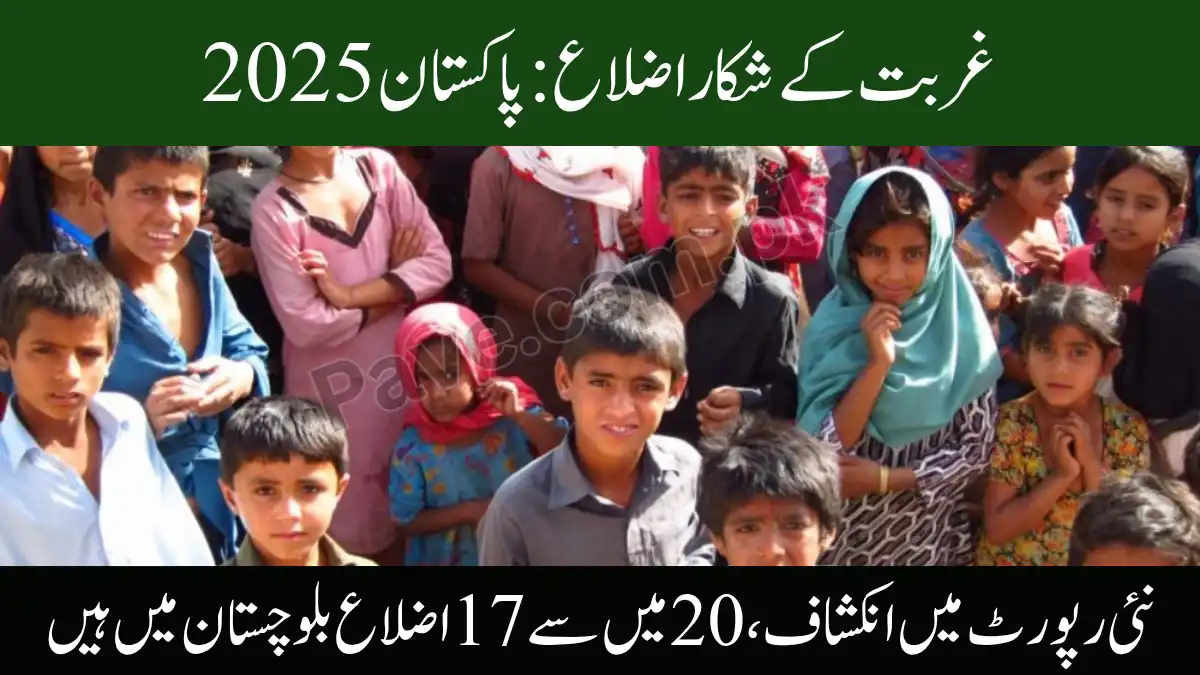
A new development assessment has revealed alarming results: the Poorest Districts in Pakistan 2025 are overwhelmingly concentrated in Balochistan, where 17 out of the 20 most deprived regions are located. The report highlights severe shortages of clean water, collapsing schools, weak healthcare systems, and limited job opportunities — painting a deeply worrying picture for millions of residents.
This new analysis shows that Pakistan’s deprivation is not evenly distributed. Instead, the Poorest Districts in Pakistan 2025 are clustered in areas long affected by underinvestment, poor infrastructure, and weak service delivery. Experts warn that unless urgent reforms are introduced, the gap between prosperous and neglected districts will continue to widen.
Balochistan Leads the List of Poorest Districts
According to the latest findings, 17 out of the Poorest Districts in Pakistan 2025 are located in Balochistan. These include Kohlu, Dera Bugti, Washuk, Khuzdar, Zhob, Mashkhel, Qila Saifullah, Kalat, and several other remote districts that consistently show the lowest performance in health, education, housing, and employment.
Punjab, meanwhile, dominates the list of prosperous districts, with 13 out of 20 highly developed regions, highlighting a significant provincial imbalance in Pakistan’s overall development.

Millions Still Without Basic Needs
More than 10 million people living in the poorest districts face severe deprivation. The report highlights the following issues:
- Shortages of sanitation facilities
- Unsafe or unavailable drinking water
- Poor schooling environments
- Almost no healthcare access
- High unemployment and unpaid household labour
Employment opportunities remain extremely limited, especially in rural parts of Balochistan and Khyber Pakhtunkhwa.
Also Check: 900km Tourist Rail Corridor to Open in 2026 – New Line to Connect 11 Major Cities in Top Holiday Hotspot

Housing Conditions Reveal Deep Poverty
Housing indicators show widespread structural poverty. Across these districts:
- 65% of households live in mud homes or temporary shelters
- Nearly half have no toilets
- 40% cannot access safe water
In Jhal Magsi, a staggering 97% of families live in mud or semi-built homes. In many districts, up to 75% of homes consist of just one room.
These factors make the Poorest Districts in Pakistan 2025 some of the most marginalized areas in the country.

Healthcare: Long Distances and Limited Access
Remote communities face serious challenges in accessing even the most basic healthcare. Because of poor roads and limited transport, residents often travel 30–50 kilometres for medical treatment. Emergency services rarely reach on time, and maternal health risks remain extremely high.
Weak mobile networks also prevent timely communication during emergencies.

Education Gaps Continue to Grow
Karachi has the highest number of functional schools, whereas Balochistan remains at the bottom in education indicators. Many schools lack boundary walls, electricity, female teachers, and adequate classrooms. Girls in rural districts face the longest travel distances to reach high schools, resulting in low enrollment and high dropout rates.
Also Check: ISPR Winter Internship Program 2026 Announced – Official 6-Week Training Begins in January
Population Growth Increasing Pressure
The report also warns that rapid population growth is making the situation even more difficult. Large families strain limited resources, restrict access to education and healthcare, and push entire communities deeper into poverty.
Conclusion
The findings show that the challenges facing the Poorest Districts in Pakistan 2025 are deep-rooted and long-standing. With 17 of these districts located in Balochistan, Pakistan urgently needs targeted investment in education, healthcare, water supply, housing, employment programs, and infrastructure. Without long-term reforms, deprivation will continue to trap millions of families and widen inequalities across the country.