Pink Bus Karachi Expands Network – Abdullah Chowk to Numaish Route Announced
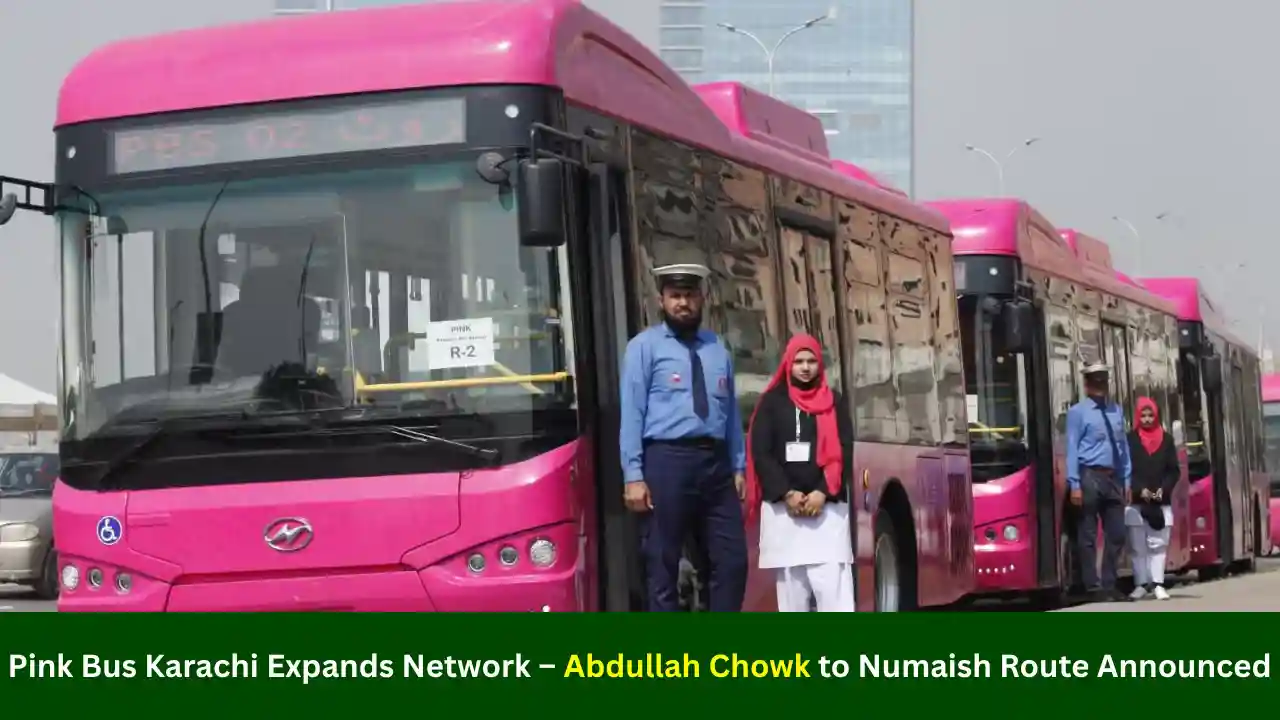
The Sindh government has announced a new route for Karachi’s women-only Pink Bus Service, which will officially begin operations on November 17, 2025.
This new addition aims to improve safe and reliable transportation for women traveling through Karachi’s busiest areas. The new route will connect Abdullah Chowk to Numaish, providing better accessibility to key commercial and educational hubs.
The announcement was made by Sindh Transport Minister Sharjeel Inam Memon, who said the decision reflects the government’s commitment to making public transport inclusive, secure, and affordable for women.
Route and Timings of the New Pink Bus Service
The new Pink Bus Route will cover major parts of central Karachi, offering dedicated female-only rides at specific intervals throughout the day.
According to the transport department, the service will operate at three fixed time slots daily:
| Time Slot | Operational Hours | Purpose |
|---|---|---|
| Morning Service | 8:00 AM – 9:00 AM | For working women and students |
| Midday Service | 1:00 PM – 2:00 PM | For office breaks and educational commutes |
| Evening Service | 5:00 PM – 7:00 PM | For return trips and shopping hours |
Officials noted that this schedule was designed after surveying passenger demand, ensuring maximum convenience during peak travel times.
Key Features of the Pink Bus
Transport Minister Sharjeel Inam Memon said the Pink Bus Service is specifically designed to provide comfort, safety, and dignity to women commuters who face challenges in mixed public transport systems.
Each Pink Bus is equipped with the following:
| Feature | Details |
|---|---|
| Security Cameras | Installed for real-time monitoring |
| GPS Tracking System | To ensure route transparency |
| Female Conductors and Drivers | Priority given to women employment |
| Comfortable Seating | Reserved spaces for working women and students |
| Emergency Button | Direct alert to central command room in case of harassment |
| Air-conditioned buses | For comfortable rides during hot weather |
The minister added that these steps aim to restore women’s confidence in public transport and enable safer access to schools, universities, hospitals, and workplaces.
Women’s Mobility and Empowerment
Memon emphasized that the Pink Bus initiative is not just a transport project but part of a broader women empowerment strategy led by the Sindh government.
“The Pink Bus is our commitment to women’s dignity and independence,” he said. “Every woman deserves safe, reliable, and affordable transport options, and we’re making that a reality in Karachi.”
The project also aligns with the Sindh Women’s Development Policy, which focuses on creating equal opportunities for women in education, health, employment, and mobility.
The government believes improved mobility can directly enhance female workforce participation across the province.
Growing Network Across Karachi
With the addition of this new route, Karachi’s Pink Bus Service continues to expand its reach.
The existing routes include:
- Model Colony to Tower
- North Karachi to Karachi Cantt
- Powerhouse Chowrangi to I.I. Chundrigar Road
The new Abdullah Chowk–Numaish route adds greater connectivity to central areas, reducing travel time and congestion for women who previously relied on overcrowded minibuses or expensive ride-hailing options.
Officials have also confirmed that more Pink Bus routes will launch in the next few months, connecting residential neighborhoods with educational institutions and commercial districts.
Public Response and Ridership Growth
Since its launch in 2023, the Pink Bus Service has been highly praised by Karachi residents.
According to Sindh Mass Transit Authority data, daily ridership exceeded 10,000 passengers across all active routes in 2025 — a significant achievement for a gender-specific urban transport model in Pakistan.
Working women and students have shared positive feedback on social media, calling the Pink Bus a “game-changer” for urban mobility and “a safe space in a chaotic city.”
Safety and Monitoring System
Each Pink Bus is connected to the central command center of the Sindh Safe Cities Project, ensuring 24/7 monitoring through GPS and CCTV systems.
Any emergency alert raised by passengers or drivers immediately notifies nearby police and transport monitoring teams.
The government has also trained all drivers and conductors in gender sensitivity and emergency response, creating a secure travel environment that prioritizes passenger well-being.
Government’s Future Plans
The Sindh government plans to expand the Pink Bus Service to other districts, including Hyderabad, Sukkur, and Larkana, by 2026.
Transport Minister Memon said feasibility studies are already underway for:
- Hyderabad Pink Bus Pilot Route (Qasimabad to Latifabad)
- Sukkur Women Bus Route (Clock Tower to Rohri)
- Larkana Urban Pink Line (Airport Road to Jinnah Bagh)
He added that the success of Karachi’s Pink Bus has inspired similar projects in Punjab and Balochistan.
Read Also: Breaking News: Pakistan Navy Announces Short Service Commission 2026-A & M Cadet Scheme 11th Batch
Part of a Larger Transport Modernization Plan
The Pink Bus Service operates under the Sindh Transport and Mass Transit Department, which also manages:
- People’s Bus Service (PBS)
- Electric Bus Project (EV Buses)
- Karachi Circular Railway (KCR) Revival Plan
- Green Line and Orange Line BRT Extensions
Officials believe that integrating these systems will create a seamless public transport network, reducing dependence on private vehicles and lowering urban pollution levels.
Women’s Voices: What Passengers Say
Zahra Ali, a schoolteacher who travels from North Karachi, said:
“Before the Pink Bus, commuting was stressful. Now I feel safe, comfortable, and respected.”
Marium Khan, a university student, added:
“The timings are perfect for classes. It’s affordable and saves me time.”
Such testimonials underscore the transformative impact of the service, particularly for women who travel long distances for work or education.
Challenges Ahead
While the service has been successful, certain challenges remain:
- Limited frequency during non-peak hours.
- High demand on popular routes leading to overcrowding.
- Maintenance issues due to limited workshop capacity.
The government is addressing these challenges by adding more buses and ensuring maintenance contracts with private operators to keep the fleet in top condition.
Environmental Benefits
Beyond its social impact, the Pink Bus Service contributes to environmental sustainability.
The buses use modern low-emission engines, and upcoming expansions may include electric vehicles (EVs) under the Punjab-Sindh Clean Transport Partnership supported by the Asian Development Bank (ADB).
This aligns with Pakistan’s National Electric Vehicle Policy (NEVP), which targets 30% EV penetration by 2030.
Read Also: Latest Update: Govt Announces Cabinet Secretariat SIFC Jobs 2025 Apply Online Across Pakistan
Conclusion About Pink Bus Service Karachi:
The launch of another Pink Bus Service route in Karachi reaffirms the Sindh government’s focus on women’s safety, empowerment, and urban mobility reform.
By combining modern technology, gender-sensitive operations, and public convenience, the initiative sets a benchmark for inclusive transport development in Pakistan.
As new routes roll out and demand continues to grow, the Pink Bus stands as a symbol of progress and equality — one ride at a time.
FAQs About Pink Bus
1. When will the new Pink Bus route start in Karachi?
The new route between Abdullah Chowk and Numaish will start operations on November 17, 2025.
2. Who can travel on the Pink Bus Service?
Only women passengers are allowed to use the service, along with children under 10.
3. What are the timings for the Pink Bus Service?
It operates three times daily — 8–9 AM, 1–2 PM, and 5–7 PM.
4. Is the Pink Bus free to use?
No, but fares are subsidized and affordable, usually ranging between Rs. 30–50 depending on distance.
5. Are there female staff on board?
Yes. Conductors and some drivers are women, and all staff are trained in safety protocols.