Local Manufacturing & PAVE: How Pakistan Plans to Build Its Own Electric Vehicles
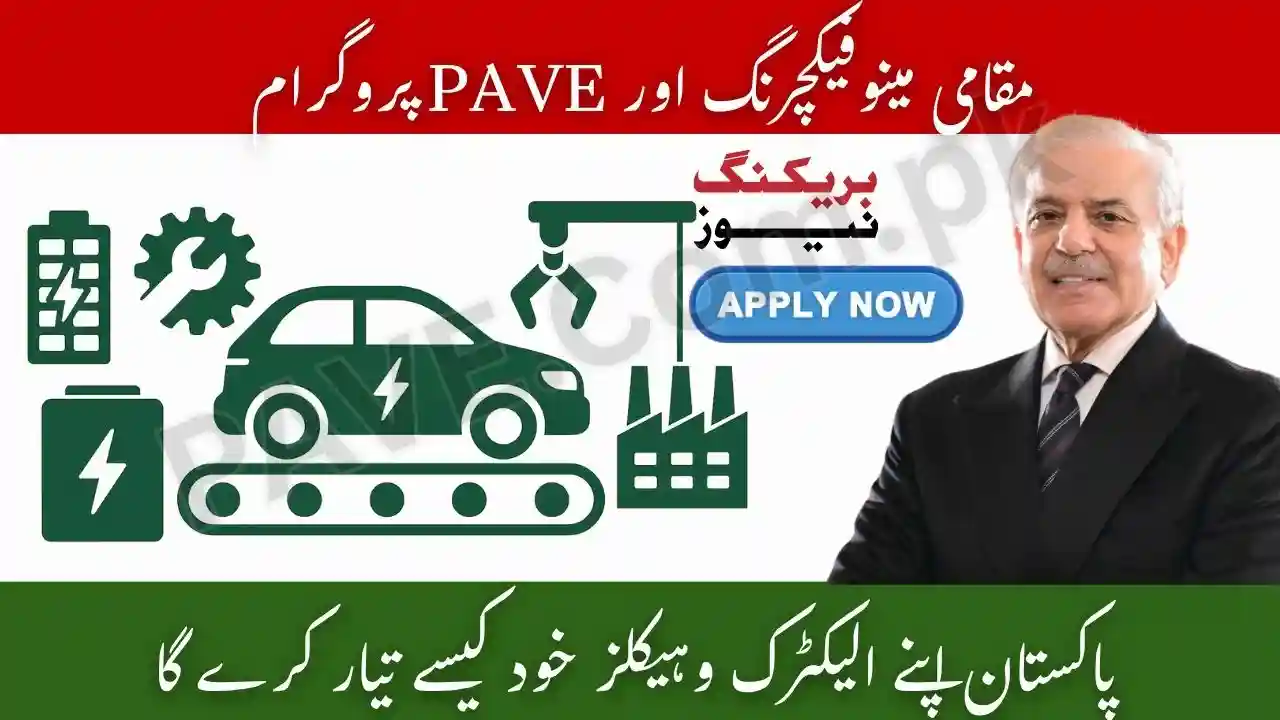
EV charging stations is entering a new phase with the launch of the PAVE (Punjab Affordable Vehicle for Everyone) initiative. While earlier EV policies focused mainly on imports and tax reductions, the new goal is to develop a strong EV manufacturing ecosystem inside Pakistan. Local assembly, vendor development, battery-pack production, and EV component manufacturing are becoming top priorities for the government as Pakistan aims to reduce imports, save foreign exchange, and make electric vehicles affordable for the masses.
This article explains how local manufacturing under PAVE will reshape Pakistan’s EV future, the government’s roadmap for EV production, expected benefits for the economy, and upcoming opportunities for investors, students, and industry players.
Pakistan’s Shift Toward Local EV Production:
Pakistan’s automotive sector has traditionally depended on imported parts, CBU units, and foreign technology. As EV demand grows worldwide, relying on imports would make electric mobility expensive and unsustainable. Recognizing this, the government introduced the PAVE Program, which focuses not only on distributing electric bikes but also on encouraging localized manufacturing of EVs within Punjab and across Pakistan.
Through PAVE, new incentives, financing models, and industry partnerships are being introduced to develop:
- Local EV assembly plants
- Battery manufacturing units
- Lithium-cell recycling facilities
- Vendor clusters for motors, controllers, and chargers
- Technical training programs for EV engineers and technicians
This marks the beginning of Pakistan’s long-term EV industrial transformation.
Government’s Roadmap for EV Local Manufacturing in Pakistan:
1. Establishing EV Assembly Plants in Punjab
Under PAVE, the Punjab Government is collaborating with local and international companies to establish dedicated EV assembly lines. These facilities will produce:
- Electric motorcycles
- Electric scooters
- Electric bicycles
- Entry-level compact EVs in future phases
This reduces reliance on imported EVs and ensures continuous availability at affordable prices.
2. Vendor Development for EV Components
The government has planned localized production of essential EV parts such as:
- Hub motors
- Battery packs
- Throttle systems
- LED clusters
- Controllers
- Chargers
- Frames
- Wiring harnesses
Increasing local vendor capability strengthens the ecosystem and creates thousands of new jobs.
3. Incentives for EV Manufacturers
To attract investors and automotive companies, Pakistan is offering multiple incentives:
- Zero or low import duty on raw materials
- Tax exemptions for local EV parts
- Subsidized industrial land in Special Economic Zones
- Utility bill discounts for EV plants
- Fast-track approvals for EV startups
These benefits improve cost-efficiency and speed up production timelines.
4. Collaboration With Universities & Technical Colleges
To address the shortage of EV engineers, universities and TEVTA institutes are introducing:
- EV diploma programs
- Battery engineering certifications
- Motor repair training
- EV diagnostics courses
- Software and controller programming modules
This ensures a skilled EV workforce.
5. Expansion of Battery Production Facilities
Local companies are now shifting from lead-acid batteries to:
- Lithium-ion battery packs
- NMC/NCA cell assembly
- Battery recycling units
This enhances long-term EV sustainability.
Check Also: Breaking News: Punjab Launches eBiz Portal 2025 – One-Window System for Business Registration
How PAVE Will Make Locally Manufactured EVs Affordable:
The PAVE initiative is designed to cut overall EV ownership costs by reducing imports and enabling local production. Major affordability benefits include:
1. Lower EV Prices
Local manufacturing will significantly reduce:
- Import duty costs
- Shipping and freight charges
- CBU pricing impact
- Currency fluctuation risks
With more parts produced domestically, the price of electric bikes and compact EVs will fall over time.
2. Cheaper Spare Parts
Local vendors will manufacture critical components, ensuring:
- Easy availability
- Low maintenance cost
- Reduced downtime
- Affordable replacement parts
This makes EV ownership practical for students and low-income groups.
3. Government Subsidies Under PAVE
The government plans to subsidize:
- Down payments
- Installment plans
- Charging infrastructure
- Local assembly units
This makes EVs accessible even to the lower-middle class.
4. Economic Benefits for Pakistan
Local manufacturing supports:
- Import reduction
- Job creation
- Technology transfer
- Industrial expansion
- Skill development
- Stronger national economy
This long-term shift will modernize Pakistan’s mobility landscape.
Charging Infrastructure Development Under PAVE:
Local EV production is supported by a parallel expansion of charging networks across Punjab:
- Dedicated EV charging stations at bus terminals
- Solar-powered EV stations
- Home and workplace chargers
- University and hostel charging points
- Retail-chain charging hubs
This ensures convenient charging for consumers adopting locally-manufactured EVs.
Pakistan’s Vision to Become an EV Manufacturing Hub:
Pakistan aims to position itself as a regional EV manufacturing hub by 2030. Through localized production of bikes, scooters, batteries, and eventually small EV cars, Pakistan seeks to compete with markets like:
- India
- China
- Indonesia
- Vietnam
This requires long-term collaboration, policy continuity, and investment in industrial technology.
Future of EV Local Manufacturing in Pakistan After PAVE:
Over the next five years, the government plans to expand local manufacturing to:
- Electric three-wheelers
- Electric rickshaws
- Electric microcars
- Small electric vans for delivery services
- Solar-integrated EV concepts
This broadens Pakistan’s EV industry and strengthens domestic capabilities.
Read Also: Electric Bike Maintenance Guide for PAVE Beneficiaries – Battery, Range & Charging Tips
FAQs – Local Manufacturing & PAVE EV Production in Pakistan:
1. What is the main goal of EV local manufacturing under PAVE?
To produce electric bikes, scooters, and future EV models inside Pakistan, reducing imports and lowering prices.
2. Will Pakistan manufacture EV batteries locally?
Yes. Pakistan is developing lithium-ion battery assembly and recycling units under the PAVE initiative.
3. How will local EV manufacturing help the economy?
It reduces foreign exchange loss, creates jobs, boosts industrial production, and improves technological capacity.
4. Are EVs becoming cheaper in Pakistan due to local manufacturing?
Yes. Localization of motors, batteries, and frames will significantly reduce EV costs.
5. Will students and employees benefit from locally-made PAVE E-bikes?
Absolutely. Local EV production ensures lower prices, cheaper spare parts, and easy financing through PAVE.
Conclusion:
Pakistan’s shift toward local EV manufacturing under the PAVE initiative marks a major milestone in the country’s mobility and industrial transformation. By focusing on local assembly, battery production, vendor development, and technical training, the government is laying the foundation for a sustainable and self-reliant electric vehicle ecosystem. This approach not only reduces dependence on imports but also ensures long-term affordability for students, employees, delivery riders, and middle-income families who need cost-effective transportation solutions.
As charging networks expand and EV technology becomes more accessible, Pakistan is moving closer to establishing itself as a regional hub for electric mobility. With continuous investment, industry partnerships, and policy support, locally manufactured EVs will play a central role in lowering costs, creating jobs, and strengthening the national economy. The PAVE program combines innovation, affordability, and industrial growth—making it a critical step toward a cleaner, smarter, and more energy-efficient future for Pakistan.