Pakistan Vehicle Electrification Program 2025 – Complete Guide, Phases, and Delivery Schedule
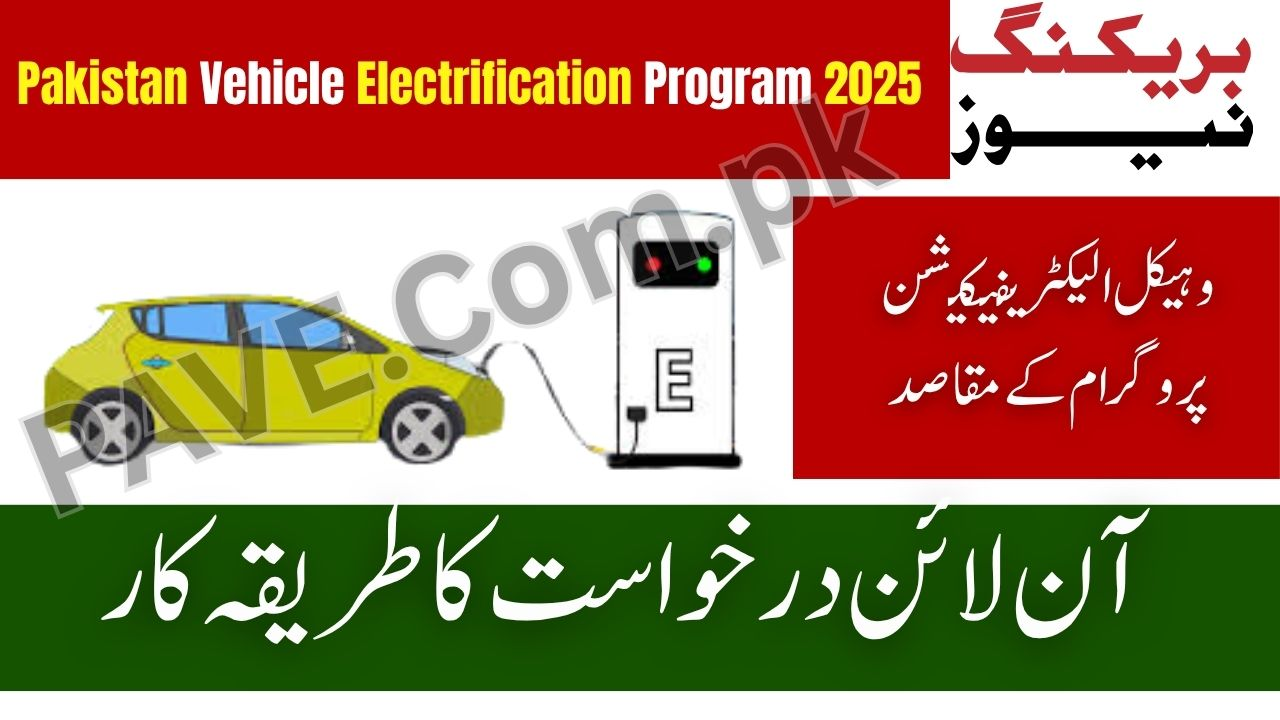
The Pakistan Vehicle Electrification Program marks a historic step toward building a cleaner, greener, and more sustainable transport ecosystem. Spearheaded by the Government of Pakistan, this program aims to accelerate the country’s shift from conventional fuel vehicles to electric vehicles (EVs) across all segments — from motorcycles and rickshaws to cars, buses, and public fleets.
The initiative aligns with the National Electric Vehicle Policy (NEVP) vision and Pakistan’s commitment to reducing carbon emissions, cutting oil imports, and promoting renewable energy usage. In 2025, the government announced new incentives, pilot projects, and delivery phases to help both individuals and institutions adopt EVs through subsidies and public-private partnerships.
Objectives of the Vehicle Electrification Program:
The main objectives of the Pakistan Vehicle Electrification Program (PVEP) 2025 are:
- To reduce Pakistan’s dependence on imported fuel and strengthen the economy.
- To lower greenhouse gas emissions and fight climate change.
- To encourage local manufacturing and create green jobs.
- To provide affordable electric transport options for citizens.
- To support small-scale electric vehicle startups, battery makers, and charging-station networks.
The government plans to electrify 30% of all new vehicles by 2030, starting with a phased rollout in 2025.

Phases of the Pakistan Vehicle Electrification Program 2025:
Phase 1 – Pilot Launch (January to June 2025)
The pilot phase focuses on introducing electric motorcycles, e-rickshaws, and small commercial EVs in Punjab, Sindh, and Islamabad.
- Targets: 10,000 e-bikes and 2,000 e-rickshaws
- Partners: Private EV manufacturers, PAVE initiative, and local banks
- Facilities: Subsidized loans, registration waivers, and tax relief
This phase aims to test EV performance under local conditions and encourage public acceptance of electric mobility.
Phase 2 – Public Fleet Electrification (July to December 2025)
The second phase expands the program to public transport and government fleets. It includes:
- Replacement of 1,000 diesel buses with electric buses in major cities like Lahore, Karachi, and Islamabad.
- Installation of 300 fast-charging stations along motorways and main highways.
- Electrification of 20% of official vehicles used by ministries and public departments.
The government will work closely with Punjab Transport Company (PTC), Sindh Mass Transit Authority, and local city administrations to ensure smooth implementation.
Phase 3 – Mass Market and Provincial Expansion (2026 onwards)
The third phase will expand EV access nationwide through:
- Local manufacturing of batteries and EV components.
- Establishment of EV industrial zones in Lahore, Karachi, and Faisalabad.
- Incentive packages for private buyers and ride-hailing companies.
- Integration with renewable-energy projects like solar charging stations.
This phase will turn Pakistan’s EV program from a pilot into a mainstream national mobility revolution.

Eligibility and Participation Criteria:
Citizens, companies, and organizations can participate under the following categories:
| Category | Eligibility | Benefits |
|---|---|---|
| Individuals | Must hold a valid CNIC and driving license | Easy loan and installment plan for e-bikes/cars |
| Government Employees | Federal/provincial departments | Subsidized EV lease and installment |
| Private Transporters | Ride-hailing, school vans, delivery fleets | Tax waiver + reduced registration fee |
| Manufacturers/Assemblers | Registered EV companies | Duty-free import of components |
| Charging Station Operators | Energy startups and petrol pumps | Land leasing and 0% import duty on chargers |

Financial Incentives and Government Support:
The government has introduced multiple incentives to promote EV adoption under the Vehicle Electrification Program 2025:
- Up to 50% subsidy on locally assembled e-bikes and rickshaws.
- No import duty on EV chargers and battery components.
- Reduced sales tax (1%) for electric vehicles.
- Green loan facility under State Bank’s refinance scheme for affordable financing.
- Tax credits and special registration plates for EV owners.
These incentives make EVs cost-competitive and encourage users to switch from petrol or diesel vehicles.
Charging Infrastructure and Green Energy Integration:
A key challenge for EV success in Pakistan is building reliable charging infrastructure. Under the 2025 plan:
- 300+ charging stations will be installed nationwide in collaboration with WAPDA, PSO, and Attock Petroleum.
- Each major city will have solar-powered charging hubs to ensure cost-effective operations.
- The government aims to power 30% of EV charging through renewable energy by 2026.
This approach not only supports clean mobility but also reduces load on the national grid during peak hours.
EV Delivery Schedule 2025:
The Vehicle Electrification Program 2025 delivery timeline is structured to ensure organized rollout:
| Month | Delivery Focus | Estimated Units |
|---|---|---|
| January–March 2025 | Pilot e-bikes to students and workers | 2,000 units |
| April–June 2025 | E-rickshaws for transporters | 3,000 units |
| July–September 2025 | Government and institutional fleets | 4,000 units |
| October–December 2025 | Public transport (e-buses, vans) | 1,000+ units |
Beneficiaries will be informed via official SMS and can check delivery updates on the EV Portal Pakistan (ev.gov.pk).
Read Also: Dubai Announces 15,000 New Jobs 2025 – Big Hiring Drive
Key EV Models under the Program:
Several local and international models have been shortlisted:
| Segment | Model | Range | Price Range (Approx.) |
|---|---|---|---|
| E-Bike | Jolta JE-70D | 80 km | Rs. 125,000 – Rs. 140,000 |
| E-Rickshaw | Sazgar Eco Rickshaw | 120 km | Rs. 350,000 – Rs. 400,000 |
| Car | MG ZS EV | 320 km | Rs. 8.5 – 9.5 million |
| Bus | Skywell Electric Bus | 250 km | Rs. 25 – 30 million |
All EVs will come with warranty, charging cable, and safety inspection certification.
Environmental and Economic Impact:
According to the Ministry of Climate Change, the EV Program will:
- Cut CO₂ emissions by 30% in transport sector by 2030.
- Save $2 billion annually on fuel imports.
- Create 100,000+ new jobs in manufacturing, energy, and maintenance.
- Improve urban air quality and public health.
This transformation positions Pakistan as one of the leading green mobility nations in South Asia.
EV Registration and Application Process:
To participate in the Pakistan Vehicle Electrification Program 2025, follow these steps:
- Visit the Official EV Portal: www.ev.gov.pk
- Register Your Account: Enter CNIC, contact details, and select category (bike, rickshaw, or car).
- Submit Documents: CNIC, income proof, driving license, and utility bill.
- Select Vehicle and City: Choose model and nearest charging hub.
- Apply for Loan/Subsidy: Submit online form for installment or subsidy.
- Delivery Notification: Selected applicants will receive confirmation SMS/email with pickup details.
Applicants can also apply via designated bank branches and PAVE centers in their respective provinces.
Government and Private Collaboration:
This national program is a result of public-private partnership (PPP).
Key collaborators include:
- Ministry of Industries and Production (MoIP)
- Ministry of Climate Change (MoCC)
- Punjab Green Development Program (PGDP)
- PAVE – Punjab Automotive Vehicle Electrification
- Private firms like MG Motors, Sazgar Engineering, and Jolta Electric
Together, these partners ensure smooth operations, financing, and after-sales services across the country.
Challenges and Future Prospects:
While the initiative is promising, some challenges remain:
- High battery cost and import dependency
- Limited awareness among the public
- Shortage of EV maintenance technicians
- Lack of charging network in remote areas
However, the government plans to tackle these by introducing:
- Local battery recycling plants
- Vocational EV training centers
- Incentives for investors to set up manufacturing units
The future of Pakistan’s transport sector lies in full electrification — combining technology, sustainability, and affordability.
Conclusion:
The Pakistan Vehicle Electrification Program 2025 is not just a policy—it’s a movement towards a cleaner, smarter, and more independent Pakistan. With clear timelines, practical incentives, and multi-phase expansion plans, this program promises to redefine how Pakistan moves, works, and breathes.
From electric bikes for students to eco-buses for cities, this initiative brings green transport closer to every citizen. If implemented effectively, it will transform Pakistan’s automotive landscape, reduce pollution, and create thousands of new opportunities in the green mobility sector.
FAQs – Pakistan Vehicle Electrification Program 2025:
Q1: What is the goal of the Pakistan Vehicle Electrification Program 2025?
The program aims to shift Pakistan’s transport sector from petrol/diesel to electric vehicles, reduce emissions, and promote renewable energy use.
Q2: Who can apply for the EV subsidy or loan?
Any Pakistani citizen with a valid CNIC and driving license can apply through the official EV portal or authorized banks.
Q3: Which vehicles are included in this program?
E-bikes, e-rickshaws, electric cars, and buses are part of the 2025 electrification drive.
Q4: When will the first deliveries start?
Deliveries for Phase 1 (pilot) start from January 2025, focusing on e-bikes and rickshaws.
Q5: Are charging stations available across Pakistan?
Yes, over 300 stations are planned across highways and major cities by end-2025.
Q6: Is there any tax benefit for EV buyers?
Yes, the government offers reduced sales tax (1%) and zero import duty on selected EVs and components.