Pakistan’s Electric Vehicle Industry 2025 – Local Manufacturers and Investment Growth
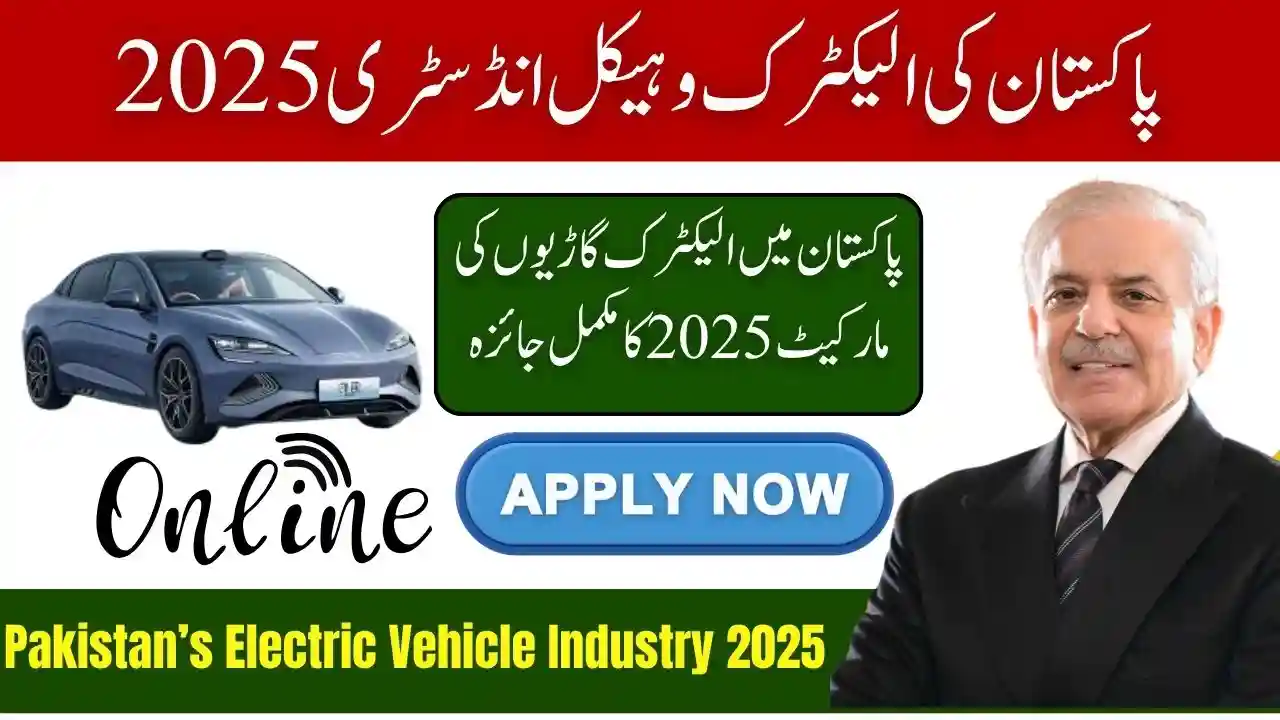
Pakistan Electric Vehicle Industry 2025 Growth is entering a transformative phase in 2025. With the Government’s focus on sustainable transportation, local manufacturing, and green investment, Pakistan is gradually becoming an emerging hub for electric mobility in South Asia. This article explores the EV market landscape, local manufacturers, government incentives, charging infrastructure, and future growth potential of the electric vehicle industry in Pakistan.
⚡ Overview of Pakistan’s Electric Vehicle Market 2025
The electric vehicle revolution in Pakistan began as a small-scale movement a few years ago, but by 2025, it has evolved into a nationwide transformation. High fuel prices, climate concerns, and global shifts toward carbon neutrality have pushed Pakistan to embrace EV technology across both public and private sectors.
- Market Size (2025): Estimated at over Rs. 25 billion, with strong annual growth.
- Key Sectors: Electric bikes, rickshaws, cars, buses, and taxis.
- Government Target: 30% of new vehicles to be electric by 2030 under the National Electric Vehicle Policy (NEVP).
- Major Drivers: Rising fuel costs, import substitution, and foreign direct investment (FDI) in green technology.
🏭 Local EV Manufacturers and Assembly Plants in Pakistan
Local production and assembly of electric vehicles are the backbones of Pakistan’s EV growth. Multiple Pakistani companies, startups, and joint ventures have stepped into this emerging sector.
1. Jolta Electric (JE) – The Pioneer of E-Bikes
Jolta Electric, Pakistan’s first approved EV manufacturer, has become a household name. Its electric motorcycles are fully designed and assembled in Pakistan.
- Models: JE-70D, JE-100L, JE-Scooty.
- Battery Range: 80–100 km per charge.
- Charging Time: 4–6 hours.
- Highlight: Endorsed by the Government of Pakistan and certified by the Engineering Development Board (EDB).
2. MG Motors Pakistan (EV Division)
MG Motors, under JW SEZ Group, has expanded its lineup to include hybrid and full-electric models like the MG ZS EV and MG4 Electric Hatchback.
- Assembly Location: Lahore.
- Price Range: Rs. 9–12 million.
- Target Audience: Urban professionals and premium car buyers.
3. Pak Electric Vehicles (PEV) Pvt Ltd
PEV focuses on electric cargo vans and delivery vehicles, promoting sustainable logistics in e-commerce and courier sectors.
- Battery Type: Lithium-ion (100Ah–200Ah).
- Use Case: Cargo, delivery fleets, and light transport.
- Highlight: Collaboration with Chinese EV component manufacturers.
4. Rahbar EV and Crown Electric Rickshaws
In 2025, Crown Motor Company and Rahbar Group are leading the e-rickshaw and e-loader market with affordable, locally assembled models.
- Charging Time: 6–8 hours.
- Range: 90–120 km.
- Price Range: Rs. 400,000 – Rs. 700,000.
- Focus Area: Punjab, Sindh, and Khyber Pakhtunkhwa urban markets.
5. Sazgar Engineering Works – Electric 3-Wheelers and Cars
Sazgar, known for its 3-wheelers, has entered the EV segment with both electric rickshaws and compact electric cars. The company’s focus on affordable urban mobility aligns with national sustainability goals.

🌿 Government Policies Driving EV Investment
The National Electric Vehicle Policy (NEVP), launched under Pakistan’s Ministry of Climate Change, plays a crucial role in encouraging domestic manufacturing, tax incentives, and foreign investment.
Key Policy Incentives (2025):
- 0% Customs Duty on EV parts and batteries.
- 1% Sales Tax for local EV manufacturers.
- Reduced Registration Fee for EVs in all provinces.
- Green Financing Options through the State Bank of Pakistan (SBP) for EV buyers.
- Charging Infrastructure Development Program (CIDP) initiated in major cities.
Provincial Initiatives:
- Punjab EV Policy 2024–2026: Tax reduction, e-bike subsidies, and 1,100 electric taxis project.
- Sindh Green Mobility Plan: Public bus electrification in Karachi.
- Khyber Pakhtunkhwa EV Strategy: Expansion of EV charging along highways and tourist routes.

🔋 EV Charging Infrastructure and Energy Network
A major challenge for EV adoption in Pakistan is limited charging infrastructure — but 2025 has seen major progress.
Charging Network Expansion:
- Total Stations (2025): Over 350 public EV charging points installed nationwide.
- Key Operators:
- PSO Charge & Go
- Tesla Industries Pakistan
- Shell Recharge
- Naymat Energy Solutions
- NICL and PITB smart charging pilots
Types of Chargers:
| Type | Charging Speed | Installation Cost (Approx.) |
|---|---|---|
| Level 1 (Home) | 6–8 hours | Rs. 30,000 – Rs. 50,000 |
| Level 2 (Public AC) | 3–4 hours | Rs. 100,000 – Rs. 250,000 |
| DC Fast Charger | 30–60 minutes | Rs. 800,000+ |
Punjab and Islamabad have been at the forefront of setting up fast-charging corridors between Lahore–Islamabad–Rawalpindi and Multan–Bahawalpur–Lahore routes.

💰 Foreign Direct Investment (FDI) and Partnerships
In 2025, Pakistan attracted significant foreign investments from China, the UK, and Gulf countries in its EV sector.
Notable Partnerships:
- CNEV + Pak Electric: $50 million investment in e-van assembly line.
- MG Motors + SAIC China: Expansion of EV assembly capacity in Lahore.
- BYD + Pakistani Consortium: Planned battery manufacturing unit by 2026.
- Tesla Industries Pakistan: Collaboration with universities for local R&D.
These investments are not only improving EV technology transfer but also creating employment opportunities for engineers, battery specialists, and software technicians.
🚗 Electric 2-Wheelers and 3-Wheelers Boom
The electric bike and rickshaw segment is currently the fastest-growing EV category in Pakistan.
Market Highlights (2025):
- Over 60,000 e-bikes sold nationwide.
- Government-backed subsidy of Rs. 25,000–50,000 per e-bike for students and working women.
- Growing trend of EV ride-hailing services (e.g., Bykea Green, Careem Electric).
| Category | Example Models | Price Range | Target Users |
|---|---|---|---|
| Electric Bikes | Jolta JE-70D, Metro T9, Road Prince EV | Rs. 150,000–250,000 | Students, office commuters |
| Electric Rickshaws | Crown, Rahbar, Sazgar EV | Rs. 400,000–700,000 | Transporters, small businesses |
| Electric Scooters | Evee C1, Jaguar E-Scooty | Rs. 250,000–300,000 | Female riders, delivery riders |
🌏 Environmental and Economic Benefits
The shift toward EVs is not only technological — it’s environmental and economic. Pakistan’s EV transition is projected to:
- Reduce CO₂ emissions by 25% by 2030.
- Save billions in fuel imports annually.
- Create 100,000+ green jobs by 2027.
- Promote innovation in battery recycling and solar charging.
Government collaborations with universities like UET Lahore and NUST Islamabad are driving EV R&D on battery efficiency and local component manufacturing.
Read Also: Major Punjab City Launches One-Day Driving License System for Motorcyclists
📈 Challenges and Road Ahead
While 2025 marks a significant milestone, several challenges remain for Pakistan’s EV ecosystem.
Key Challenges:
- High cost of batteries and lack of local production.
- Unreliable electricity grid in rural areas.
- Need for standardization of EV components.
- Limited public awareness about EV benefits.
Future Outlook:
By 2030, Pakistan aims to:
- Produce 500,000 e-bikes, 100,000 e-rickshaws, and 10,000 EV cars annually.
- Establish battery recycling plants and EV R&D hubs in Punjab and Sindh.
- Launch 100% electric bus fleets in Karachi, Lahore, and Islamabad.
With growing investments, policy support, and rising consumer demand, the next five years could position Pakistan as a regional EV manufacturing center.
🧩 FAQs – Pakistan’s Electric Vehicle Industry 2025:
Q1: What is the current status of EV adoption in Pakistan?
As of 2025, Pakistan has thousands of registered electric bikes, cars, and rickshaws, supported by over 350 public charging stations across major cities.
Q2: Which companies are manufacturing electric vehicles in Pakistan?
Key players include Jolta Electric, MG Motors, Sazgar, Rahbar EV, Crown Motors, and Pak Electric Vehicles Pvt Ltd.
Q3: What incentives are offered by the government for EV buyers?
Buyers enjoy reduced registration fees, tax exemptions, and green loans from banks such as HBL, Meezan Bank, and Bank of Punjab.
Q4: How long does it take to charge an electric vehicle?
Depending on the charger type, it takes 30 minutes to 6 hours for a full charge.
Q5: Is there any government subsidy on e-bikes?
Yes, the Punjab Government’s e-bike subsidy program (PAVE) offers financial assistance of Rs. 25,000–50,000 for students and working women.
Q6: What are the environmental benefits of EVs in Pakistan?
EVs reduce air pollution, lower carbon emissions, and help decrease fuel import dependency.
Q7: What is the future outlook of Pakistan’s EV industry?
The industry is projected to grow 20–25% annually, with increased foreign investment, local production, and stronger policy support.
📍 Conclusion:
Pakistan’s Electric Vehicle Industry 2025 stands at the intersection of innovation, investment, and sustainability. From government policies to private manufacturing and global partnerships, every component is moving in sync toward a greener and more efficient transport future.
The rise of local EV manufacturers, charging networks, and eco-friendly public transport marks a decisive step toward Pakistan’s vision of a clean, modern economy. If momentum continues, Pakistan could soon become one of South Asia’s leading EV production hubs by the end of the decade.