Pakistan Diplomatic Passport Visa Rule Changed
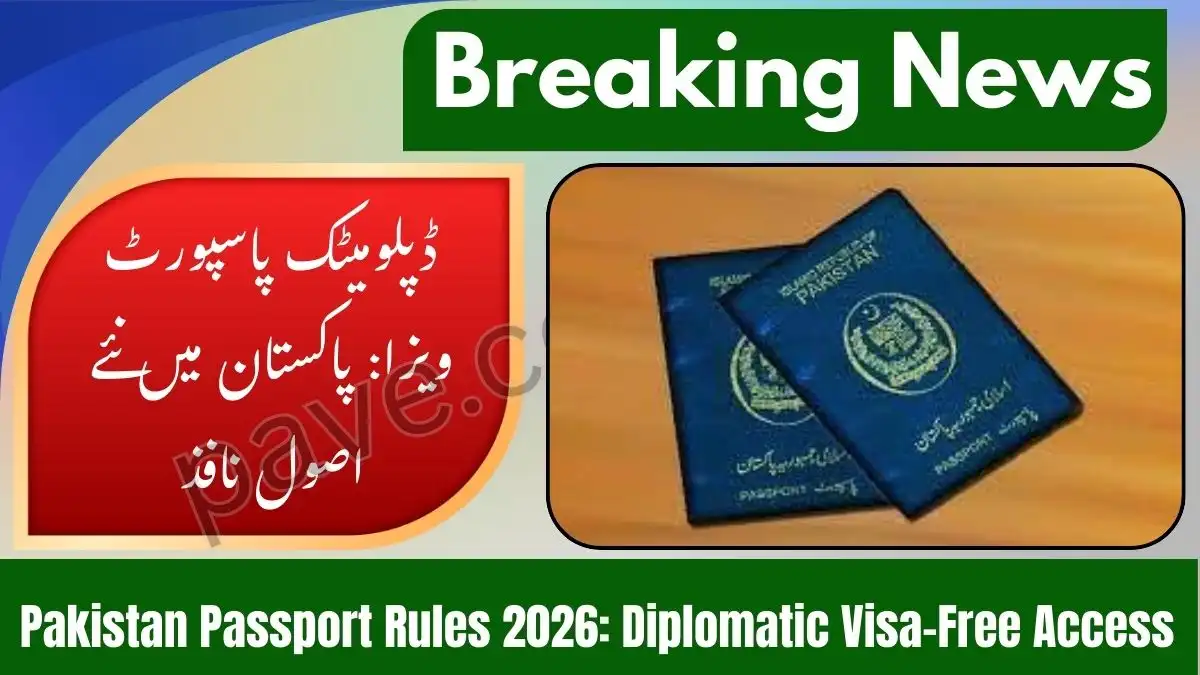
As of January 2026, Pakistan has introduced one of the sharpest policy splits in its travel regime in years. While ordinary passport holders now face stricter entry requirements, diplomatic and official passport holders are seeing expanded global access through new and revived bilateral agreements.
Below is a complete, ultra-premium breakdown answering the most searched questions around Pakistan’s new passport rules.
What Are the New Changes in Pakistani Passport Rules (2026)?
The 2026 update has two clear directions:
For Diplomatic & Official Passports
- Visa-free access expanded through new bilateral agreements
- Easier entry for government officials on state duty
- Longer permitted stays in key countries
For Ordinary Passports
- Visa Prior to Arrival (VPA) suspended from January 1, 2026
- Return to paid e-visa system
- Higher fees ($35–$60)
- Processing time extended up to 7 working days
This creates a two-tier travel system based on passport category.

Breaking Update: Pakistan–Somalia Visa Abolition (Jan 24, 2026)
In a landmark diplomatic move, Pakistan and Somalia signed a visa abolition agreement on January 24, 2026.
Key Details
- Applies to Diplomatic Passport holders only
- Witnessed by Asif Ali Zardari and Somalia’s Interior Minister
- Allows visa-free travel for officials on duty
- First major Pakistan–Somalia diplomatic breakthrough in 35 years
This agreement reflects Pakistan’s broader push to strengthen ties with Africa and OIC member states.

New Visa-Free Agreements Activated (2025–2026)
Over the last year, Pakistan has operationalized several high-impact agreements:
United Arab Emirates (UAE)
- Effective: November 25, 2025
- Status: Fully operational
- Coverage: Diplomatic and Official passports
- Stay: Up to 90 days
Bangladesh
- Approved: August 2025
- Duration: 5-year reciprocal agreement
- Coverage: Diplomatic & Official passport holders
Lao PDR
- Reinforced agreement
- Visa-free stay: Up to 90 days for diplomatic staff

Which Countries Are Visa-Free for Pakistani Diplomatic Passport Holders? (2026)
As of late January 2026, Pakistani Diplomatic and Official Passport holders enjoy visa-free or visa-on-arrival access to 50+ countries.
Key Visa-Free Destinations
| Country | Stay Duration | Passport Type |
|---|---|---|
| Somalia | As per agreement | Diplomatic |
| UAE | 90 Days | Diplomatic & Official |
| Turkey | 90 Days | Diplomatic & Official |
| China | 30–90 Days | Diplomatic & Official |
| Germany | 90 Days | Diplomatic |
| Belgium | 90 Days | Diplomatic |
| Russia | Entire assignment | Diplomatic |
| South Korea | 90 Days | Diplomatic & Official |
| Brazil | 90 Days | Diplomatic |
| Azerbaijan | 30 Days | Diplomatic & Official |
| Bahrain | 90 Days | Diplomatic & Special |
Each country may apply different rules for meetings, postings, or transit, even under visa-free arrangements.

Is UAE Visa Available for Pakistani Official Passport Holders?
Yes.
Under the 2025 agreement, United Arab Emirates grants visa-free entry to Pakistani Diplomatic and Official Passport holders.
Conditions
- Maximum stay: 90 days
- Travel must be official in nature
- Note Verbale / mission letter often required at entry
- Passport must have 6+ months validity
This is one of the most practically important agreements for Pakistani civil servants and diplomats.
Who Can Have a Diplomatic Passport in Pakistan?
A Pakistani Diplomatic Passport is not issued to the general public. It is strictly regulated.
Eligible Categories
- President, Prime Minister
- Federal Ministers and Advisors
- Members of Parliament (while on official duty)
- Senior civil servants (BPS-20 and above)
- Ambassadors, High Commissioners, diplomats
- Military officers on foreign postings
- Officials traveling on government assignment abroad
Important Rule
The passport:
- Is valid only for official travel
- Must be surrendered after assignment completion
- Cannot be used for personal tourism
Contrast: What Changed for Ordinary Pakistani Passport Holders?
While diplomatic travel is easing, ordinary travelers face tighter rules:
Key Restrictions (2026)
- Free Visa Prior to Arrival (VPA) ended
- Paid e-visa mandatory for most nationalities
- Processing time increased
- Stricter entry screening
Only Gulf countries retain limited facilitation under separate arrangements.
Important Protocols for Diplomatic Travelers (2026)
Even with visa-free access, officials must comply with protocol:
- Passport validity: Minimum 6 months
- Mission letter / Note Verbale: Required by most states
- Assignment clarity: Short visits vs long-term postings have different rules
- Overstay penalties: Still apply under host-country law
Visa-free does not mean protocol-free.
Final Summary
- Pakistan has expanded visa-free access for diplomatic and official passports
- Somalia and UAE agreements are major highlights of 2026
- Ordinary passport holders now face stricter, paid visa rules
- Diplomatic passports remain privilege-based, not citizen-based
Bottom Line
Pakistan’s 2026 passport reforms are not about travel freedom for all. They are a strategic diplomatic recalibration, rewarding state-to-state engagement while tightening controls for general travel. For government officials, however, global mobility has never been broader.