Miftah Ismail Says Pakistan Trapped in Economic Cycle
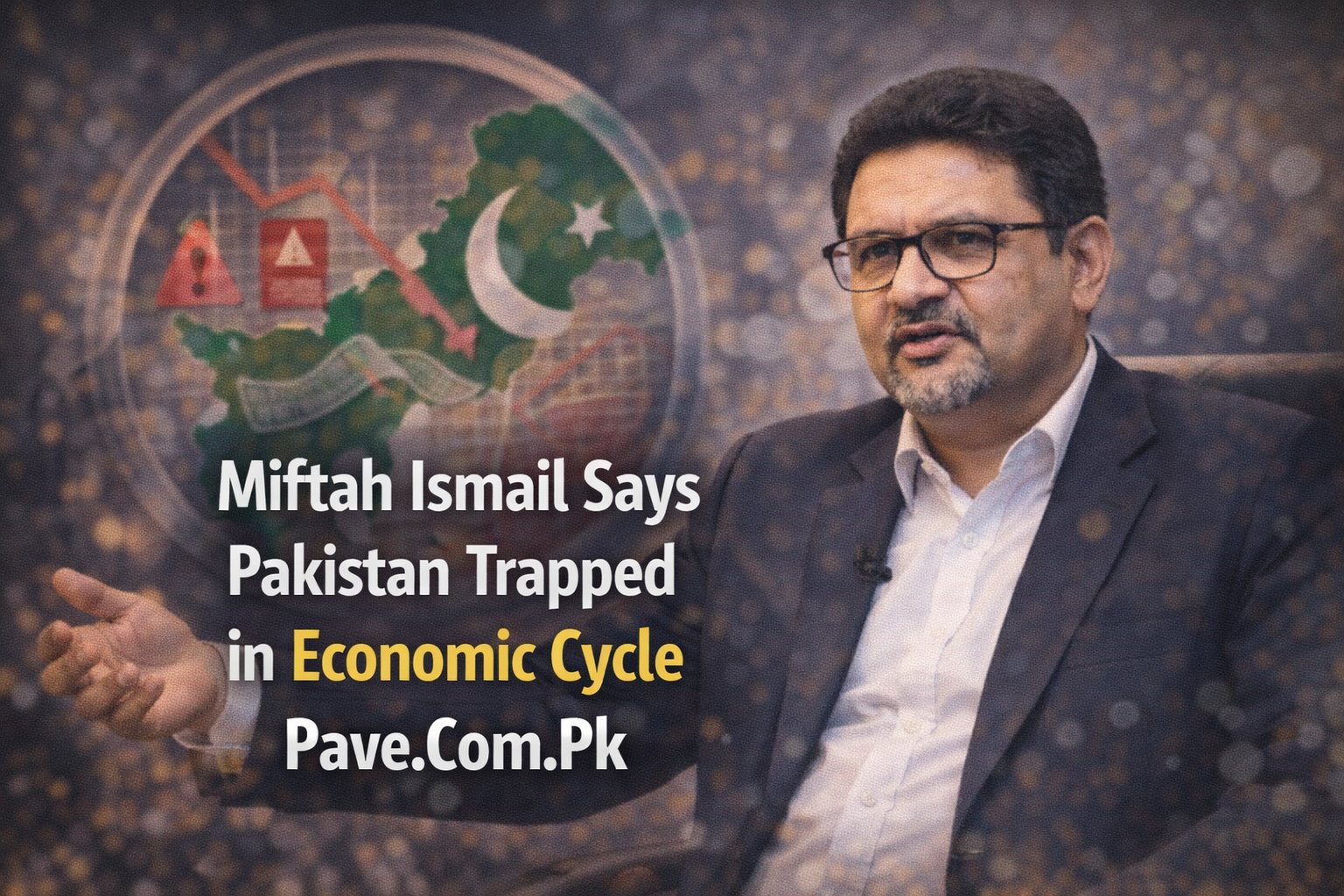
Former Finance Minister Miftah Ismail has said that Pakistan is stuck in a repeated economic crisis cycle, where the country moves from one financial emergency to another without long-term stability.
His remarks have sparked fresh debate about Pakistan’s economic challenges, IMF programs, inflation, debt burden, and structural reforms. Many people are searching online for Pakistan economic crisis 2026, Miftah Ismail statement, and why Pakistan economy is struggling.
This article explains what Miftah Ismail said, what the economic cycle means, and what challenges Pakistan faces — all in simple and easy English.
What Did Miftah Ismail Say?
Miftah Ismail stated that Pakistan repeatedly:
- Faces balance of payments crisis
- Seeks help from the IMF
- Stabilizes temporarily
- Returns to economic instability again
According to him, this pattern shows that Pakistan has not implemented deep structural reforms.

What Is an Economic Cycle in Pakistan’s Context?
In general, an economic cycle refers to periods of:
- Growth
- Slowdown
- Recession
- Recovery
However, in Pakistan’s case, Miftah Ismail used the term to describe a repeating financial crisis pattern, where:
- Imports rise
- Foreign reserves fall
- Currency weakens
- IMF loan is requested
- Temporary recovery happens
- Crisis returns
This cycle has repeated several times over the past decades.

Pakistan’s Balance of Payments Crisis Explained
One of the main issues is the balance of payments crisis.
This happens when:
- Pakistan imports more than it exports
- Foreign currency reserves decline
- Dollar shortages appear
When reserves fall too low, Pakistan turns to the International Monetary Fund (IMF) for financial support.

IMF Programs and Pakistan
Pakistan has entered multiple IMF programs over the years.
These programs usually require:
- Increasing taxes
- Reducing subsidies
- Controlling government spending
- Allowing currency depreciation
While IMF programs provide temporary relief, critics argue that long-term reforms are often incomplete.

Why Does Pakistan Keep Facing Economic Crises?
According to economic experts, key reasons include:
1. Low Export Growth
Pakistan’s exports grow slowly compared to imports.
2. High Debt Burden
Large foreign loans require heavy repayments.
3. Weak Tax Collection
Only a small percentage of the population pays income tax.
4. Political Instability
Frequent political changes affect economic planning.
5. Energy Sector Losses
Circular debt in the power sector increases financial pressure.
Inflation and Public Impact
One major effect of the economic cycle is high inflation in Pakistan.
People face:
- Rising food prices
- Increased fuel costs
- Higher electricity bills
- Expensive imported goods
Inflation reduces purchasing power and increases poverty levels.
Currency Depreciation and Dollar Rate
During crises:
- Pakistani rupee weakens
- Dollar rate increases
- Imports become expensive
Currency depreciation increases inflation and affects businesses.
Business Community Reaction
Business leaders say economic uncertainty:
- Reduces investment
- Slows industrial growth
- Creates job insecurity
- Impacts exports
Stability is essential for attracting foreign investment.
Political Debate Over Economic Policies
Miftah Ismail’s statement has triggered political debate.
Supporters argue:
- Structural reforms are needed
- Hard decisions must be taken
Critics say:
- Global factors also affect Pakistan
- Previous governments share responsibility
The debate continues across political platforms.
Structural Reforms: What Are They?
Structural reforms refer to deep changes in:
- Tax system
- Energy sector
- Public spending
- Export policy
- Governance structure
Without these reforms, temporary solutions may not break the crisis cycle.
Comparison With Other Countries
Some countries faced similar crises but improved by:
- Expanding export industries
- Strengthening tax systems
- Controlling fiscal deficits
- Encouraging manufacturing
Pakistan may need similar long-term strategies.
Public Concerns and Social Media Reaction
People online are discussing:
- Pakistan economic future
- IMF conditions impact
- Inflation crisis
- Debt repayment challenges
Many citizens are concerned about rising living costs.
What Could Break the Economic Cycle?
Experts suggest:
- Expanding exports beyond textiles
- Reducing import dependence
- Increasing tax net
- Improving governance
- Encouraging foreign investment
- Reforming state-owned enterprises
Long-term planning is essential.
Government’s Possible Response
The government may:
- Announce reform packages
- Negotiate better IMF terms
- Introduce tax reforms
- Provide targeted subsidies
However, implementation remains key.
Economic Stability vs Political Stability
Economic growth requires:
- Policy continuity
- Investor confidence
- Stable leadership
- Transparent governance
Political stability often supports economic stability.
Youth and Employment Challenges
Economic cycles affect youth employment.
Young people face:
- Limited job opportunities
- Rising education costs
- Business uncertainty
Stable growth can improve job creation.
The Way Forward
Breaking the economic cycle requires:
- Strong political will
- Long-term reforms
- Public cooperation
- Transparent policy decisions
Experts say short-term fixes are no longer enough.
Final Thoughts
Miftah Ismail’s statement that Pakistan is trapped in an economic cycle reflects ongoing concerns about recurring financial crises, IMF reliance, inflation, and structural weaknesses.
While debate continues, many economists agree that sustainable reforms are needed to achieve lasting economic stability.
Frequently Asked Questions (FAQs)
Q1: What does “economic cycle” mean in Pakistan’s case?
It refers to repeated financial crises followed by temporary recovery.
Q2: Why does Pakistan go to the IMF?
Due to low foreign reserves and balance of payments crises.
Q3: What causes inflation in Pakistan?
Currency depreciation, global prices, and fiscal deficits.
Q4: Can Pakistan break the economic cycle?
Yes, through structural reforms and long-term planning.
Q5: How does this affect ordinary citizens?
Through rising prices, job uncertainty, and reduced purchasing power.