Govt Increases Petrol and Diesel Prices in Pakistan – New Rates Effective from 1 November 2025
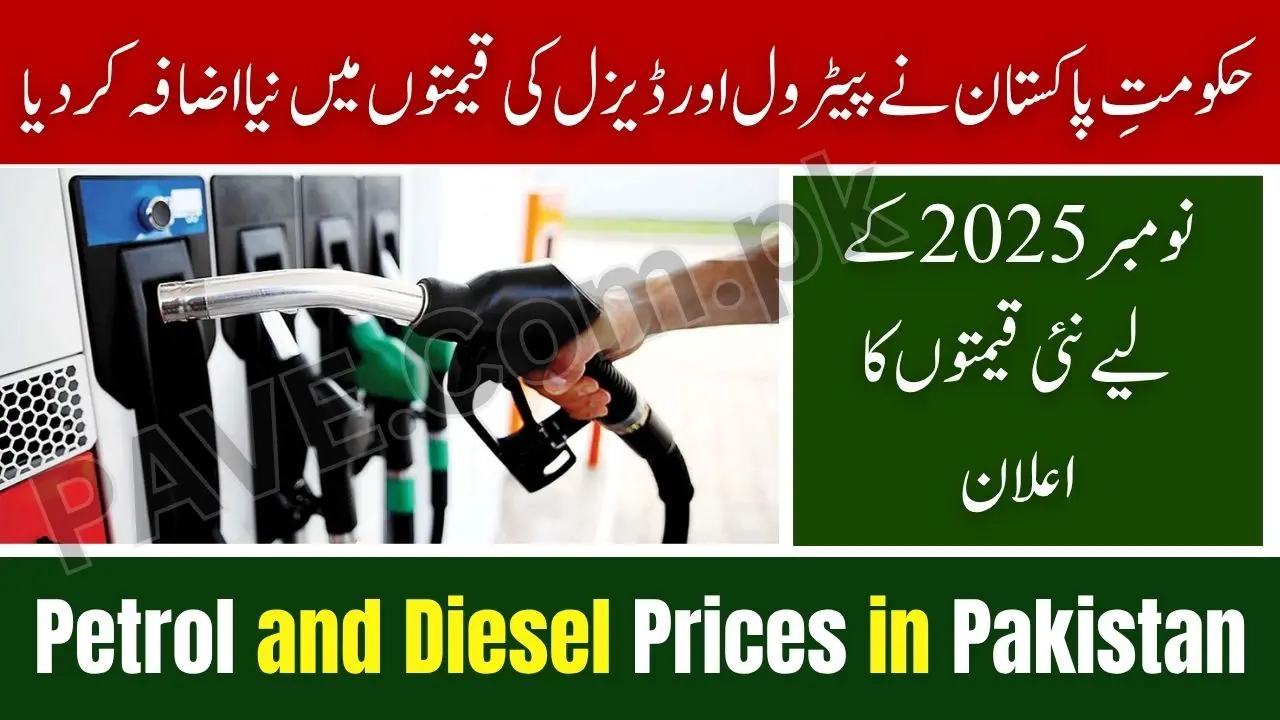
The Government of Pakistan has once again increased the prices of Petrol and Diesel Prices in Pakistan, marking the first price revision for November 2025. This latest hike, approved by the Finance Division on the recommendation of the Oil and Gas Regulatory Authority (OGRA), has been implemented across the country from 1 November 2025.
According to the official notification, the petrol price in Pakistan today has risen by Rs 2.43 per litre, while the diesel rate in Pakistan has increased by Rs 3.02 per litre. The new rates will remain in effect for the first fortnight of November, until the next revision expected on 15 November 2025.
This price adjustment comes as global oil prices remain volatile, while the Pakistani rupee continues to experience pressure against the US dollar. Together, these factors have directly impacted fuel import costs, resulting in higher retail prices for Pakistani consumers.
New Petrol and Diesel Prices in Pakistan – November 2025 OGRA Update
| Fuel Type | Previous Price (Rs/Litre) | Increase (Rs/Litre) | New Price (Rs/Litre) |
|---|---|---|---|
| Petrol (MS) | 263.02 | +2.43 | 265.45 |
| High-Speed Diesel (HSD) | 275.42 | +3.02 | 278.44 |
The new fuel prices in Pakistan will stay applicable until 15 November 2025, when OGRA will submit its next price review summary. The authority uses an internationally recognized pricing formula that considers import costs, global crude prices, exchange rate fluctuations, and government taxes.
Check Also: Gold Price in Pakistan Today 1st November 2025 – Latest Market Rates
Why the Govt Increased Petrol and Diesel Prices in Pakistan
Global Oil Market Impact on Pakistan Fuel Prices
International crude oil prices have remained around $88–90 per barrel, due to OPEC+ production cuts and geopolitical instability in the Middle East. As Pakistan imports nearly 80% of its petroleum products, these global fluctuations directly affect domestic pump prices.
Currency Depreciation and Import Costs
The Pakistani rupee’s depreciation against the US dollar continues to increase the import bill. Since oil purchases are dollar-denominated, even a small dip in the rupee value leads to higher costs in rupee terms, which OGRA passes on to local consumers.
Petroleum Levy and Government Revenue Needs
The petroleum levy (PL), which is a key component of the Government’s revenue collection, remains unchanged but continues to keep prices high. This levy, combined with General Sales Tax (GST), helps the government meet IMF fiscal targets while maintaining the national energy supply chain.
Economic Effects of Petrol and Diesel Price Hike in Pakistan
The rise in fuel prices in Pakistan is expected to impact inflation, transportation costs, and the prices of essential goods. Higher fuel costs mean that transport fares, food distribution, and logistics expenses will also rise.
Daily wage earners, small businesses, and transport operators are likely to face financial pressure as a result of this adjustment. Experts predict that this increase could push the Consumer Price Index (CPI) slightly upward in November, especially in urban areas.
OGRA Fuel Price Revision System in Pakistan
The Oil and Gas Regulatory Authority (OGRA) revises petrol and diesel prices every 15 days to reflect international market trends. Its pricing formula includes:
- Import Parity Price (IPP) based on global crude rates
- Exchange rate difference between PKR and USD
- Freight and port handling costs
- Inland Freight Equalization Margin (IFEM)
- Petroleum levy and tax adjustments
The formula ensures transparency and keeps domestic prices aligned with international energy markets while maintaining fiscal balance.
Petrol and Diesel Price Trend in Pakistan (October–November 2025)
| Date | Petrol (Rs/Litre) | Diesel (Rs/Litre) |
|---|---|---|
| 1 Oct 2025 | 260.03 | 271.40 |
| 15 Oct 2025 | 263.02 | 275.42 |
| 1 Nov 2025 | 265.45 | 278.44 |
This steady upward trend shows how Pakistan’s fuel rates have been adjusting in line with global market conditions. Despite regular fortnightly reviews, the average prices have continued to rise gradually throughout October and early November.
Comparison of Fuel Prices in Pakistan with Neighboring Countries
| Country | Petrol Price (PKR/Litre Equivalent) | Diesel Price (PKR/Litre Equivalent) |
|---|---|---|
| Pakistan | 265.45 | 278.44 |
| India | 312.60 | 295.00 |
| Bangladesh | 283.20 | 276.00 |
| Sri Lanka | 305.50 | 293.80 |
Even after the recent increase, Pakistan’s petrol and diesel prices remain lower than most regional economies, largely due to moderate domestic taxes and subsidies on transport fuels.
Government’s Official Statement on Fuel Prices
In its official press release, the Finance Division stated:
“The revision in petrol and diesel prices is in line with international oil market trends and exchange rate adjustments. The Government aims to maintain supply stability and minimize shocks to consumers.”
Officials reaffirmed that fuel subsidies for low-income families under the Benazir Income Support Programme (BISP) and other targeted relief measures will continue wherever possible.
How Higher Fuel Prices Affect Common Citizens
- Public Transport: Bus, rickshaw, and ride-hailing fares may increase in major cities like Karachi, Lahore, and Islamabad.
- Freight and Goods Transport: Logistics companies are expected to adjust delivery rates, which may increase food and commodity prices.
- Agriculture Sector: Diesel-based irrigation pumps and tractors will become more expensive to operate.
- Energy Costs: Diesel generators used during power outages will lead to higher production costs for businesses.
Experts recommend carpooling, use of public transport, and efficient fuel consumption to minimize personal impact.
Impact on Inflation and Economic Outlook
Economists warn that the fuel price increase in Pakistan may slightly push inflation upward. Rising fuel costs raise production and transportation expenses, leading to higher market prices for essentials like wheat, vegetables, and dairy.
However, the government insists that these adjustments are essential for fiscal discipline under the ongoing IMF Extended Fund Facility (EFF). Maintaining realistic fuel pricing prevents budget deficits and reduces dependence on heavy subsidies.
Global Crude Oil Market and Its Influence on Pakistan
The global oil market has remained tight due to reduced supply from OPEC+ countries and increased demand from Asia. With Brent crude hovering near $90 per barrel, import-reliant countries like Pakistan continue to experience financial strain.
Experts suggest that unless global supply increases or the rupee strengthens, Pakistan will continue facing price adjustments every fortnight.
Public and Market Reaction
Immediately after the announcement, long queues formed at petrol stations as motorists rushed to fill their tanks before midnight. Social media users expressed frustration, calling for government action to promote electric vehicles (EVs) and solar energy adoption to reduce long-term dependence on imported oil.
Transport associations and business groups have also urged the government to implement a price stabilization mechanism to protect both consumers and industries from recurring shocks.
Next OGRA Fuel Price Update in Pakistan
The next OGRA summary for fuel prices is expected around 15 November 2025. If global crude oil prices decline and the rupee gains strength, experts anticipate a possible minor reduction. However, persistent volatility could result in another small upward adjustment.
FAQs – Govt Fuel Price Update November 2025:
Q1. What are the new petrol and diesel prices in Pakistan?
Petrol costs Rs 265.45 per litre and diesel costs Rs 278.44 per litre from 1 November 2025.
Q2. Who revises fuel prices in Pakistan?
Prices are reviewed every 15 days by OGRA and approved by the Finance Division.
Q3. Why do petrol prices keep changing?
Because global oil prices and currency exchange rates fluctuate regularly, OGRA updates domestic prices fortnightly.
Q4. When will the next price change happen?
Around 15 November 2025, after OGRA submits the next pricing report.
Q5. How does this affect inflation?
Higher fuel prices raise the cost of goods, transportation, and energy, contributing to inflation.
Q6. Are there any government subsidies on petrol now?
General subsidies have been removed, but targeted relief continues for BISP beneficiaries.
Q7. Will public transport fares increase?
Yes, most operators are expected to increase fares slightly after the price hike.
Q8. Can prices decrease next month?
Yes, if global oil prices fall and the rupee strengthens, prices could be adjusted downward.
Check Also: Petrol Price in Pakistan Today – Check Latest Price Per Litre
Conclusion – Govt Increases Petrol and Diesel Prices in Pakistan
The Govt Increases Petrol and Diesel Prices in Pakistan for the first half of November 2025, citing rising global oil costs and exchange rate pressures. While this ensures fiscal stability and steady supply, it also puts additional strain on the public’s daily expenses. All eyes are now on the mid-November review, which will determine whether consumers get any relief or face another adjustment.