
Government Approves Honorarium Card for Imam Masjid — Big Relief for Religious Staff
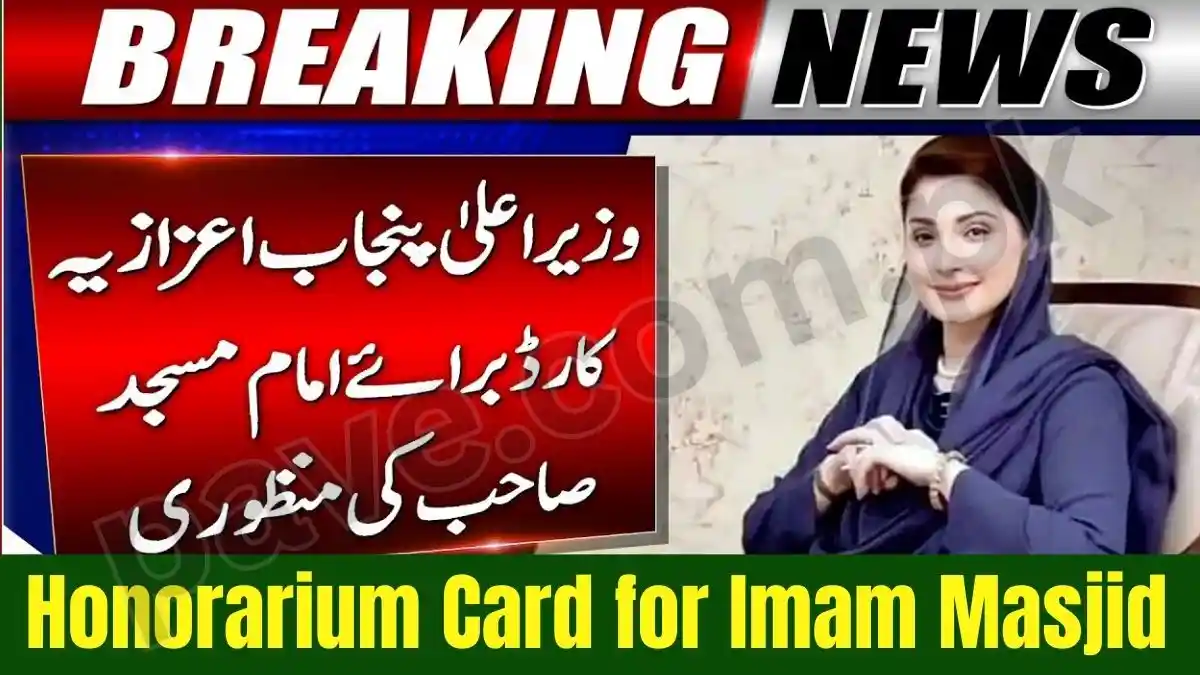
The government has approved a new Honorarium Card for Imam Masjid across the country, introducing an official support system for religious staff who have long been working without stable income. This new decision is being viewed as a major step toward recognizing the services of imams and providing them with financial security. Thousands of mosques in Pakistan rely on donations from local communities, and many imams receive very low or irregular monthly support. The government’s initiative is designed to bring uniformity, transparency, and dignity to the support system for religious leaders.
The decision was reviewed in a high-level meeting where officials discussed the challenges faced by mosque imams. Many imams not only lead prayers but also take part in funerals, religious education, Nikah ceremonies, and community guidance. Their role becomes even more important during Ramadan, Eid, and national emergencies. Despite this, most of them do not receive a structured salary. The Honorarium Card aims to change this by offering a verified and reliable mechanism through which imams can receive financial assistance.
What Is the Honorarium Card for Imam Masjid?
The Honorarium Card will work as an official identity and digital support card for registered imams. Through this card, the government is expected to transfer a monthly allowance directly to the eligible imam’s bank account or digital wallet. This removes the need for middlemen and ensures that support reaches the right person without delay.
This initiative is similar to other government welfare systems that operate through digital verification. Just like government-issued cards used for social support, the Imam Honorarium Card will include an identity number, verification status, and eligibility data. It will be linked to national ID records to avoid duplication and misuse.
Why Did the Government Approve This Program?
The government approved this program after recognizing that imams perform essential religious and social responsibilities in every community. Officials noted that while teachers, police, doctors, and other staff receive structured salaries, imams are left out of any official support network. Most mosques depend on donations, which vary from area to area. Many imams struggle to support their families, pay school fees, or manage daily expenses.
By introducing the Honorarium Card, the government aims to:
- Provide stable and predictable monthly income
- Support imams in performing their duties with dignity
- Reduce inequality between mosques in different areas
- Encourage qualified individuals to join religious services
- Build a verified database of mosque staff
- Bring transparency to mosque-related financial matters
This move also aligns with the government’s goal of promoting social welfare and reducing financial stress on low-income households.
Who Will Be Eligible for the Honorarium Card?
Exact criteria will be issued in the official notification, but early reports suggest the following eligibility requirements:
- The individual must be a registered Imam of a mosque
- Must have a valid CNIC
- Must be verified by the local Auqaf department or district administration
- Must be leading prayers regularly
- Must not be receiving any other government-funded religious salary
The Auqaf department will likely supervise the verification process. In areas where mosques are not registered with Auqaf, additional documentation may be required from mosque committees.
Benefits Expected Through the Honorarium Card
Although the complete benefits list is not yet released, the Honorarium Card is expected to include:
1. Monthly Stipend
A fixed amount will be transferred every month to the imam’s account to ensure financial stability.
2. Access to Social Welfare Programs
The card may allow imams to receive benefits from government-backed welfare programs, especially those related to food subsidies, health support, and utility relief.
3. Medical Support
There are discussions that imams may be given priority in government health insurance schemes.
4. Digital Verification ID
The card will act as an official identity for imams, making it easier for them to access government services.
5. Future Expansion of Benefits
Officials have hinted that additional benefits may be added later, such as pension-like payments or emergency assistance.
Reaction from Mosque Communities and Religious Circles
The decision has been widely appreciated by religious scholars, mosque committees, and community leaders. Many have praised the government for recognizing the financial difficulties of imams. They say that imams dedicate their entire lives to religious services, yet they are often neglected when it comes to financial support. This new program will bring respect and empowerment to thousands of families.
However, some groups have requested the government to expand the scheme to all mosques, including those that operate independently and are not listed under Auqaf. They also expect clarity on whether assistant imams, khateebs, and muezzins will be included in future phases.
Implementation Timeline: When Will the Card Be Issued?
Authorities have confirmed that the implementation process will begin after the official notification is published. The steps expected include:
- Verification of imams at the district and tehsil levels
- Preparation of a digital database
- Online and in-person registration
- Issuance of digital or physical cards
- Start of monthly financial transfers
The government is also planning awareness campaigns to help imams understand how to apply, register, and use the Honorarium Card.
What This Means for Religious Staff in Pakistan
The introduction of the Honorarium Card represents a milestone in the state’s relationship with religious workers. For decades, the financial struggles of imams have been discussed but never formally addressed at the national level. This initiative sends a message that religious service is valued, and those who dedicate their lives to guiding communities deserve financial respect and support.
It will also help improve mosque management, encourage better record-keeping, and build a structured system for religious institutions. Many experts believe that this program could become a model for other countries in the region.