
Gilgit-Baltistan’s IT Sector Generates Up to $18 Million: PASHA (Full Premium Article)
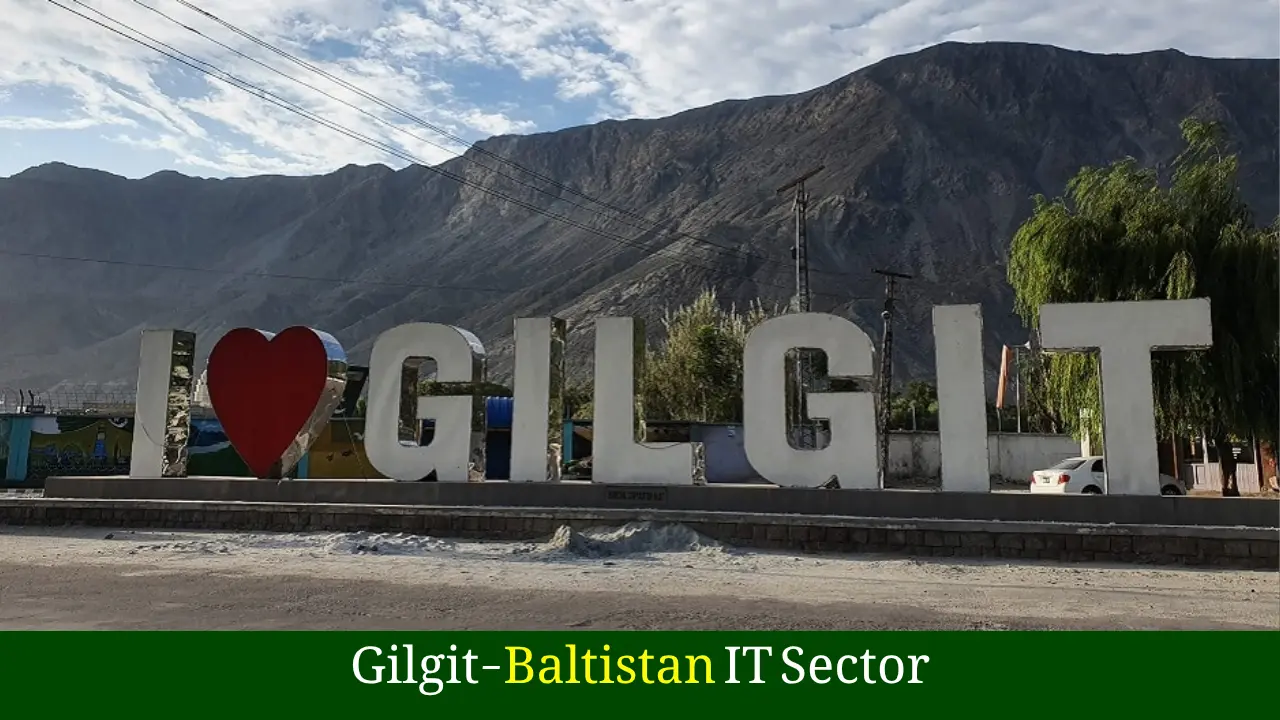
Gilgit-Baltistan (GB), a region mostly known for its mountains, tourism, and agriculture, is now stepping into the digital economy with impressive momentum. According to a new report from the Pakistan Software Houses Association (PASHA), the IT and IT-enabled services sector of Gilgit-Baltistan is generating between $15 million to $18 million every year. This growth shows that GB is becoming one of Pakistan’s most promising emerging technology hubs.
The Gilgit-Baltistan IT & IT-Enabled Sector Diagnostic Report highlights that nearly 120 active IT companies based in GB contribute around $3.5 million, while the region’s 3,000–4,000 freelancers bring in an estimated $10–15 million annually. This combination of small companies, freelancers, remote workers, and young professionals has created one of the fastest-growing digital ecosystems in northern Pakistan.
But despite this progress, GB’s IT industry still faces major challenges, including connectivity issues, limited market access, and early-stage business development barriers. This article explains the region’s IT landscape, challenges, opportunities, and future growth potential in an easy and detailed way.
IT Sector Growth in Gilgit-Baltistan – A Rising Technology Hub
The growth of the IT sector in GB is driven mostly by young freelancers, remote professionals, and small tech startups. PASHA’s report states that GB’s IT ecosystem is expanding at a stable rate but remains smaller compared to cities like Karachi, Lahore, and Islamabad.
Key Stats from the PASHA Report
- $15–18 million annual IT revenue generated
- 120 active IT companies
- 3,000–4,000 freelancers contributing up to $15 million
- 6,000–7,000 total IT workforce (employees + freelancers)
- Around 300 companies registered with SECP, but only 100–120 active
- 68% of companies located in Gilgit district, others in Skardu, Hunza, Ghizer, and Nagar
Most IT companies in GB specialize in:
- Web development
- Mobile app development
- Digital marketing
- UI/UX design
- Software development
- Content writing
- E-commerce services
- Outsourcing and BPO work
Because the local market is small, most companies and freelancers work with clients from major cities or overseas.
Read Also: Breaking News: Gold Rate Today in Pakistan – Latest 24K & 22K Prices (November 2025)

Why GB’s IT Sector Revenues Remain Limited
Even though GB’s technology ecosystem is active, its current revenue size is still modest. PASHA identifies several major reasons:
1. Limited Market Access
Local IT companies struggle to reach large clients due to:
- Remote geography
- Weak marketing networks
- Fewer business links with Karachi, Lahore, and Islamabad
- Low visibility in international markets
2. Small Project Sizes
Most GB companies work on:
- Small website projects
- Basic software support
- Low-budget international gigs
This limits revenue growth.
3. Early-Stage Business Development
Many companies in GB are young and still learning:
- Business management
- Marketing
- Financial planning
- Scaling strategies
This slows down their ability to grow into larger firms.

Where Do Most IT Professionals Work in GB?
GB’s tech workforce is diverse and spread across multiple districts.
Major Tech Hubs
- Gilgit District (68%) – The largest cluster of IT offices
- Skardu – Second-largest IT community
- Hunza – Fast-growing due to tourism and remote work culture
- Ghizer and Nagar – Emerging hubs for remote freelancers
GB’s culture of education, exposure to tourism, and interest in remote-based work has helped thousands of young people join the IT sector.

Main Challenges Facing GB’s IT Industry
PASHA’s report highlights multiple barriers that continue to affect growth.
1. Unreliable Electricity Supply
Around 88% of IT companies report frequent power outages.
This creates:
- Delays in project delivery
- Increased operational costs
- Reduced productivity
IT companies rely heavily on stable electricity for:
- Servers
- Internet routers
- Workstations
- Software development environments
Without power stability, competitiveness suffers.
Read Also: Breaking News: Sindh Extends Vehicle Number Plate Deadline by Two Months
2. Poor High-Speed Internet Connectivity
GB’s mountainous geography and limited ISPs create:
- Slow internet speeds
- Network dropouts
- Unstable connectivity during winters
Digital freelancers and IT offices face significant difficulties due to bandwidth limitations.
3. No Access to Funding or Investment
GB has:
- No venture capital presence
- No angel investment networks
- Minimal banking support
Most companies rely on:
- Personal savings
- Small grants
- Friends and family support
This prevents startups from scaling or hiring more staff.
4. Difficulty in Reaching Big Markets
PASHA’s survey reveals:
- 40% struggle with marketing and promotional reach
- 23% have poor networking opportunities
- 15–20% face issues like operational costs and limited talent
This shows the need for:
- Business development training
- Trade fair participation
- Marketing assistance programs

Opportunities for Growth in the GB IT Sector
Despite the challenges, GB has strong potential to grow into a large IT contributor. PASHA outlines major opportunities.
1. GB as a Remote Work Hub
GB’s youth is:
- Highly educated
- Skilled in technology
- Comfortable with remote work
Once connectivity improves, the region can become a remote-work powerhouse.
2. IT Special Economic Zone (SEZ)
One major proposal by PASHA is to establish a:
- Dedicated IT SEZ in Gilgit-Baltistan
Benefits would include:
- Tax incentives
- Subsidized office spaces
- Access to investors
- Enhanced IT training
This would attract national and international IT companies to GB.
3. Inclusion in National IT Export Strategy
GB can enter global markets through:
- ITCN Asia
- Export delegations
- Government-backed expos
- Startup accelerators
A “Made in GB” brand can help promote the region worldwide.
4. Government Support Is Increasing
The Ministry of IT & Telecom, PASHA, and SIFC are working on:
- Improving electricity
- Expanding fiber internet
- Supporting freelancers
- Funding IT labs and training centers
These initiatives can double GB’s IT revenue within 2 years.
Recent Developments Boosting GB’s IT Ecosystem
PASHA recently held:
- First-ever CXO Meetup in Gilgit
- Sessions with GB Software Houses Association (GBSHA)
- Discussions on infrastructure, collaboration, and business expansion
PASHA also plans to open a regional office in GB, marking a major milestone.
Additionally, GB startups will be showcased at ITCN Asia in Lahore under a special “Made in GB Pavilion”.
The Future of IT in Gilgit-Baltistan
According to PASHA Senior Vice Chairman Muhammad Umair Nizam:
“GB’s IT revenues can grow from $15 million to $30 million within two years.”
This prediction is realistic because of:
- Skilled youth
- Remote-work demand
- Government digital policies
- Increasing tech awareness
- Strong freelancer community
If GB receives better internet, power stability, and investment support, it can become one of Pakistan’s strongest regional IT hubs.
Read Also: Breaking News: Gold Prices in Pakistan Increase Massively – Per Tola Hits Record Rs. 424,162 Today
Conclusion About Gilgit-Baltistan IT Sector:
Gilgit-Baltistan’s IT sector is full of potential. With 120 active IT companies, thousands of freelancers, and growing government support, the region is steadily moving into the digital economy. Challenges like electricity, internet connectivity, and funding still limit growth, but major opportunities—such as the proposed IT SEZ, national integration, and global exposure—can completely transform GB’s technology landscape in the next few years.
With the right infrastructure and investor backing, GB can easily double its IT revenue and emerge as a leading tech powerhouse in Pakistan.
FAQs – Gilgit-Baltistan IT Sector
1. How much revenue does the IT sector in Gilgit-Baltistan generate?
Gilgit-Baltistan’s IT sector generates between $15 million to $18 million annually, including revenue from IT companies and freelancers.
2. How many IT companies are operating in Gilgit-Baltistan?
There are around 120 active IT companies, mostly based in Gilgit, Skardu, and Hunza, with nearly 300 registered in total.
3. How many freelancers are working in GB’s IT sector?
PASHA reports that 3,000–4,000 freelancers work in GB, earning around $10–15 million every year.
4. What are the main challenges for IT companies in Gilgit-Baltistan?
The biggest issues include poor internet connectivity, frequent power outages, limited market access, lack of funding, and early-stage business development.
5. What is being done to support and grow GB’s IT sector?
The government, SIFC, and PASHA are working to improve internet, electricity, IT training, national integration, and business support. PASHA is also setting up its first-ever office in GB.