Breaking: Fake Govt Job Scams: A Growing Threat To Job Seekers
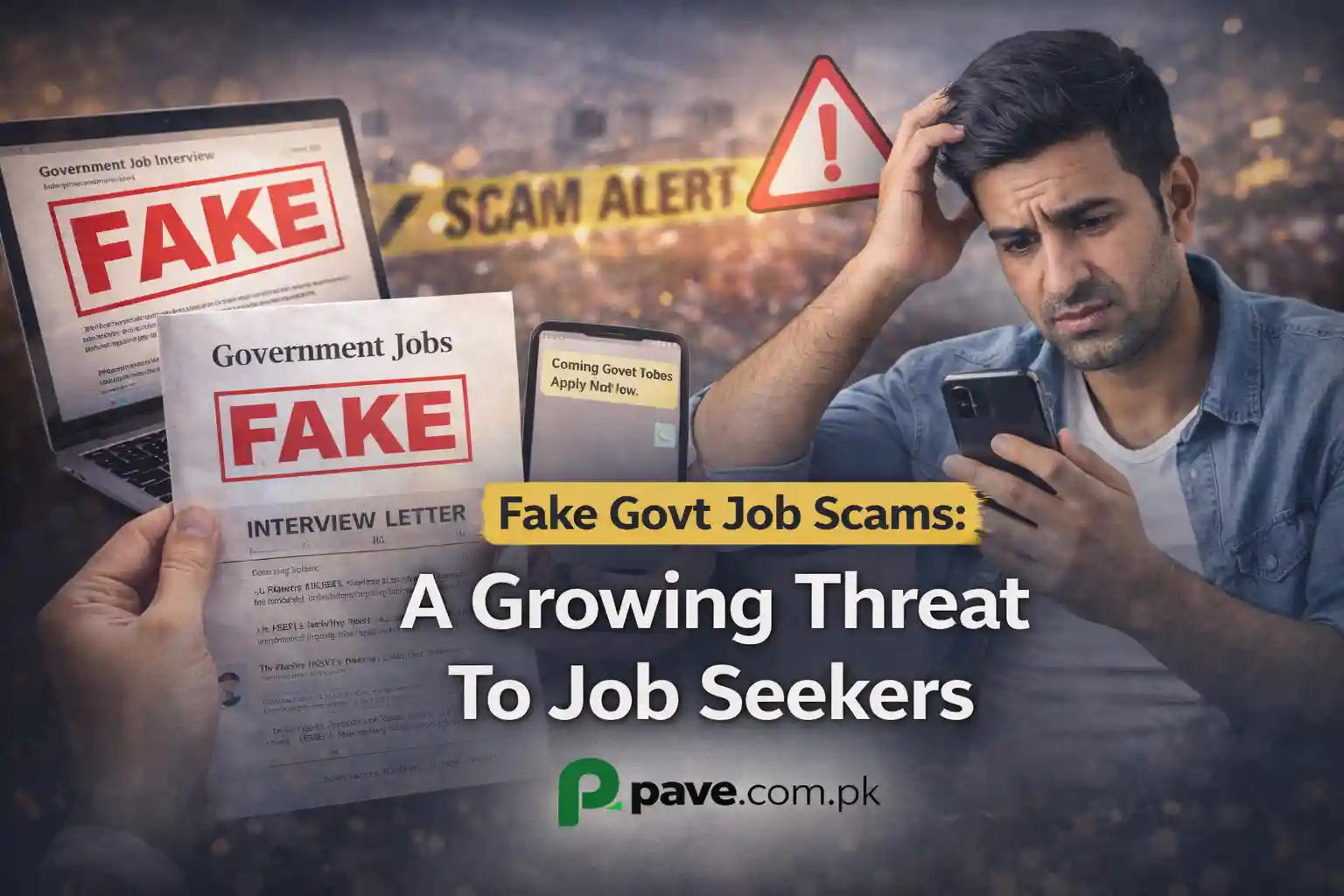
In 2026, fake government job scams in Pakistan have evolved into highly organized digital fraud operations. With unemployment rising and recruitment shifting online, scammers are exploiting job seekers through AI-generated advertisements, cloned government websites, WhatsApp interviews, and payment traps. These scams are no longer limited to simple fake SMS messages — they now involve identity theft, financial fraud, and even international trafficking networks.
This comprehensive guide explains how these scams work, the top warning signs, the most common fraud patterns in 2026, how to verify real government jobs, and what to do immediately if you have already been targeted.
How Fake Job Scams Work in 2026
Modern employment scams operate in stages:
Step 1: Attractive Advertisement
Fraudsters post fake job ads on:
- Facebook groups
- WhatsApp broadcasts
- Telegram channels
- Fake websites that mimic real government portals
They may use AI-generated logos and official-looking documents.
Step 2: Rapid Shortlisting
Victims are told they are “selected” quickly without proper testing or interviews.
Step 3: Payment Demand
Scammers request money under excuses such as:
- Registration fee
- Security deposit
- Medical processing charges
- Laptop or training kit charges
Payments are usually demanded via:
- EasyPaisa
- JazzCash
- Bank transfer to personal accounts
Step 4: Data Theft
Victims are asked to send:
- CNIC copies
- Passport photos
- Bank account details
- OTP codes
Once information is collected, scammers disappear or misuse identity data.

Top Red Flags of a Fake Government Job Advertisement
If you notice any of the following, treat the job offer as suspicious.
1. Request for Payment
Real government jobs never demand money through mobile wallets or personal accounts. Official fees are paid only through:
- Bank challans
- 1-Link supported payment systems
- Official testing service portals
2. Unofficial Email Addresses
Legitimate government emails end in:
.gov.pk
Fake recruiters often use:
- Gmail
- Yahoo
- Outlook
3. WhatsApp-Only Interviews
No authentic government department conducts recruitment solely via WhatsApp or Telegram.
4. Unrealistic Salary Offers
Promises like:
“Rs 120,000 per month for office assistant, no experience required”
are classic scam bait.
5. Poor Language & Formatting
Spelling errors, inconsistent logos, or incorrect department names indicate fraud.
Most Common Job Scams in Pakistan (2026)
1. Fake “Nigehban” Recruitment Scam
Fraud ads claim to hire:
- Survey Officers
- Field Registration Officers
They demand Rs 2,000 “processing fee.”
The real Nigehban relief program does not recruit through paid SMS registration.
2. International IT Job Traps
The Federal Investigation Agency (FIA) has warned about fake high-paying IT jobs in Southeast Asia (Thailand, Myanmar).
Victims are:
- Lured with fake contracts
- Taken abroad
- Forced into cybercrime operations
- Stripped of passports
3. Ghost Government Postings
Fake social media posts collect:
- CNIC numbers
- Phone numbers
- Home addresses
The purpose is identity theft or loan fraud.
4. Recruitment Fraud Using Reputable Brand Names
Scammers impersonate major organizations (including global companies like Thomson Reuters) using fake websites and domain variations.
They send:
- Fake offer letters
- Appointment confirmations
- Background check requests with payment demands
Legitimate companies never ask candidates to pay recruitment fees.
5. Phishing Email Scams
Victims receive emails asking to:
- Click links
- Enter login credentials
- Submit financial information
These links lead to cloned portals that steal data.
Top 5 Most Current Scams in Pakistan (2026)
- Government survey officer recruitment scam
- International remote IT job fraud
- Fake data entry jobs with high salary promises
- Fake armed forces recruitment portals
- University scholarship fee scams

Official Government Job Portals – Use Only These
Always verify job postings through official platforms:
| Organization | Official Website |
|---|---|
| National Job Portal | njp.gov.pk |
| Federal Public Service Commission | fpsc.gov.pk |
| Punjab Public Service Commission | ppsc.gop.pk |
| National Testing Service | nts.org.pk |
If a job is not listed on the department’s official site, it is likely fake.
How to Verify a Job Posting Safely
Step 1
Search the department’s official website directly.
Step 2
Check the “Notice Board” or “Careers” section.
Step 3
Confirm the advertisement number matches official PDF format.
Step 4
Verify that payment instructions include official bank challan details.
Never rely solely on social media posts.
How to Protect Yourself – 5 Professional Safety Tips
1. Never Pay for a Job Offer
Legitimate employers do not request upfront payments.
2. Verify Email Domains
Check that emails end in official company domains.
3. Avoid Sharing OTP Codes
OTP requests are usually banking fraud attempts.
4. Research the Company
Search for official press releases or career pages.
5. Trust Your Instinct
If it sounds too good to be true, it probably is.
What To Do If You’ve Already Been Scammed
1. Report to FIA Cyber Crime Wing
Contact:
NR3C (National Response Centre for Cyber Crime)
Helpline: 1991
File a formal complaint with screenshots and payment receipts.
2. Freeze Your Bank Account
If you shared banking details:
- Immediately contact your bank.
- Block debit cards.
- Reset passwords.
3. Alert NADRA
If you shared CNIC copies, notify:
National Database and Registration Authority
This helps monitor unauthorized biometric attempts.
4. Preserve Evidence
Keep:
- Screenshots
- Payment receipts
- Call logs
- Email conversations
These assist investigation.
Why Employment Scams Are Increasing
Several factors contribute:
- High unemployment rates
- Digital recruitment shift
- Social media dependency
- AI-generated fake content
- Limited awareness among first-time job seekers
Scammers exploit emotional vulnerability and financial desperation.
What to Expect from Legitimate Employers
Real organizations:
- Conduct structured interviews
- Use official email domains
- Provide formal offer letters with verifiable contact details
- Do not demand payment
- Maintain transparent hiring timelines
For example, multinational corporations such as Thomson Reuters clearly state they never request money or personal banking details during recruitment.
Final Summary
Fake government job scams in Pakistan have become more advanced in 2026, using digital manipulation and identity theft tactics. The safest approach is verification through official portals, refusal to pay any recruitment fee, and immediate reporting of suspicious activity.
Remember:
- Government jobs never require EasyPaisa payments.
- Official emails end in .gov.pk.
- WhatsApp-only interviews are red flags.
- High salary without experience is suspicious.
- Protect your CNIC and banking information at all times.