Big Update! E-Challan System Changed Under Motor Vehicles Act 2026
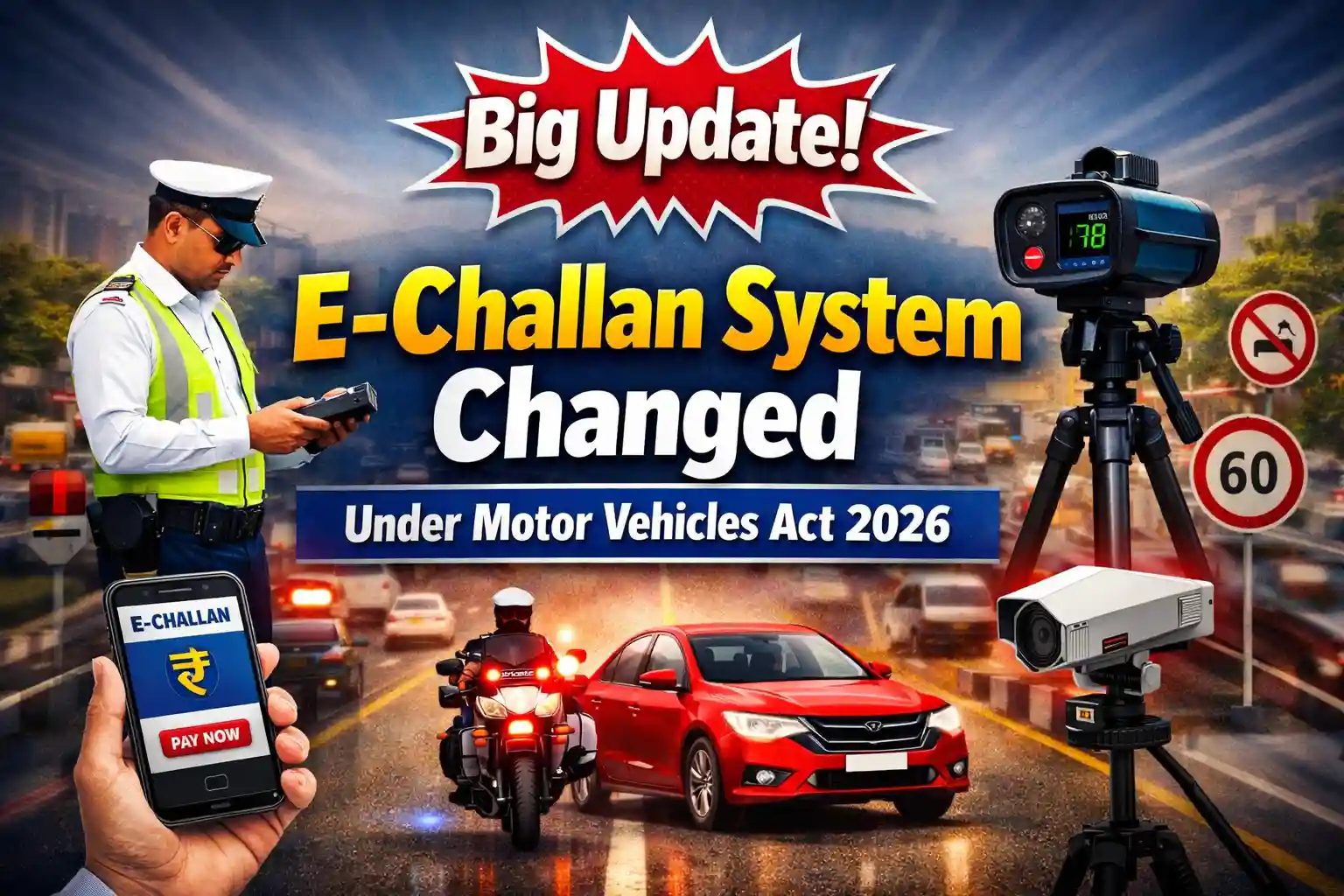
The government has introduced major reforms to the E-Challan system under the Motor Vehicles Act 2026, bringing stricter enforcement, higher penalties, digital transparency, and faster online processing. These changes aim to improve road safety, reduce traffic violations, and modernize traffic management through advanced surveillance technology.
If you are a vehicle owner, driver, or transport operator, understanding these new E-Challan rules is extremely important. In this detailed guide, we will explain everything about the updated Motor Vehicles Act 2026 E-Challan system, including new penalties, digital verification, online payment methods, dispute process, and frequently asked questions.
What Is the E-Challan System Under the Motor Vehicles Act 2026?
The E-Challan system is a digital traffic fine system that allows traffic authorities to issue electronic tickets for violations such as:
- Over-speeding
- Signal violation
- Driving without license
- Driving without helmet or seatbelt
- Wrong parking
- Using mobile phone while driving
- Expired vehicle documents
Under the Motor Vehicles Act 2026, this system has been upgraded with automated cameras, real-time data integration, and stricter enforcement policies.
Instead of manual paper challans, fines are now generated electronically and sent directly to the vehicle owner’s registered mobile number or address.
Major Changes in E-Challan System 2026
Here are the biggest updates introduced under the Motor Vehicles Act 2026:
1. Increased Traffic Fine Amounts
One of the most significant changes is the increase in traffic fines. The government has raised penalties to discourage repeat violations.
For example:
- Over-speeding fine increased
- No helmet / No seatbelt penalty doubled
- Driving without license heavy penalty
- Repeat offense = double fine
This step aims to create fear of penalty and promote responsible driving behavior.
2. Automatic Camera-Based Detection
New high-resolution traffic cameras are now installed at major roads, highways, and intersections.
These cameras automatically detect:
- Speed limit violations
- Red light crossing
- Lane violations
- Illegal parking
Once detected, the system automatically generates an E-Challan linked to the vehicle registration number.
This reduces corruption and eliminates manual interference.
3. Instant SMS & Online Notification
Under the 2026 update:
- Drivers receive SMS alerts instantly
- Challan details available online
- Fine amount mentioned clearly
- Payment deadline specified
This ensures transparency and avoids unnecessary delays.
4. Integration with National Vehicle Database
The new system is integrated with the national vehicle registration database. This means:
- Challan directly linked with CNIC
- Vehicle transfer blocked if unpaid fines exist
- License renewal restricted for defaulters
- Insurance claims affected in some cases
This digital linking ensures better compliance.
5. Online Payment & Installment Option
Another major change is simplified payment methods:
- Online payment via debit/credit card
- Mobile banking apps
- Government portals
- Bank branches
- Easypaisa / JazzCash (in some regions)
In some cases, installment options may be allowed for heavy penalties.

How to Check E-Challan Online in 2026?
Follow these simple steps:
- Visit the official traffic police or excise portal
- Enter vehicle number or CNIC
- Click “Check Challan”
- View violation details
- Download or print challan
- Pay online
The process is now faster and more user-friendly.
New Rules for Repeat Offenders
The Motor Vehicles Act 2026 has introduced strict rules for habitual offenders:
- Second offense = higher fine
- Third offense = license suspension
- Serious violations = court action
- Vehicle impound possible
This aims to reduce repeated traffic violations.
Impact of E-Challan Reform on Drivers
Positive Impact
- Improved road safety
- Reduced corruption
- Transparent fine system
- Quick online process
- Encourages responsible driving
Challenges
- Higher financial burden due to increased fines
- Technical errors in camera detection
- Need for digital literacy
However, authorities claim grievance systems are available to resolve disputes.
How to Dispute an Incorrect E-Challan?
If you believe a challan is wrongly issued:
- Visit official traffic website
- Click on complaint/dispute option
- Upload supporting documents
- Submit online request
- Wait for review
You may also visit the traffic police office for clarification.
Deadline & Late Payment Penalty
Under the 2026 update:
- Challan must be paid within the given deadline
- Late fee may apply
- Unpaid challan may result in:
- Vehicle blocking
- License suspension
- Legal action
It is advised to pay on time to avoid complications.
Digital Monitoring & AI Technology
The updated E-Challan system now uses:
- Artificial Intelligence
- Automatic Number Plate Recognition (ANPR)
- Real-time data analysis
- Centralized monitoring
This makes traffic enforcement more efficient and accurate.
Why Government Updated the Motor Vehicles Act in 2026?
The main objectives behind these changes are:
- Reduce road accidents
- Increase law enforcement efficiency
- Minimize corruption
- Digitize traffic system
- Improve public safety
Road accidents had been rising due to negligence, and authorities believe stricter digital enforcement will help reduce violations.
Important Tips for Drivers in 2026
To avoid E-Challan penalties:
- Always carry valid driving license
- Wear helmet/seatbelt
- Follow speed limits
- Avoid mobile phone usage while driving
- Keep vehicle documents updated
- Park only in authorized areas
Following traffic rules not only saves money but also protects lives.
FAQs – Motor Vehicles Act 2026 E-Challan Update
1. What is new in the E-Challan system 2026?
The system now includes higher fines, automatic camera detection, instant SMS alerts, and database integration.
2. How can I check my E-Challan online?
You can check it through the official traffic police website using your vehicle number or CNIC.
3. What happens if I don’t pay my E-Challan?
Unpaid challans may result in late fees, license suspension, vehicle blocking, or legal action.
4. Can I challenge a wrong E-Challan?
Yes, you can file a dispute online or visit the traffic police office with evidence.
5. Are fines increased under Motor Vehicles Act 2026?
Yes, most traffic violation fines have been increased to ensure strict compliance.
Conclusion – Stay Alert Under New Motor Vehicles Act 2026
The Big Update in the E-Challan system under Motor Vehicles Act 2026 marks a major step toward digital traffic management and stricter law enforcement. While higher fines may seem strict, the ultimate goal is improved road safety and responsible driving.
Drivers are strongly advised to stay updated, follow traffic rules, and regularly check their E-Challan status online to avoid penalties.