
E-Challan Scam Exposed (2026): How Fake Traffic Fines Trap Drivers in India
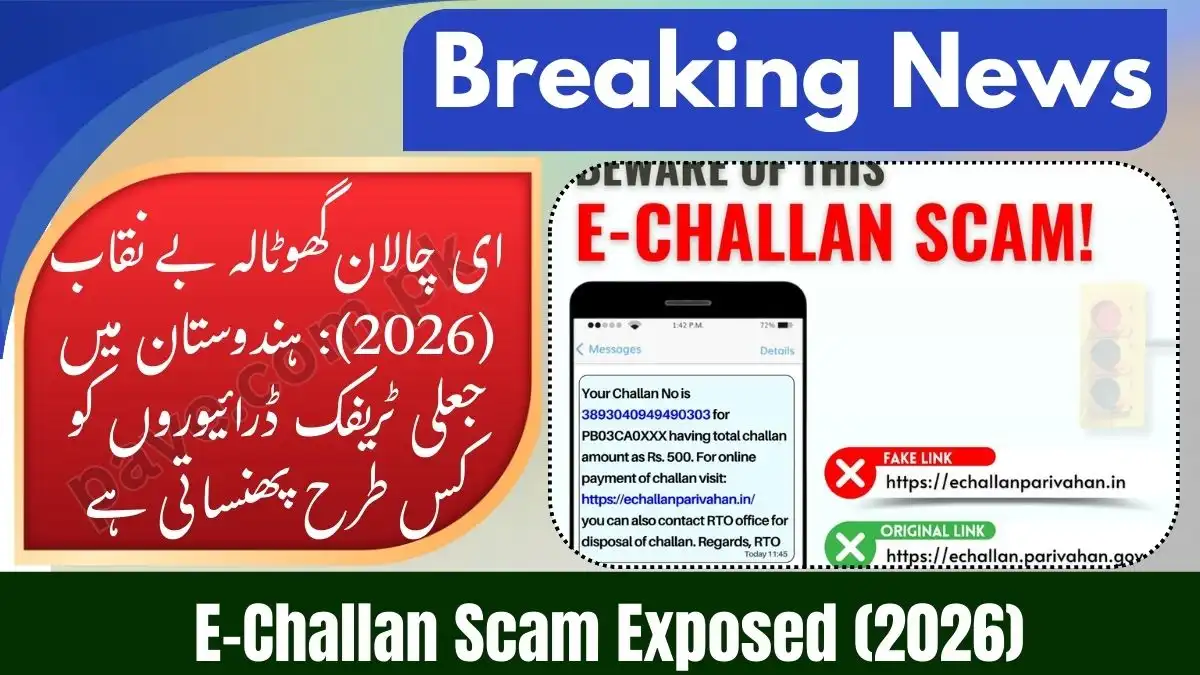
Across India, a dangerous new wave of e-Challan fraud is exploiting drivers’ trust in digital governance. These scams imitate official traffic fine alerts so convincingly that even tech-savvy users are falling victim—losing money, data, and device control within minutes.
Below is an ultra-premium, step-by-step breakdown of how the scam works, how to spot red flags, and exactly what to do if you’re targeted.
The Modus Operandi: How the Scam Works
Fraudsters send SMS or WhatsApp messages designed to look like official government alerts—often including your actual vehicle registration number to establish credibility. The flow is calculated and ruthless:
1️⃣ The Hook
You receive a message claiming a traffic violation (speeding, signal jump, no helmet, lane violation).
2️⃣ The Threat
The message uses urgent, intimidating language:
- “License will be suspended”
- “Court action initiated”
- “Pay within 2 hours to avoid seizure”
3️⃣ The Bait
A link is provided to “view” or “pay” the challan.
The site looks identical to the official Digital Traffic / Transport portal.
4️⃣ The Theft
Two attack paths are common:
- Phishing Form: You enter bank/UPI/card details → funds are drained.
- Malware APK: You’re asked to install an app (e.g.,
RTO_Challan.apk) which:- Spies on your phone
- Intercepts OTPs
- Grants full remote access to scammers
⚠️ Once installed, OTP protection becomes useless.

Real vs. Fake: How to Spot the Fraud
Use this quick comparison to identify scams instantly:
| Feature | ✅ Genuine e-Challan | ❌ Fake / Scam Message |
|---|---|---|
| Sender ID | Official IDs (e.g., VM-PARIVAHAN) | Random 10-digit mobile numbers |
| Website Link | Ends strictly in .gov.in | Uses .cc, .vip, .apk, short links |
| Payment Method | Redirects to official portal only | Asks for UPI, WhatsApp, or APK install |
| Tone | Neutral & informational | Urgent, threatening, panic-driven |

Official Safety Guidance (Police Advisory)
Indian cyber units—including Delhi Police and Panchkula Police—have issued strict advisories:
✅ DO THIS
- Verify fines only on the official Parivahan portal
- Check that:
- Engine Number (last 5 digits)
- Chassis Number (last 5 digits)
are shown before any payment step
❌ NEVER DO THIS
- ❌ Click links like
echallan.gov.in.ccorpay-rto.online - ❌ Pay fines via WhatsApp or direct UPI requests
- ❌ Install APK files sent through SMS/WhatsApp
📌 Traffic Police never send apps via messages.
Only download official apps like mParivahan from the Google Play Store or Apple App Store.
What to Do If You’re Already Scammed
If you clicked a link, shared details, or installed an APK—act immediately:
🚨 1. Block Financial Access
- Call your bank instantly
- Freeze:
- Debit/Credit Cards
- UPI IDs
- Net banking access
🚨 2. Report Cybercrime
- Dial 1930 (National Cybercrime Helpline)
- File a report at cybercrime.gov.in
🚨 3. Secure Your Phone
- If an APK was installed:
- Back up photos & contacts
- Factory reset the phone
- Change all passwords from a different device
⏱️ Speed matters—early reporting dramatically improves recovery chances.

Why This Scam Is Spreading So Fast in 2026
- Widespread adoption of digital challans
- Easy access to leaked vehicle databases
- Growing trust in SMS-based government alerts
- High fear factor linked to license suspension & legal threats
Scammers are weaponizing convenience and urgency.
Final Verdict: Trust the Portal, Not the Message
The e-Challan scam is not about traffic fines—it’s about phishing psychology.
Remember this golden rule: