China EV Makers Struggle for Survival in 2026 as Global Competition Heats Up
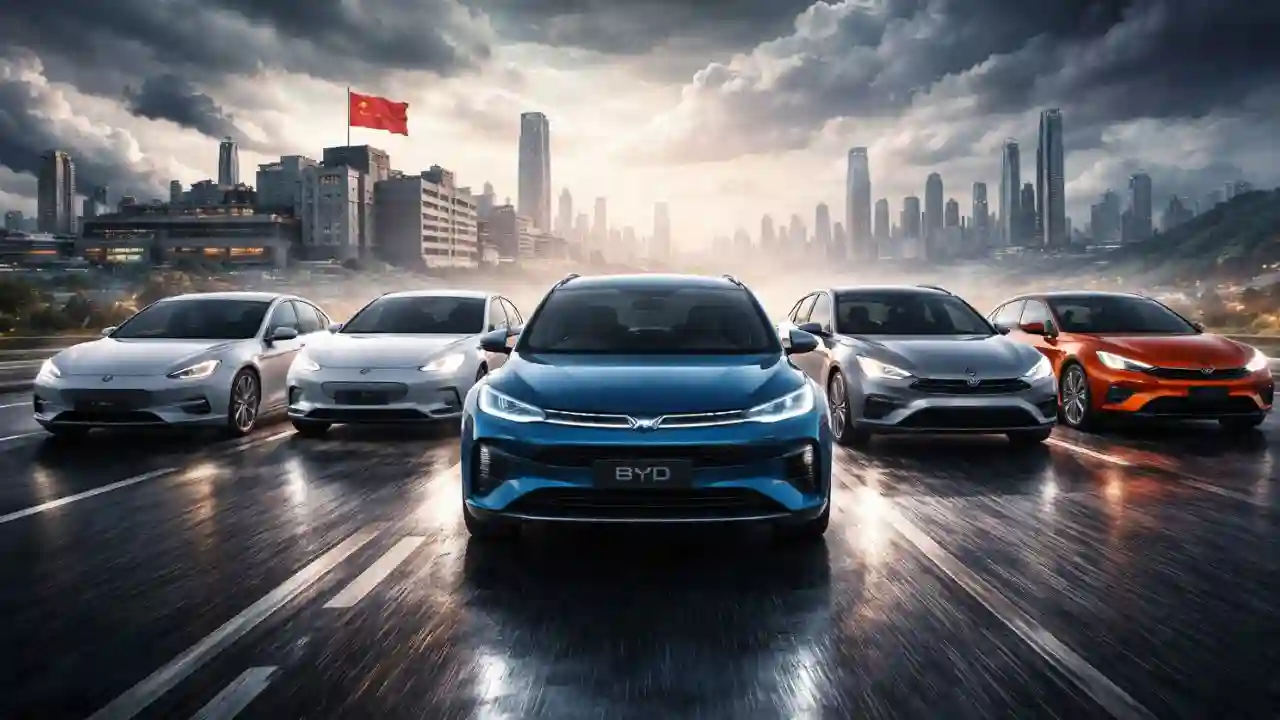
China EV Makers Struggle for Survival in 2026 is entering a critical survival phase in 2026. After years of explosive growth, aggressive expansion, and generous state support, many Chinese EV manufacturers are now facing intense global competition, shrinking margins, and mounting financial pressure.
While China remains the world’s largest EV market, the reality in 2026 is far more complex. Dozens of EV startups are struggling to stay afloat, exports are facing resistance in major international markets, and global rivals are fighting back with new technology, tariffs, and localization strategies.
China EV Industry in 2026: From Rapid Growth to Survival Mode
Over the last decade, China built the world’s most extensive EV ecosystem. Companies such as BYD, SAIC, Geely, Chery, and NIO helped turn China into the global leader in EV production and sales. However, by 2026, the industry has entered a shakeout phase.
China now has more EV manufacturers than its domestic market can sustainably support. Price wars, overcapacity, and slowing demand growth are forcing weaker players to merge, exit, or shut down entirely.
Analysts describe 2026 as the year when “scale, efficiency, and global adaptability” decide which Chinese EV brands survive.

Price Wars Are Crushing Profit Margins for Chinese EV Makers
One of the biggest challenges Chinese EV companies face in 2026 is the brutal price war at home. In an attempt to maintain market share, manufacturers have slashed prices across almost every vehicle segment.
While this strategy has boosted short-term sales, it has severely damaged profitability. Even major brands are reporting thinner margins, while smaller EV startups are bleeding cash.
Key impacts of China’s EV price war include:
- Reduced revenue per vehicle
- Higher inventory pressure
- Limited funds for R&D and global expansion
- Increased dependence on government or investor support
For many mid-tier and small EV makers, surviving another year of price competition has become increasingly difficult.

Global Expansion Brings New Challenges for Chinese EV Brands
As domestic competition intensifies, Chinese EV manufacturers have aggressively expanded into Europe, Southeast Asia, the Middle East, Latin America, and Africa. However, 2026 has shown that global expansion is no longer easy.
Several international markets are pushing back against the influx of low-cost Chinese EVs.
Rising Tariffs and Trade Barriers
Major economies have introduced or increased tariffs, anti-dumping investigations, and regulatory barriers targeting Chinese EV imports. These measures are designed to protect local industries but have significantly increased costs for Chinese exporters.
As a result, Chinese EV makers must now:
- Build local factories
- Partner with domestic firms
- Absorb higher compliance costs
This has slowed expansion plans and reduced price advantages abroad.
Brand Trust and After-Sales Concerns
Outside China, many consumers remain cautious about newer Chinese EV brands. Concerns about:
- Long-term reliability
- Software updates
- Battery lifespan
- After-sales service
have limited adoption in some regions, especially in Europe and North America.

Technology Gap Is Narrowing as Global Rivals Catch Up
Chinese EV manufacturers built early advantages in battery technology, supply chain control, and cost efficiency. However, by 2026, global competitors have significantly narrowed the gap.
Automakers from Japan, South Korea, Europe, and the United States are rolling out:
- Next-generation solid-state battery research
- Advanced driver-assistance systems (ADAS)
- Improved energy efficiency and range
At the same time, Chinese firms face rising costs for raw materials and software development, making it harder to maintain technological leadership.

Overcapacity Is a Growing Threat to China’s EV Sector
China’s EV production capacity far exceeds both domestic and global demand in 2026. Many factories are operating below optimal utilization, creating financial strain across the industry.
This overcapacity has resulted in:
- Increased inventory levels
- Pressure to export at low margins
- Factory closures or production cuts
- Layoffs in weaker companies
Industry experts predict that dozens of Chinese EV brands may disappear over the next two years through bankruptcies or mergers.
Government Support Is Becoming More Selective
In earlier years, Chinese EV makers relied heavily on government subsidies, incentives, and policy support. However, by 2026, authorities have shifted focus toward quality over quantity.
Instead of supporting every EV startup, regulators are prioritizing:
- Technologically advanced companies
- Financially stable manufacturers
- Firms aligned with long-term industrial goals
This policy shift means that weaker EV companies can no longer rely on state backing for survival.
Winners and Losers in China’s EV Survival Battle
Stronger Players Likely to Survive
Companies with:
- Large production scale
- Strong balance sheets
- Global manufacturing footprints
- In-house battery and software capabilities
are better positioned to weather the storm. Established brands continue to invest in innovation and overseas production.
Struggling Startups Face Exit
Smaller EV startups with:
- Limited funding
- Narrow product portfolios
- Weak export strategies
are most at risk. Many are expected to merge with larger players or exit the market entirely.
Impact on Global EV Markets in 2026
The struggles of Chinese EV makers are reshaping the global EV landscape. Reduced price aggression could stabilize international EV markets, while consolidation may lead to fewer but stronger Chinese competitors abroad.
For consumers, this could mean:
- Fewer ultra-cheap EV options
- Better quality and reliability
- More standardized global EV platforms
For competitors, China’s EV shakeout offers breathing room but also signals tougher competition from stronger, more efficient survivors.
What the Future Holds for Chinese EV Manufacturers
Despite the challenges, China will remain a dominant force in the EV sector. However, the era of unchecked expansion is over. The future belongs to companies that can combine cost efficiency, innovation, and global compliance.
By the end of 2026, China’s EV industry is expected to be:
- Smaller in number
- Stronger in structure
- More globally integrated
The survival test underway will determine which Chinese EV makers shape the next decade of electric mobility.
Conclusion
China EV makers are struggling for survival in 2026 as global competition heats up, price wars intensify, and trade barriers rise. While the industry remains powerful, only the most resilient, innovative, and globally adaptable companies will survive the ongoing shakeout.
The coming years will define whether Chinese EV brands emerge as sustainable global leaders or retreat after a decade of rapid growth.
FAQs – China EV Makers and Global Competition 2026
1. Why are Chinese EV makers struggling in 2026?
Due to intense price wars, shrinking profit margins, overcapacity, and rising global trade barriers.
2. Is China still the world’s largest EV market in 2026?
Yes, China remains the largest EV market, but growth has slowed significantly.
3. Are Chinese EVs facing tariffs abroad?
Yes, several countries have introduced tariffs and regulatory restrictions on Chinese EV imports.
4. Will smaller Chinese EV startups survive?
Many smaller startups are expected to merge or exit the market due to financial pressure.
5. Does China still lead in EV technology?
China remains strong, but global competitors have narrowed the technology gap in 2026.