Ghotki Police Officer Viral TikTok Video Sparks Debate Over Duty Conduct
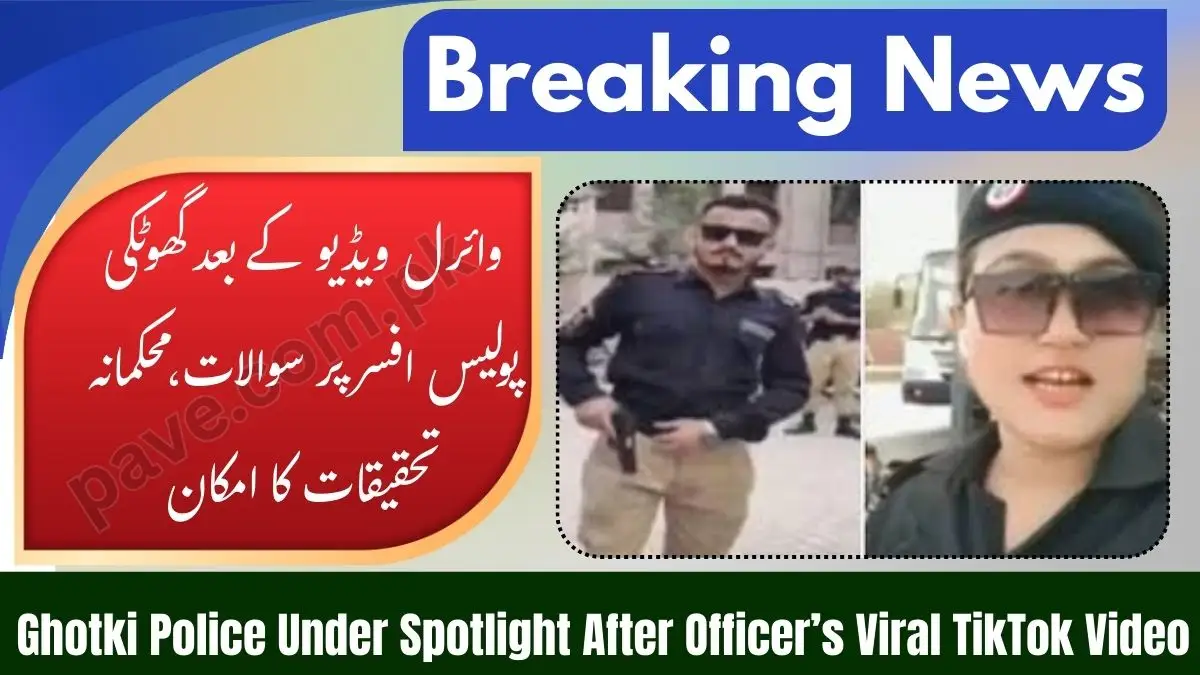
A video of a police officer from Ghotki, Sindh, recently went viral on TikTok, triggering widespread debate about professional conduct, discipline, and the boundaries of social media use while on active duty.
The incident has once again placed the spotlight on internal accountability mechanisms within the Sindh Police, especially regarding its 2026 updated digital conduct guidelines.
Below is a detailed breakdown of the incident, official response, policy framework, and the broader implications for law enforcement professionalism in Pakistan.
The Incident – What the Viral Video Shows
According to local reporting and social media circulation:
- The officer, identified as a lady constable, recorded TikTok-style content while wearing official uniform.
- Some clips were reportedly filmed inside police station premises.
- Other segments appeared to be recorded at or near active deployment sites.
The content included background music and stylized visuals, which critics argue conflict with the professional image associated with state authority.
The controversy intensified because operational environments appeared visible in the footage, raising concerns about potential exposure of sensitive locations.

Official Action – Suspension Pending Inquiry
Following the video’s rapid circulation:
- The Senior Superintendent of Police (SSP) Ghotki reportedly took notice.
- The DIG Sukkur range initiated departmental review.
- The officer was suspended pending formal inquiry.
Suspension in such cases is typically procedural rather than punitive at the initial stage. It allows an impartial investigation into whether departmental codes were violated.

Why the Incident Sparked Debate
The public reaction has been sharply divided.
Critics’ Perspective
Those criticizing the officer argue that:
- Law enforcement duties require full attention and situational awareness.
- Recording content in uniform undermines institutional dignity.
- Showing police station interiors or deployment zones may compromise security.
- Social media distraction can impact operational readiness.
Supporters’ Perspective
Some social media users counter that:
- Police personnel are also individuals with personal lives.
- If official duties are not compromised, limited expression should be allowed.
- Social media can humanize institutions.
However, departmental codes generally prioritize institutional discipline over individual digital expression.

Sindh Police Social Media Policy – 2026 Update
The Inspector General of Police (IGP) Sindh has reinforced what is described internally as a “Zero Tolerance Policy” for social media misconduct.
Key policy elements include:
1. Uniform Restrictions
Officers are prohibited from creating TikToks, Instagram Reels, or YouTube Shorts while in official uniform without authorization.
2. Location Confidentiality
Filming within police stations, sensitive installations, or deployment points is considered a breach of operational protocol.
3. Weapon Display
Using official weapons in stylized or glorified social media content can result in immediate dismissal.
4. Conduct Standards
Content that may damage public confidence in the police service is subject to disciplinary action.

Trend Across Pakistan – Not an Isolated Case
This is not the first such case.
Over the past six months, more than 20 police personnel across Sindh and Punjab have reportedly faced suspension or dismissal for social media-related misconduct.
Common violations include:
- Recording TikTok videos while on duty
- Displaying service weapons in stylized clips
- Posting politically sensitive commentary in uniform
- Filming inside official vehicles or security zones
Departments across provinces have tightened digital oversight policies in response.
Professional Ethics vs Digital Culture
The Ghotki case reflects a broader institutional challenge:
- Younger officers are active on social media.
- Platforms reward short-form viral content.
- Public institutions demand strict discipline and neutrality.
Balancing personal expression with professional responsibility remains a complex issue.
Globally, many police departments enforce similar restrictions, particularly concerning uniformed content and operational security.
Legal and Administrative Framework
Disciplinary actions typically follow these steps:
- Preliminary suspension (if deemed necessary).
- Internal inquiry under departmental rules.
- Show-cause notice issued to the officer.
- Decision ranging from warning to dismissal.
The final outcome depends on:
- Severity of the violation.
- Whether operational security was compromised.
- Prior service record of the officer.
Impact on Public Trust
Incidents like this influence:
- Perception of discipline within law enforcement.
- Institutional credibility.
- Internal morale within the department.
Police leadership often emphasizes that uniform represents state authority, and any perceived misuse may affect public confidence.
Conclusion
The viral Ghotki TikTok video appears to have triggered a standard departmental response under Sindh Police’s updated 2026 social media regulations. While some view the situation as over-policing digital expression, official policy prioritizes operational security and institutional dignity.
The inquiry’s outcome will likely clarify whether this was a minor breach or a serious violation of protocol.