Finance Minister Says Economic Stability Restored After 18 Months
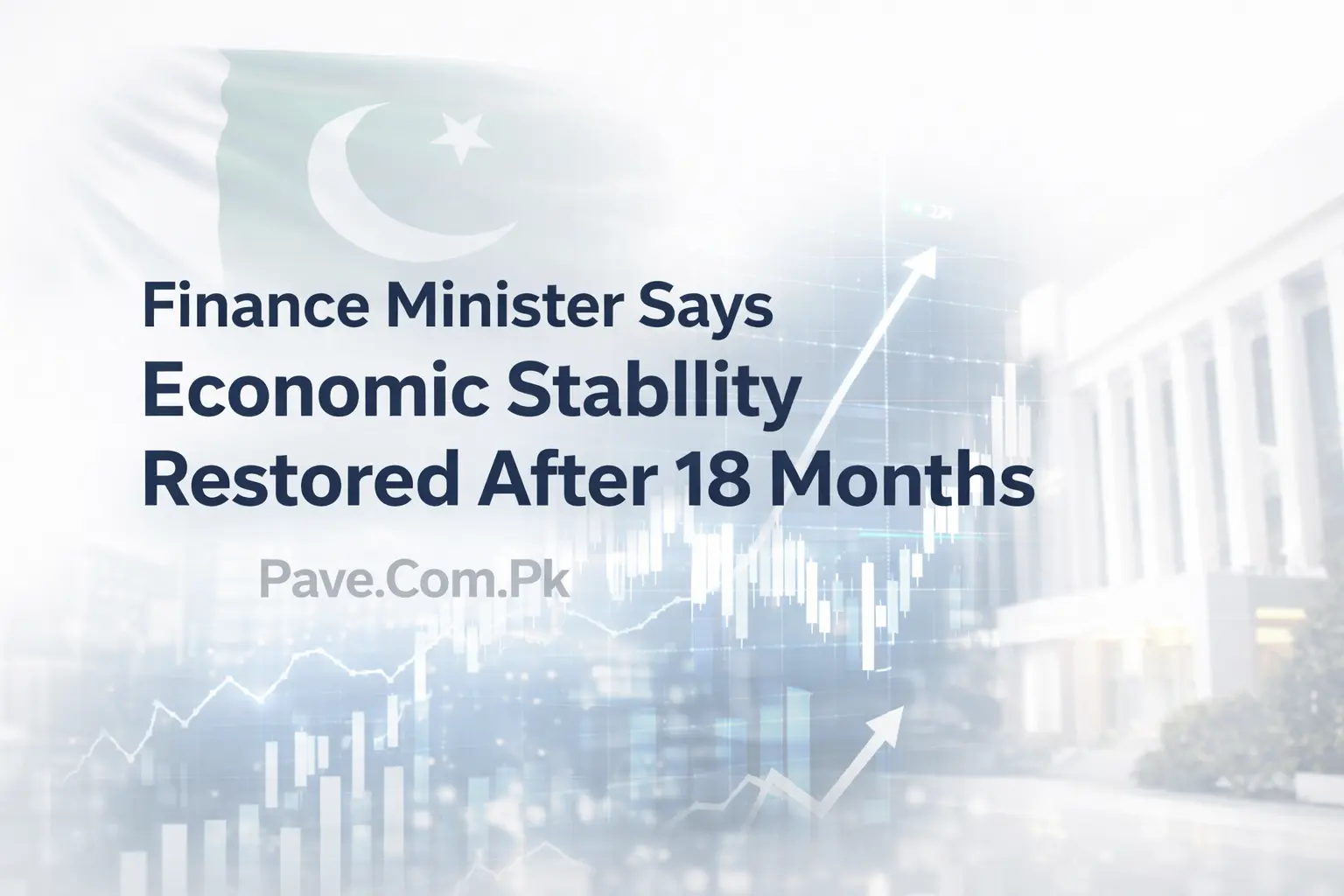
Federal Minister for Finance and Revenue, Senator Muhammad Aurangzeb, has stated that Pakistan has successfully restored macroeconomic stability after 18 months of focused reforms and economic management. The statement came during a high-level meeting at the Finance Division with international investors and development partners.
The delegation included representatives from the International Finance Corporation (IFC), British International Investment (BII), Asian Development Bank (ADB), and Baltoro Capital. The meeting focused on economic reforms, private sector growth, foreign investment, tax policy improvements, and financial stability.
The Finance Minister emphasized that Pakistan’s economy is now moving toward stability and long-term growth.
Key Highlights of the Finance Minister’s Statement
During the meeting, Senator Aurangzeb highlighted major economic improvements:
- Stabilization of the Pakistani rupee
- Improvement in foreign exchange reserves
- Reduction in investment deficit
- Strengthening of private sector participation
- Ongoing trade liberalization reforms
He stated that Pakistan’s foreign exchange reserves are projected to cover approximately three months of imports by the end of the fiscal year, showing improved economic confidence.

What Is Macroeconomic Stability?
Macroeconomic stability refers to:
- Stable inflation
- Controlled fiscal deficit
- Strong foreign exchange reserves
- Stable currency
- Predictable economic policies
For the past 18 months, Pakistan has worked on restoring economic balance after facing financial challenges.
Improvement in Foreign Exchange Reserves
One of the major achievements mentioned by the Finance Minister was the improvement in Pakistan’s foreign exchange reserves.
Stronger reserves help:
- Support imports
- Stabilize the rupee
- Increase investor confidence
- Prevent currency crises
Covering three months of imports is considered an important benchmark for economic stability.

Role of International Financial Institutions
The meeting included representatives from:
- International Finance Corporation (IFC)
- Asian Development Bank (ADB)
- British International Investment (BII)
- Baltoro Capital
These institutions are long-standing development partners of Pakistan.
The Finance Minister appreciated their continued support in:
- Private sector financing
- Infrastructure development
- Local currency initiatives
- SME support

Boosting Private Sector Participation
The government aims to reduce sovereign risk and increase private sector exposure in the economy.
Private sector growth leads to:
- Job creation
- Innovation
- Economic diversification
- Increased exports
The delegation discussed innovative local currency financing mechanisms to strengthen investment opportunities.
Trade Liberalization and Tariff Reforms
Senator Aurangzeb briefed investors about Pakistan’s trade liberalization program.
Key reforms include:
- Tariff rationalization
- Reduction of protectionist barriers
- Enhancing competitiveness
- Expanding export potential
The goal is to position Pakistan on a growth path similar to successful Southeast Asian economies.
Strong Performance of the Services Sector
The services sector is showing strong growth.
Exports from services such as:
- IT and software services
- Freelancing
- Business outsourcing
- Financial services
are expected to continue rising.
This helps reduce trade deficit and supports economic recovery.\
Energy Sector Reforms
Energy reforms remain a top priority.
Efforts include:
- Reducing circular debt
- Renegotiating power contracts
- Improving billing efficiency
- Encouraging renewable energy
Energy stability directly impacts industrial growth and foreign investment.
Tax Policy Improvements and Broadening the Tax Base
The Finance Minister highlighted reforms in tax policy and administration.
Focus areas include:
- Broadening the tax base
- Improving tax collection
- Digitalizing tax systems
- Aligning tax policy with economic growth
Improved tax administration helps reduce fiscal deficit and increase government revenue.
Pakistan’s Debt Repayment Status
Aurangzeb confirmed that Pakistan is meeting all repayment obligations smoothly.
The government is also exploring international debt markets through:
- Panda Bond
- Global Medium-Term Note (GMTN) framework
These programs aim to diversify funding sources and improve financial flexibility.
Inaugural Panda Bond and GMTN Program
The Panda Bond is issued in China’s domestic market.
Benefits include:
- Access to new investors
- Diversification of borrowing sources
- Strengthening bilateral economic ties
The GMTN framework allows flexible international borrowing.
Strengthening Domestic Investor Confidence
The Finance Minister emphasized the importance of domestic investment.
He cited the privatization of Pakistan International Airlines (PIA) through a local consortium as a positive example.
This shows:
- Growing local investor confidence
- Improved privatization process
- Increased business optimism
Focus on Private Equity and Infrastructure
Development partners expressed interest in:
- Private equity investments
- Infrastructure financing
- SME growth
- Mid-cap enterprise development
- Job creation initiatives
Mobilizing domestic and foreign capital is crucial for long-term economic growth.
Importance of Reducing Sovereign Risk
Sovereign risk refers to the risk of a country defaulting on its obligations.
Reducing sovereign risk improves:
- Credit ratings
- Foreign direct investment (FDI)
- Investor trust
- Economic stability
Pakistan aims to strengthen its credit profile.
IMF Review and Economic Reform Continuation
Although not directly mentioned in the meeting summary, Pakistan’s economic reforms are closely linked to IMF programs.
Stability improvements may positively influence:
- IMF reviews
- International lending
- Investor confidence
Continued reforms are necessary for sustained growth.
Challenges Ahead
Despite improvements, challenges remain:
- Inflation control
- Political stability
- Revenue generation
- External financing pressures
The government must continue structural reforms.
Importance of Foreign Investment in Pakistan
Foreign investment supports:
- Infrastructure projects
- Industrial development
- Technology transfer
- Employment generation
Improved economic stability makes Pakistan more attractive to investors.
Collaboration Between Government and Development Partners
The meeting concluded with a shared commitment to:
- Deepen partnerships
- Accelerate reform efforts
- Improve business environment
- Strengthen private sector growth
Collaboration is key for sustainable development.
Public and Market Reaction
Financial markets often respond positively to signs of stability.
Improved reserves and currency stabilization may lead to:
- Stronger stock market performance
- Reduced exchange rate volatility
- Better credit outlook
Investor sentiment plays a vital role in economic recovery.
Long-Term Economic Vision
The government aims to transition toward:
- Investment-driven growth
- Export-led economy
- Private sector-led development
- Sustainable fiscal management
The Finance Minister stressed that reforms are ongoing and not temporary measures.
Conclusion
After 18 months of economic reforms, Pakistan has made notable progress in restoring macroeconomic stability, according to Finance Minister Muhammad Aurangzeb.
Improvements in foreign exchange reserves, currency stability, tax reforms, and private sector engagement indicate positive momentum. Continued collaboration with international financial institutions and development partners remains crucial.
While challenges remain, the government is focused on creating a stable, investment-friendly, and growth-oriented economy.
If reforms continue consistently, Pakistan may achieve stronger economic resilience and long-term prosperity.