Cooking Oil Prices Rise Across Pakistan Amid Supply Shortage
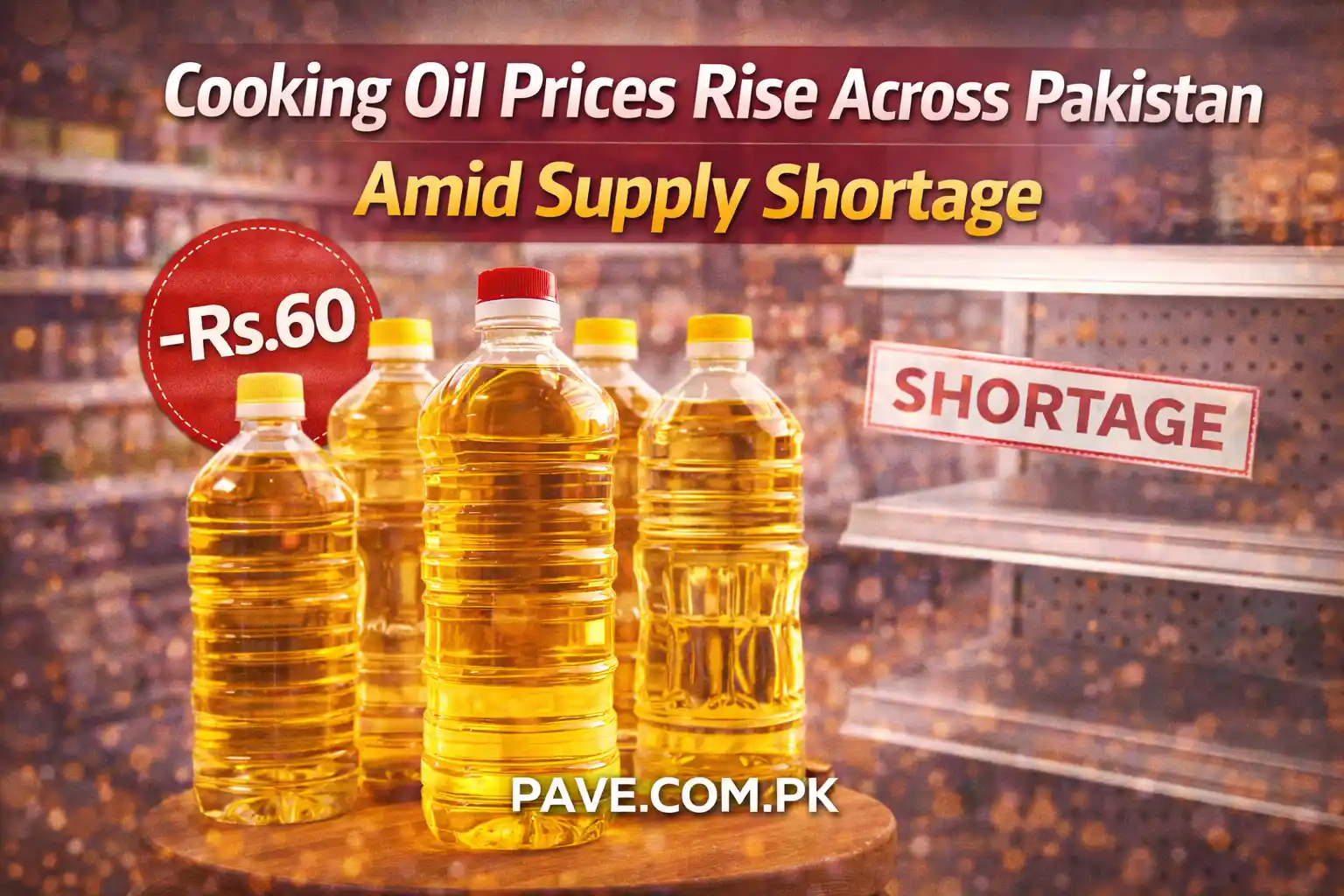
Cooking oil prices in Pakistan have recorded a sharp increase, adding further pressure on households already struggling with inflation. The latest price hike has pushed retail cooking oil rates up by as much as Rs. 60 per liter in several cities, with prices now reaching around Rs. 550 per liter.
This cooking oil price increase in Pakistan February 2026 has raised concerns among consumers, traders, and economists. With flour prices also rising, families are finding it increasingly difficult to manage their monthly budgets.
In this detailed article, we will explain the latest cooking oil price in Pakistan, reasons behind the increase, impact on consumers, government response, and what to expect in the coming weeks.
Latest Cooking Oil Price in Pakistan 2026
According to market data, cooking oil prices have increased significantly over the past week. Shopkeepers report that cooking oil, which was previously available at around Rs. 490 per liter, is now being sold at Rs. 550 per liter in many retail markets.
This means an increase of approximately Rs. 60 per liter in a short period.
Current Market Rates (Approximate)
Cooking Oil Price per Liter: Rs. 550
Previous Price: Rs. 490
Increase: Rs. 60 per liter
This sudden hike in cooking oil rates in Pakistan has surprised many consumers who were already dealing with high prices of essential food items.

Why Have Cooking Oil Prices Increased in Pakistan?
There are several reasons behind the cooking oil price hike in Pakistan.
1. Supply Shortage
Shopkeepers claim that a shortage in supply is one of the main reasons for the increase. When supply is limited and demand remains high, prices automatically rise in the open market.
2. Global Edible Oil Prices
Pakistan imports a large portion of its edible oil. Any increase in international palm oil prices directly affects local cooking oil prices. Global market fluctuations, especially in palm oil exporting countries, often impact local rates.
3. Currency Depreciation
If the Pakistani rupee weakens against the US dollar, import costs rise. Since edible oil is largely imported, exchange rate volatility increases the landed cost, which is then passed on to consumers.
4. Transportation and Production Costs
Higher fuel prices and increased transportation costs also contribute to higher retail cooking oil prices. Production and packaging costs have also risen due to inflation.

Impact on Household Budgets
The increase in cooking oil prices in Pakistan 2026 has intensified financial stress for middle-class and lower-income families.
Cooking oil is an essential kitchen item used daily in almost every household. When its price increases, the monthly grocery bill rises significantly.
For example:
If a family uses 5 liters of cooking oil per month,
Previous Cost: 5 x 490 = Rs. 2,450
Current Cost: 5 x 550 = Rs. 2,750
Extra Monthly Burden: Rs. 300
This may seem small, but when combined with rising flour prices, sugar prices, and vegetable prices, the overall impact becomes serious.

Flour Prices Also Increase
At the same time, flour prices in Pakistan have also gone up. A 5-kg bag of flour is now being sold for around Rs. 900 in some markets, which is significantly higher than other competing brands.
With both cooking oil and flour becoming expensive, households are facing double pressure. These two items are basic food necessities, and their rising prices directly affect daily meals.

Inflation in Pakistan 2026
The cooking oil price hike is part of a broader inflation trend in Pakistan.
Over the past year, prices of essential food items have steadily increased. Consumers are already paying more for:
Flour
Sugar
Rice
Vegetables
Pulses
Cooking oil
Rising inflation in Pakistan 2026 continues to strain household budgets and reduce purchasing power.
Government Response to Rising Cooking Oil Prices
So far, there has been no major official announcement about price control measures specifically for cooking oil. However, authorities usually monitor market conditions and may take steps if prices continue to rise.
Possible measures may include:
Increasing imports
Monitoring hoarding
Crackdown on artificial shortages
Subsidy adjustments
Consumers are hoping that the government will take steps to stabilize cooking oil prices in Pakistan.
Market Experts’ View
Market analysts say that cooking oil prices may remain high if global edible oil prices do not decrease.
They believe that:
If international palm oil prices stabilize, local prices may also come down.
If the rupee strengthens, import costs may reduce.
If supply improves, retail prices could see some correction.
However, if supply issues continue, cooking oil prices in Pakistan may remain elevated.
Comparison With Previous Years
Compared to previous years, cooking oil prices have seen significant volatility.
In earlier years, cooking oil was available at much lower rates. However, global commodity trends, exchange rate fluctuations, and domestic inflation have contributed to price instability.
Consumers now regularly search online for:
Latest cooking oil price in Pakistan
Cooking oil rate today
Edible oil price update February 2026
Cooking oil inflation Pakistan
The rising search trend shows how concerned people are about food price increases.
Urban vs Rural Impact
The impact of rising cooking oil prices is different in urban and rural areas.
Urban households rely heavily on packaged cooking oil, making them more vulnerable to price hikes. Rural areas may sometimes use alternative sources like desi ghee or locally produced oil, but most families still depend on market supply.
Small restaurants and food vendors are also affected. Higher cooking oil costs may lead to:
Increased food prices
Smaller portion sizes
Lower profit margins
Long-Term Effects on the Economy
If food inflation continues, it can affect the broader economy.
Higher food prices reduce disposable income. When families spend more on essentials, they spend less on other goods and services. This slows economic activity.
High inflation can also:
Increase poverty levels
Reduce savings
Create social pressure
Therefore, stabilizing cooking oil prices is important not just for households but also for overall economic stability.
What Consumers Can Do
While consumers cannot control market prices, they can take some practical steps:
Buy in bulk when prices are stable
Compare rates at different stores
Avoid panic buying
Use oil efficiently to reduce wastage
However, these measures offer only limited relief when prices rise significantly.
Future Outlook for Cooking Oil Prices in Pakistan
Experts believe that the future trend of cooking oil prices will depend on:
Global edible oil markets
Exchange rate stability
Import policies
Supply chain efficiency
If international prices fall and supply improves, there is a chance of price correction. Otherwise, consumers may have to continue facing higher rates.
For now, cooking oil price in Pakistan February 2026 remains a major concern for households across the country.
Conclusion
The sharp increase in cooking oil prices across Pakistan has added to the financial burden on families already struggling with inflation. With prices rising from Rs. 490 to Rs. 550 per liter, consumers are feeling the pressure.
Combined with rising flour prices and other essential goods, this hike highlights the ongoing inflation challenges in Pakistan 2026. Whether prices stabilize or increase further will depend on global markets, supply conditions, and government action.
Consumers are closely watching the market and hoping for relief in the coming weeks.