Pakistan May Set Age Limit for Children on Social Media
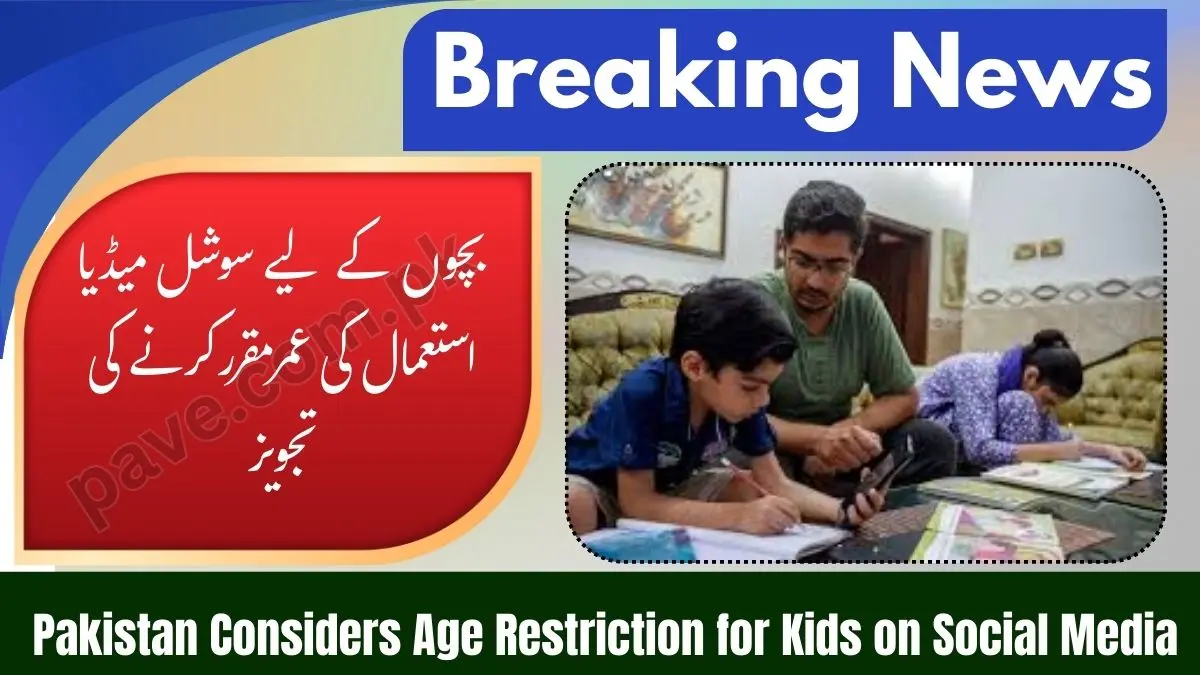
In line with a growing global focus on digital safety, Pakistan has been actively working on legislation aimed at restricting social media access for minors. What began as a strict and controversial proposal in mid-2025 has, by early 2026, evolved into a more measured regulatory framework shaped by political debate, public response, and judicial scrutiny.
Rather than a blanket ban, the current direction reflects a balancing act between child protection, parental responsibility, and practical enforcement.
Current Status of the Age Limit (2025–2026)
The key legislative instrument driving this debate is the Social Media (Age-Restricted Users) Bill 2025. Below is a clear breakdown of how the policy has developed:
1. Original Proposal (July 2025)
Senators initially introduced a bill proposing a complete ban on social media accounts for children under 16. The restriction applied to major platforms including Facebook, TikTok, Instagram, WhatsApp, and others.
2. Policy Reversal (August 2025)
Following strong criticism over the proposed age threshold and the severity of penalties, the bill was formally withdrawn for revision. Lawmakers acknowledged concerns around feasibility, parental rights, and over-criminalization.
3. Revised Target Age
The government is now considering lowering the minimum age to 13 or 14, aligning Pakistan more closely with international standards such as the US Children’s Online Privacy Protection Act (COPPA). However, a segment of the Senate continues to push for retaining 16 as the cutoff age, keeping the debate unresolved.
4. Judicial Intervention (January 2026)
A student-led petition filed in the Lahore High Court called for a legally enforced age limit of 16, citing social media’s adverse effects on mental health, academic focus, and behavioral development.
As a result, the federal government and the Pakistan Telecommunication Authority (PTA) were directed to submit formal responses outlining their regulatory roadmap.
This judicial involvement has added urgency and accountability to the policy process.

Key Provisions and Proposed Penalties
The revised framework is among the strictest proposed in the region, built on the principle of shared responsibility between digital platforms, parents, and the state.
Platforms Covered
TikTok, Instagram, Facebook, X (formerly Twitter), YouTube, WhatsApp, Snapchat, and Bigo Live.
Corporate Penalties
Platforms that fail to comply with age-restriction requirements may face fines ranging from Rs. 50,000 to Rs. 5 million, depending on the severity and repetition of violations.
Individual Accountability
Adults, including parents or guardians, who deliberately assist minors in bypassing age verification could face penalties of up to six months’ imprisonment.
Enforcement Authority
The PTA will have the legal power to identify and block underage accounts, as well as to oversee compliance by social media companies operating in Pakistan.

Implementation Challenges and Open Questions
Despite clear legislative intent, several practical hurdles remain:
Age Verification
Authorities are exploring digital age-verification systems, potentially linked to NADRA records. While this could improve accuracy, it has raised serious privacy and data-protection concerns among civil society groups and technology experts.
Platform Compliance
Global tech companies such as Meta and ByteDance have historically struggled to enforce strict age gates, especially in countries without universally adopted digital ID systems.
Parental Concerns
Many parents rely on social media for educational content, communication, and supervised learning, leading to growing support for a parental-consent model rather than an outright ban for teenagers.

The “Teen Accounts” Signal: A Shift in Strategy
In late 2025, the PTA, in collaboration with Meta, introduced Instagram Teen Accounts in Pakistan. These accounts automatically apply enhanced privacy settings, content filters, and interaction limits for users under 16.
This move strongly suggests that policymakers may favor a “managed access” approach instead of a total prohibition, particularly for older teens. It reflects a broader recognition that regulation, not exclusion, may offer a more sustainable path forward.

Bottom Line
As of early 2026, Pakistan has not implemented a final, nationwide social media age ban, but the direction is clear: tighter controls, stronger accountability, and increased scrutiny of how minors engage online. The final shape of the law will likely emerge from continued legislative debate, court guidance, and negotiations with global tech platforms.