Virus Outbreak Alert: ICC T20 World Cup in Trouble After Nipah Virus Cases in India
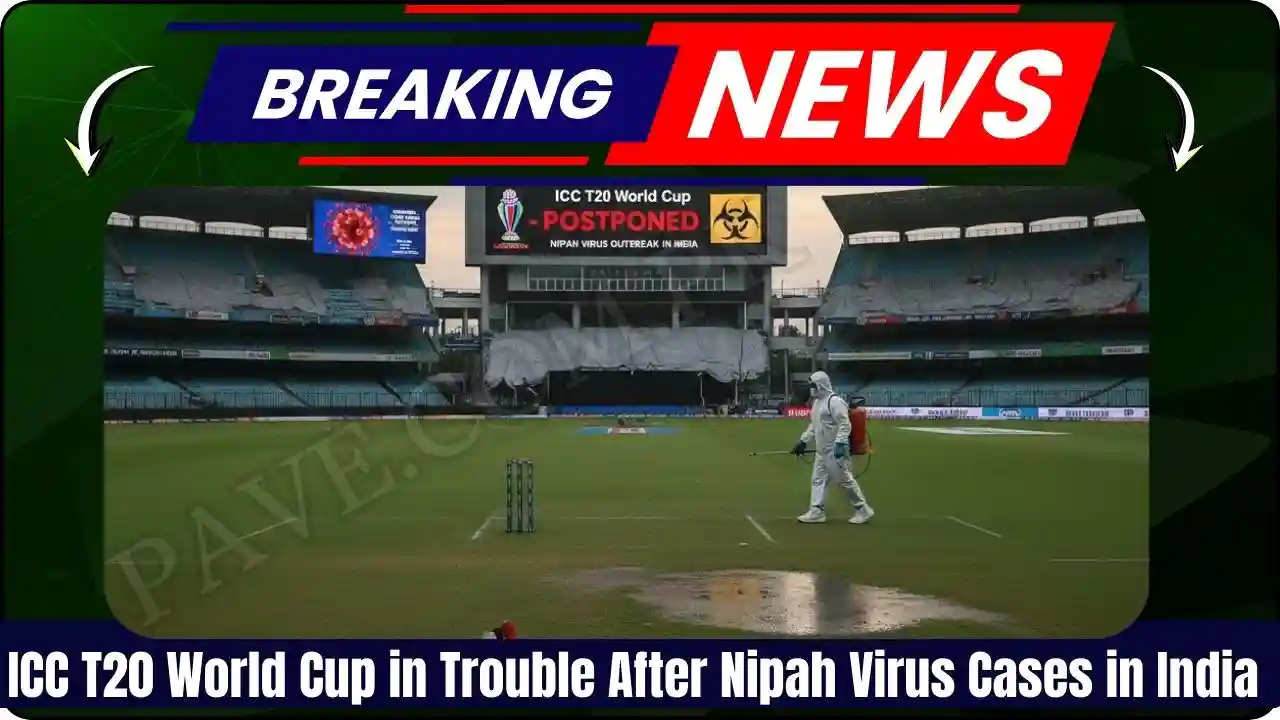
The ICC T20 World Cup in Trouble After Nipah Virus Cases in India has been put on high alert following reports of Nipah virus cases in India, raising serious concerns about the safety and smooth organization of the ICC T20 World Cup. With millions of fans, players, officials, broadcasters, and support staff involved, any public health emergency can have far-reaching consequences for an international sporting event of this magnitude.
This developing situation has triggered intense discussions within cricket boards, health authorities, and the International Cricket Council about preparedness, contingency plans, and possible disruptions. While no final decision has been announced, the presence of Nipah virus cases in India has undeniably placed the upcoming T20 World Cup under a cloud of uncertainty.
What Is the Nipah Virus? A Serious Public Health Threat
The Nipah Virus is a highly dangerous zoonotic virus that can spread from animals to humans and also through human-to-human contact. First identified in 1998, the virus is known for its high fatality rate and severe symptoms, which often include:
- High fever
- Severe headaches
- Respiratory problems
- Encephalitis (inflammation of the brain)
- Rapid deterioration in critical cases
Health experts consider Nipah virus outbreaks particularly alarming because there is no specific vaccine or definitive treatment currently available. Management mainly relies on supportive care and strict containment measures.

Nipah Virus Cases in India: Why It Matters for the T20 World Cup
India has experienced Nipah virus outbreaks in the past, especially in certain regions, and each episode has prompted swift public health responses. However, the timing of recent cases has raised red flags because of India’s central role in international cricket.
India is not only a cricketing powerhouse but also a major hub for:
- International team travel
- Broadcaster operations
- ICC logistics and planning
- Fan tourism and sponsorship activities
Even if matches are scheduled outside India, any outbreak in a major cricketing nation can impact travel, preparation camps, and administrative coordination, thereby affecting the ICC T20 World Cup.

Why the ICC T20 World Cup Could Be at Risk
1. Player and Staff Safety Concerns
The safety of players, coaches, match officials, and support staff is the ICC’s top priority. A contagious virus with a high mortality rate naturally creates anxiety among teams and medical units. Even a small risk can lead to:
- Hesitation from teams to travel
- Demands for stricter bio-secure bubbles
- Requests for schedule adjustments
2. Travel Restrictions and Quarantine Rules
Virus outbreaks often result in sudden travel advisories or quarantine requirements. These restrictions can complicate:
- Team arrivals and departures
- Practice schedules
- Pre-tournament warm-up matches
Any disruption to international travel can severely affect tournament timelines.
3. Fan Attendance and Stadium Capacity
If health authorities recommend avoiding large gatherings, stadium attendance may be limited or matches could be played behind closed doors. This would impact:
- Ticket revenue
- Stadium atmosphere
- Local tourism and hospitality sectors
4. Broadcasting and Commercial Impact
The ICC T20 World Cup is a multi-billion-dollar event driven by broadcasting rights and sponsorship deals. Health scares can lead to:
- Reduced advertising confidence
- Lower viewership expectations
- Insurance and contractual complications
ICC’s Likely Response to the Nipah Virus Situation
While the ICC has not issued any drastic announcements yet, history suggests a multi-layered response strategy, including:
- Close coordination with global and local health authorities
- Enhanced medical screening for players and officials
- Emergency health protocols at venues
- Flexible scheduling options
The ICC has previously handled tournaments during global health crises, and those experiences may help guide decision-making this time as well.

Impact on Teams and Players
Cricketers are elite athletes whose preparation depends heavily on mental focus and physical routines. Uncertainty surrounding a virus outbreak can affect:
- Training intensity
- Mental well-being
- Willingness of players’ families to travel
Some boards may even consider withdrawing players if they feel risks are too high, especially for individuals with underlying health conditions.
Lessons From Past Health Crises in Global Sports
Global sports have faced similar challenges before, where outbreaks forced organizers to rethink traditional approaches. Common lessons include:
- Early transparency builds trust
- Clear communication reduces panic
- Health safety must override commercial pressure
These lessons will likely influence how the ICC handles the Nipah virus alert in relation to the T20 World Cup.
Can the ICC T20 World Cup Be Postponed or Relocated?
At this stage, postponement or relocation remains speculative. Such decisions depend on:
- The scale and spread of the virus
- Recommendations from health experts
- Government policies in host and participating countries
Postponing a global tournament is a massive logistical challenge, but the ICC has shown in the past that player safety comes first.
What This Means for Cricket Fans Worldwide
For fans, the uncertainty can be frustrating. The ICC T20 World Cup is one of the most anticipated cricket events, uniting supporters across continents. While concerns are valid, fans should remember:
- Monitoring does not mean cancellation
- Preventive action is a sign of responsible governance
- Health-first decisions protect the long-term future of the sport
Patience and understanding will be key as the situation evolves.
Future Outlook: Caution, Not Panic
Health experts emphasize that alertness is essential, but panic is not helpful. Nipah virus outbreaks, though serious, are often contained with swift action. Continuous monitoring, transparent communication, and strong health infrastructure can significantly reduce risks.
The ICC T20 World Cup remains a symbol of global unity through sport, and all stakeholders are working to ensure it can proceed safely and successfully.
Conclusion
The emergence of Nipah virus cases in India has undoubtedly cast a shadow over the ICC T20 World Cup. However, it is still too early to predict severe outcomes. With proactive health measures, coordination between cricket authorities and medical experts, and responsible decision-making, the tournament can still move forward without compromising safety.
Cricket has weathered many storms before, and once again, adaptability and caution will define the path ahead.
FAQs: ICC T20 World Cup and Nipah Virus Alert
Q1: What is the Nipah virus and why is it dangerous?
The Nipah virus is a zoonotic virus that can cause severe illness and has a high fatality rate. It spreads through contact with infected animals or humans and currently has no specific vaccine.
Q2: Are ICC T20 World Cup matches officially cancelled?
No, there is no official cancellation. Authorities are monitoring the situation closely.
Q3: Can the ICC T20 World Cup be postponed due to the virus?
Postponement is possible only if health risks escalate significantly. No such decision has been announced yet.
Q4: Will players refuse to participate because of Nipah virus fears?
Some players or boards may express concern, but participation decisions will depend on safety assessments and medical advice.
Q5: How is the ICC preparing for health emergencies?
The ICC typically implements strict health protocols, medical screenings, and coordination with local health authorities.