PCB Confirms T20 World Cup 2026 Entry, Plans ICC Protest
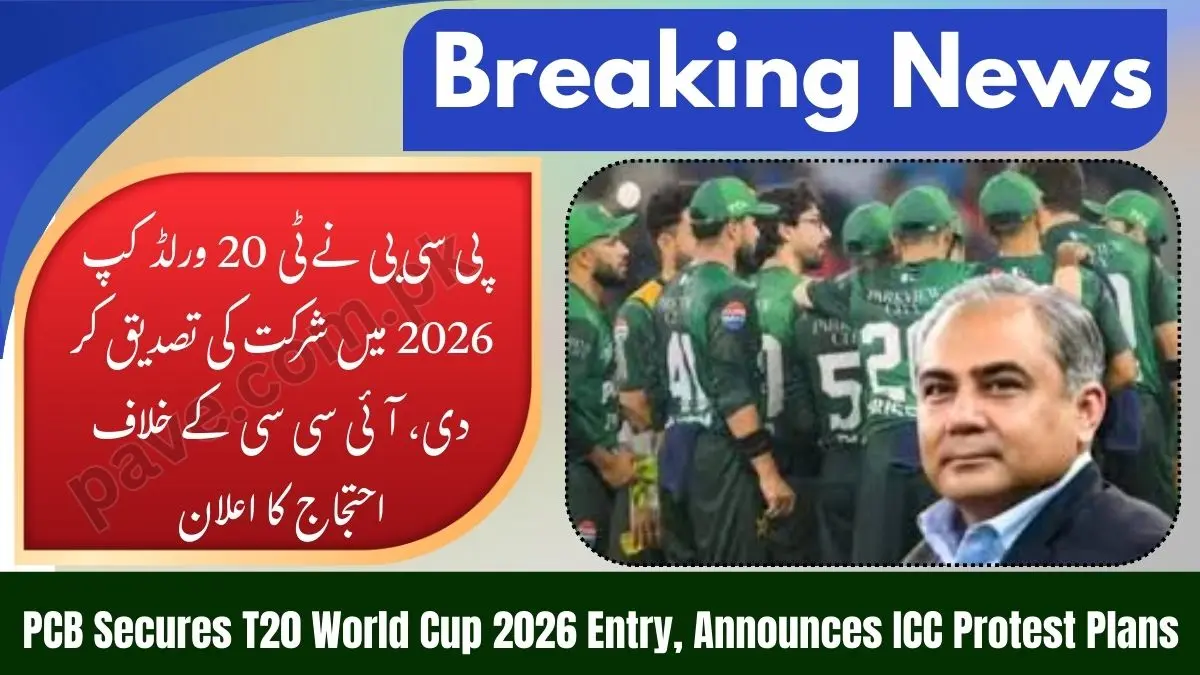
Pakistan’s participation in the T20 World Cup 2026 has entered a decisive and politically sensitive phase. After days of speculation, protests, and behind-the-scenes diplomacy, the Pakistan Cricket Board has adopted what insiders are calling a “conditional participation” strategy—keeping all options open until a final government call is made.
Below is the full, verified picture of where things stand, why Pakistan is unhappy, and what could happen next.
1. The Official Standpoint: Conditional Participation
Following a high-level meeting on January 26, 2026, between Mohsin Naqvi (PCB Chairman & Interior Minister) and Shehbaz Sharif, a clear interim strategy was finalized.
What Has Been Decided So Far
- Squad Announced:
To avoid a technical breach of ICC rules or an automatic forfeit, the PCB announced a 15-member squad on January 25, led by Salman Ali Agha. - Final Deadline Set:
Mohsin Naqvi confirmed that Pakistan’s final and binding decision will be announced between January 30 and February 2, after the Prime Minister completes consultations with stakeholders. - Preparation Continues:
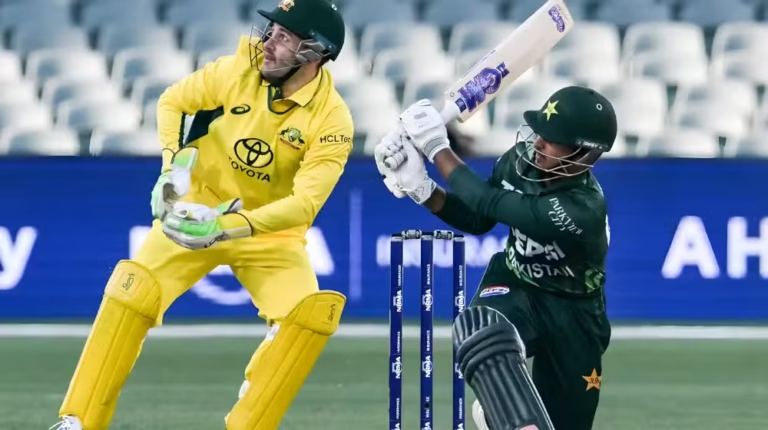
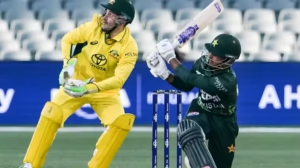
Pakistan’s cricketing preparations are continuing as normal, including the upcoming Australia T20I series, to avoid sporting disruption if participation is confirmed.
This approach keeps Pakistan legally compliant with tournament regulations while preserving political leverage.
2. The Core Dispute: “ICC Double Standards”
The controversy revolves around what Pakistan describes as selective flexibility by the ICC.
Pakistan’s Argument
- When India refused to travel to Pakistan for the Champions Trophy, the International Cricket Council (ICC) approved a hybrid model.
- However, when Bangladesh requested a similar arrangement—refusing to play matches in India—the request was rejected.
- Bangladesh was subsequently replaced by Scotland, triggering backlash within Asian cricket boards.
Pakistan has formally protested this inconsistency, calling it a breach of neutrality and a dangerous precedent for future tournaments.

3. The “Boycott India Match” Strategy (Middle Ground)
Instead of a complete withdrawal, PCB insiders say Pakistan is exploring a targeted protest.
What This Means
- Pakistan may skip only one match: the high-profile India vs Pakistan fixture scheduled for February 15 in Colombo.
- Tournament participation would continue, avoiding a total ICC standoff.
Why This Option Matters
- Sporting Impact:
Pakistan would lose just 2 points, not automatic elimination. - Commercial Impact:
The India–Pakistan clash is the most valuable fixture in world cricket. Skipping it could cost:- Broadcasters & sponsors an estimated $35–40 million
- Diplomatic Message:
This would act as a symbolic protest against ICC policy while avoiding complete isolation.
PCB officials see this as maximum leverage with minimum long-term damage.
4. Risks of a Full Boycott (Worst-Case Scenario)
If Pakistan opts for a total withdrawal by February 2, the consequences could be severe.
Possible ICC Sanctions
- Financial Freeze:
Suspension of Pakistan’s share in the $3.2 billion ICC media rights pool. - PSL Fallout:
Foreign players could be denied NOCs, severely weakening the Pakistan Super League. - Replacement Team:
Reports suggest Uganda could be drafted into Pakistan’s slot in Group A.
Such a move could isolate Pakistan cricket internationally for years.

5. Timeline: Key Dates to Watch
| Date | Event | Status |
|---|---|---|
| Jan 25 | 15-member squad announced | ✅ Completed |
| Jan 29 | T20I vs Australia (Lahore) | On schedule |
| Jan 30 | Preliminary decision window | Upcoming |
| Feb 2 | Final decision deadline | 🔴 Critical |
| Feb 7 | T20 World Cup begins | Official start |
6. The Bigger Picture: Sports Diplomacy in Action
This situation is not just about cricket—it’s about sports diplomacy, commercial power, and governance credibility.
Pakistan’s position is simple:
- If rules are flexible for one board, they must be flexible for all.
- The India–Pakistan match is being used as strategic leverage, not as a threat—but as a negotiation tool.
As one senior official privately put it, this is a “game of chicken” between cricket’s biggest commercial stakeholders and the governing body meant to treat them equally.
Final Outlook
All eyes are now on February 2, 2026.
Until then, Pakistan remains officially in—but politically dissatisfied.
Whether the PCB chooses participation, partial boycott, or full withdrawal, the decision will shape Pakistan’s cricketing relationships for the rest of the decade.