Electric Vehicles Get Major Boost as Govt Plans Rs. 100 Billion Subsidy Till 2030
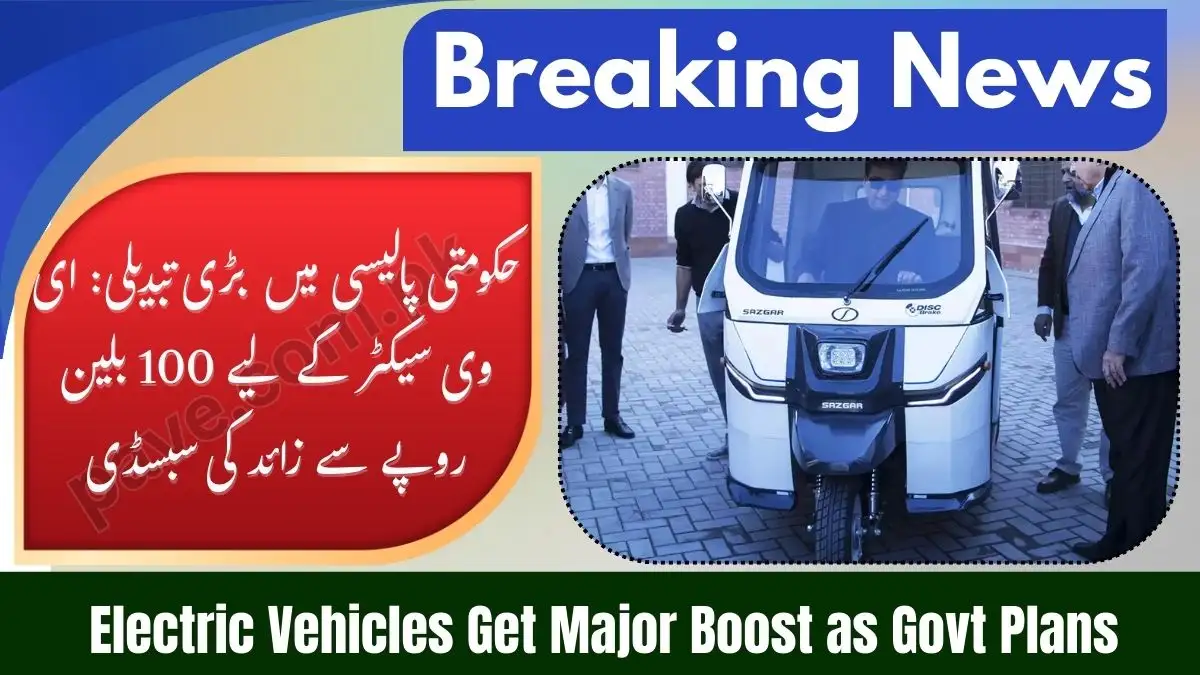
Pakistan has officially entered a new phase of transport and energy policy, committing more than Rs. 100 billion over the next five years to accelerate the shift toward electric mobility. The initiative—designed to cut fuel imports, reduce urban pollution, and make EVs affordable for the masses—is one of the most ambitious green transitions ever launched in the country.
At the center of this effort is a phased subsidy program, now active under Phase-I, with clear financial, environmental, and social targets through 2030.
1. The Financial Roadmap (2025–2030): How the Rs. 100.36 Billion Will Be Spent
The federal government has approved a total allocation of Rs. 100.36 billion, to be released in structured phases up to FY 2029–30. For the current fiscal year 2025–26, an initial Rs. 9 billion has already been released, officially kickstarting the program.
Planned Annual Subsidy Allocation
| Fiscal Year | Allocation |
|---|---|
| FY 2025–26 | Rs. 9.00 billion |
| FY 2026–27 | Rs. 19.00 billion |
| FY 2027–28 | Rs. 24.16 billion |
| FY 2028–29 | Rs. 26.62 billion |
| FY 2029–30 | Rs. 22.64 billion |
This staggered structure is designed to scale adoption gradually, avoid fiscal shocks, and allow domestic EV manufacturing to grow in parallel.

2. Who Gets the Subsidy? Focus on Bikes and Rickshaws
Rather than starting with expensive electric cars, the government has strategically targeted two-wheelers and three-wheelers, which account for the largest share of daily urban traffic in Pakistan.
Subsidy Details by Vehicle Type
- Electric Bikes:
Subsidy ranging from Rs. 50,000 to Rs. 80,000 per unit - Electric Rickshaws / Loaders:
Subsidy of up to Rs. 200,000 per vehicle
This approach directly benefits low- and middle-income commuters, delivery riders, and small traders—where fuel savings are felt immediately.
Reserved Quotas (Social Inclusion Built In)
To ensure equitable access, the scheme includes dedicated quotas:
- 25% reserved for women
- 10% reserved for commercial delivery riders
- A special quota for top-performing students
This makes the EV policy not just an environmental initiative, but a social mobility program as well.
3. How to Apply and Receive the Subsidy
The scheme is being implemented by the Engineering Development Board (EDB) under the banner of PAVE – Pakistan Accelerated Vehicle Electrification.
Transparent Digital Process
- Applications are submitted via a central online portal
- Selection is conducted through an e-balloting system, ensuring fairness and eliminating manual discretion
Two Payment Options
Option 1: Self-Finance (Reimbursement Model)
- Buyer pays the full vehicle price to the manufacturer
- The subsidy amount is credited directly to the buyer’s bank account
- Payments are processed via the State Bank of Pakistan
Option 2: Bank Leasing
- Vehicle purchased through easy monthly installments
- Participating banks offer subsidized interest rates
- Reduces upfront burden for salaried individuals and riders
4. The “Green” Targets for 2030: Why This Policy Matters
This Rs. 100 billion investment is not symbolic—it is tied to clear, measurable national targets.
By 2030, the Government Aims to Achieve:
- 30% EV Market Share
30% of all new vehicle sales in Pakistan to be electric - $1 Billion Annual Fuel Savings
Major reduction in oil import bills, easing pressure on foreign exchange reserves - $405 Million in Health Cost Savings
Lower smog levels and emissions, especially in urban centers like Lahore, Karachi, and Islamabad
In effect, the policy links transport reform with economic stability and public health.

5. Charging Infrastructure: Supporting 100,000+ EVs
Recognizing that subsidies alone are not enough, the government has paired incentives with infrastructure expansion.
Motorway Charging Network
- 40 fast-charging stations planned on motorways
- Average spacing: 105 km
- Designed to support intercity EV travel
Building Code Reforms
New regulations now mandate EV charging points in:
- Residential apartment buildings
- Commercial plazas
- Large parking facilities
This ensures future-proof urban development and reduces “range anxiety.”
Phase-I vs Phase-II: What’s Coming Next?
- Phase-I (Current):
Focused on 41,000 vehicles, mainly bikes and rickshaws - Phase-II (Expected Later in 2026):
Planned expansion to:- Electric cars
- Heavy commercial vehicles
- Buses and logistics fleets
This phased rollout allows policymakers to fine-tune execution before scaling up.
Final Analysis: A Structural Shift, Not a Short-Term Scheme
Pakistan’s EV subsidy program marks a fundamental shift in transport policy. Instead of elite-focused incentives, it prioritizes mass adoption, affordability, and long-term savings—for both citizens and the state.
If implementation remains transparent and infrastructure keeps pace, this Rs. 100 billion roadmap could:
- Transform daily commuting
- Reduce fuel dependency
- Cut pollution at its source
In short, this is not just an EV program—it is a redefinition of how Pakistan moves between now and 2030.