
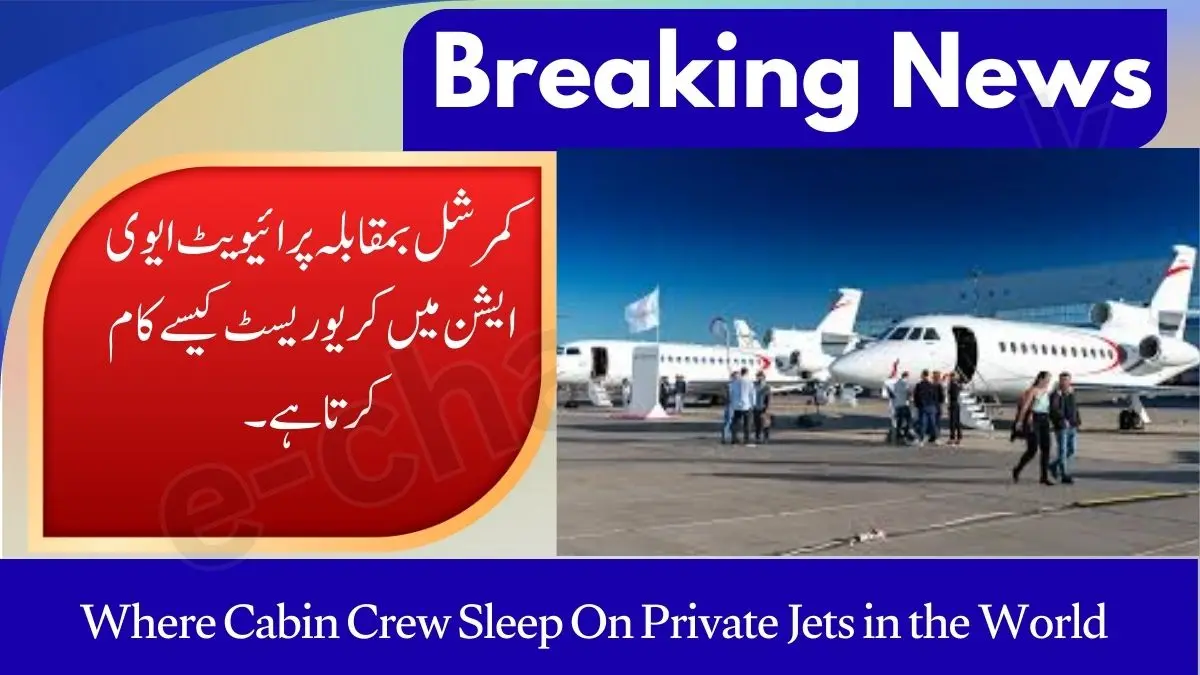
Where Cabin Crew Sleep On Private Jets in the World
Long-haul flights—whether commercial or private—require crew rest to ensure safety, alertness, and regulatory compliance. However, how and where cabin crew sleep on private jets differs dramatically from commercial airlines.
On airline flights exceeding eight hours, relief pilots and flight attendants are mandatory, with rest periods strictly regulated. Dedicated crew rest modules, blocked seats, and precise rotation schedules exist solely to manage fatigue and maintain safety.
In private aviation, the rules—and realities—are very different.
How Crew Rest Works in Commercial vs Private Aviation
Commercial airlines operate under Part 121 regulations in the United States, which strictly govern:
- Crew duty limits
- Mandatory rest facilities
- Minimum number of pilots and flight attendants
Private jets, however, typically operate under Part 91 or Part 135, applying to individual owners and charter operators.
Under these rules:
- Flight attendants are not legally required on most private jets
- Dedicated crew rest areas are optional, not mandatory
- Operators have broad flexibility in staffing and cabin design
This regulatory gap explains why crew rest on private jets varies so widely across aircraft and operators.

Flight Attendants on Private Jets: Optional, Not Mandatory
Most business jets carry fewer than 20 passengers, placing them below the threshold that legally requires flight attendants.
Even ultra-long-range jets such as:
- Gulfstream
- Bombardier Global series
- Dassault Aviation Falcon series
…are not required by law to carry cabin crew.
Why Flight Attendants Are Still Onboard
When attendants are present, their role is hospitality-driven, not regulatory.
Charter operators such as:
- VistaJet
- NetJets
often staff attendants on larger aircraft to deliver luxury service, fine dining, and personalized care.
Training emphasizes:
- High-end service standards
- Discretion and privacy
- Culinary presentation
- VIP protocol
In some private arrangements, aviation experience isn’t even required—and compensation can be extraordinary. In 2023, Netflix advertised a primary flight attendant role with a reported salary of $385,000, highlighting the exclusivity of the sector.

Where Cabin Crew Actually Sleep on Private Jets
Because flight attendants are optional, private jets rarely include dedicated cabin-crew sleeping quarters.
Common Crew Rest Arrangements
- Reclining passenger seats
- Jumpseats near the galley
- Small bunk beds (on select aircraft)
- Curtains or sliding doors for privacy
Unlike commercial jets—where crew rest modules are hidden above the cabin or in the cargo crown—private jet crew rest areas are often part of the visible cabin environment.
Comfort is functional, not luxurious.

Pilot Rest Areas: More Structured but Still Compact
Pilots on private jets have more defined rest provisions, especially on long-range flights.
Long-Haul Pilot Staffing
- Standard flights: 2 pilots
- Flights over 8–10 hours: 3–4 pilots
- Ultra-long-haul missions may require augmented crews
Pilot Rest Facilities May Include:
- Reclining seats
- Compact bunk beds
- Private areas near the cockpit or galley
- Curtains or sliding doors for separation from passengers
These spaces are designed for alertness, not indulgence, ensuring pilots remain compliant with duty-time regulations.

Private Jets That Offer Dedicated Crew Rest Facilities
Only large-cabin, intercontinental jets are equipped for true crew rest.
Aircraft With Built-In Crew Rest Options
- Bombardier Global 5000 / 6000 / 7500 / 8000
- Gulfstream G600 / G650ER / G700
- Dassault Falcon 7X / 8X
- Airbus ACJ series
- Boeing BBJ series
These aircraft include compact, private rest zones—often hidden behind panels or near the galley—allowing crews to rest discreetly without disrupting passengers.
Life Behind the Luxury: The Reality for Private Jet Crew
Working in private aviation looks glamorous—but it’s demanding.
Challenges
- Unpredictable schedules
- Long duty days
- Broader responsibilities (cleaning, luggage handling)
- Minimal rest facilities
Rewards
- Global travel
- Exclusive clientele
- Exceptional compensation
- Personalized work environment
- Prestige and discretion
Crew members become trusted extensions of the aircraft owner or charter brand, where flexibility and professionalism matter more than rigid structure.
Commercial Airlines vs Private Jets: A Stark Contrast
On airlines such as Emirates or United Airlines:
- Crew presence is mandatory
- Rest is legally structured
- Facilities are purpose-built
On private jets:
- Crew is optional
- Rest is operationally driven
- Comfort depends on aircraft size and owner preference
Passengers rarely notice—but behind the scenes, the difference is profound.
Bottom Line
Crew rest on private jets operates in a completely different world from commercial aviation.
- Regulations are flexible
- Flight attendants are often optional
- Rest facilities are minimal but functional
Pilots and cabin crew balance comfort, safety, and operational necessity while delivering a seamless luxury experience for passengers.
From short regional hops to intercontinental flights, private aviation blends freedom, discretion, and exclusivity—and crew rest reflects that same philosophy above the clouds.