
New EV Range Test Exposes Shortfalls in Tesla Model Y and Kia EV3
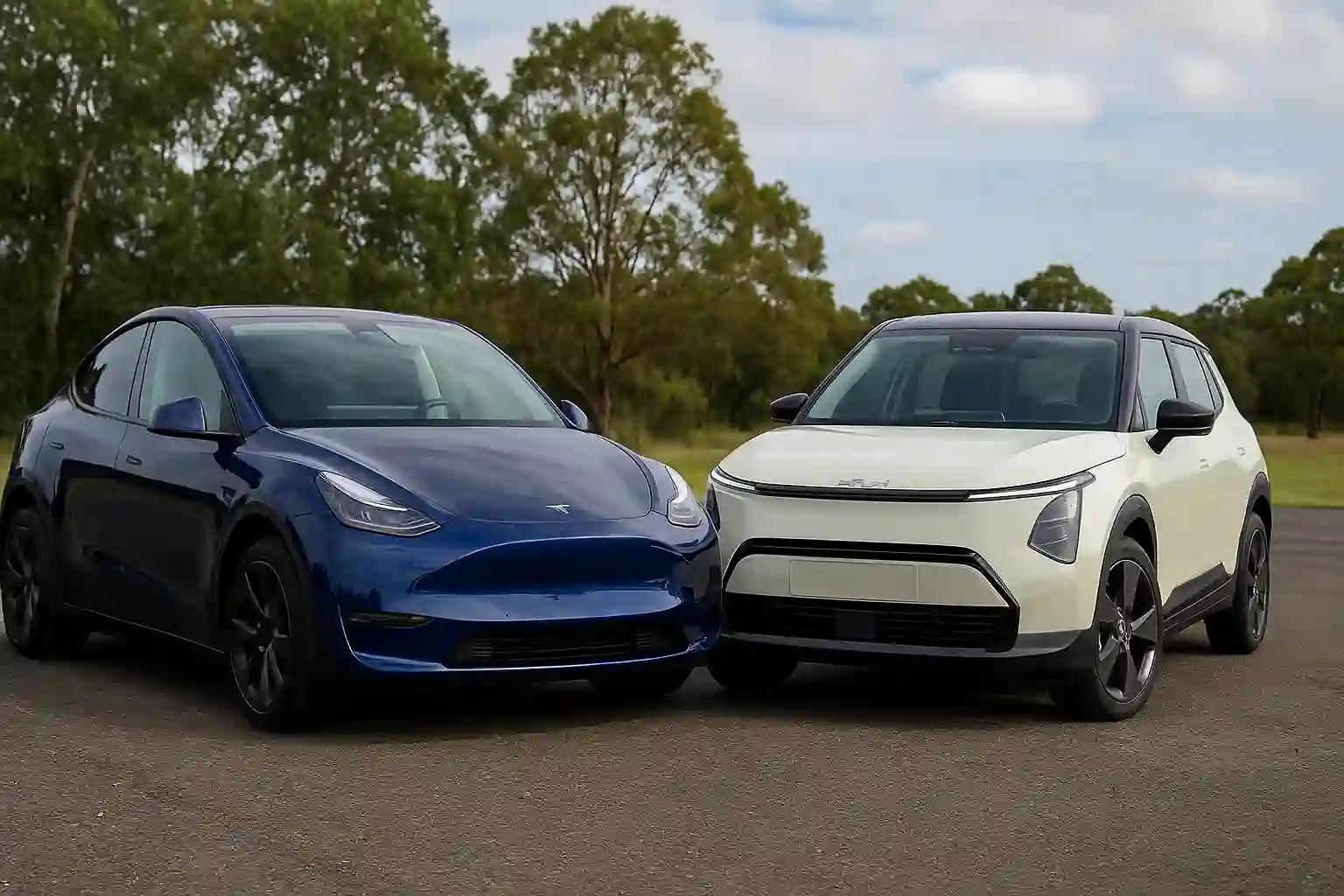
Electric vehicles continue to gain popularity around the world, including in Australia, where buyers are increasingly turning to EVs for lower running costs and reduced emissions. But a new report by the Australian Automobile Association (AAA) has raised important questions about how far these vehicles can actually travel on a single charge.
In the latest round of tests under the Commonwealth-funded Real-World Testing Program, the AAA examined four electric vehicles: the 2025 Tesla Model Y, the 2025 Kia EV3, the 2024 Smart #1, and the 2023 MG4. The results revealed that all four EVs failed to meet their official manufacturer-claimed driving ranges. The discrepancies ranged from 3% to a massive 31%, proving that real-world performance can differ sharply from laboratory ratings.
These findings are crucial as EV buyers often depend on advertised range figures to decide which model suits their daily needs. The test results now provide a clearer picture for consumers who want honest and practical information before making the switch to electric mobility.
Real-World Testing Shows Noticeable Range Gaps
The AAA conducted these tests in real Australian conditions, including highway driving, city traffic, climate variations and typical user behaviour. Unlike laboratory tests—where vehicles run in controlled environments—the real-world tests reflect how people actually use their cars.
MG4 Reports the Biggest Shortfall
Among the four vehicles, the 2023 MG4 showed the most dramatic gap. While its official laboratory range is 405 kilometres, the real-world test delivered only 281 kilometres. This results in a 31% shortfall, raising concerns for potential buyers who rely on longer-range performance.
The MG4 has been marketed as an affordable, high-value EV, but such a large discrepancy may make some consumers think twice. Range anxiety already remains a common issue among EV users, and a 31% reduction is not easy to ignore.
Smart #1 Falls Short by 13%
The 2024 Smart #1, a compact electric SUV gaining attention for its modern design and pricing, also underperformed. Instead of its claimed 420 km, it managed 367 km in the real test. This 13% shortfall indicates that even well-reviewed EVs may struggle to match their lab numbers when faced with real roads and real conditions.
Kia EV3 Misses by 11% Despite New Technology
The upcoming 2025 Kia EV3, one of the most anticipated electric SUVs in the global market, also recorded a noticeable gap. With a claimed range of 604 km, it achieved 537 km—an 11% shortfall.
While still offering strong range compared to many competitors, this difference reminds buyers that lab ratings are often optimistic. Kia has promoted the EV3 as a practical, affordable electric SUV for families, but the real-world test suggests customers should expect slightly lower performance.
Tesla Model Y Performs Closest to Expectations
Among the tested cars, the 2025 Tesla Model Y performed the best. Tesla claimed 466 km, while the AAA test showed the vehicle could achieve 450 km, which is just a 3% shortfall.
This result strengthens Tesla’s reputation for more accurate range estimates compared to some rivals. For many buyers, this level of consistency builds trust and reduces uncertainty around long-distance travel.

Comparison Table: Lab Range vs Real-World Range
| Model | Advertised Range (Lab) | Real-World Range | Shortfall |
|---|---|---|---|
| MG4 2023 | 405 km | 281 km | -31% |
| Smart #1 2024 | 420 km | 367 km | -13% |
| Kia EV3 2025 | 604 km | 537 km | -11% |
| Tesla Model Y 2025 | 466 km | 450 km | -3% |

Why EV Range Claims Differ From Real Life
EV range can vary for several reasons, many of which cannot be captured accurately during controlled laboratory testing.
Driving Conditions
Highway speeds, stop-and-go traffic, and steep roads all impact efficiency. Real-world tests include these variables, while lab tests do not.
Temperature
EV batteries perform differently in hot or cold weather. Australia’s climate can significantly affect driving range.
Speed and Driving Style
Fast acceleration, heavy braking and sustained high-speed driving reduce range, something lab tests normally avoid.
Weight and Load
Carrying passengers, luggage or additional cargo also affects efficiency. Lab tests are conducted with minimal weight.
These factors mean that advertised ranges should be taken as ideal maximum numbers, not guaranteed results.

AAA Says Data Helps Reduce Range Anxiety
AAA Managing Director Michael Bradley explained that the goal of the Real-World Testing Program is to provide transparent information for consumers. According to him, around 60% of Australians considering an EV worry about running out of charge, making range accuracy extremely important.
“These results give consumers an independent indication of real-world battery range,” Bradley said. “People now know which cars perform as advertised and which do not.”
He added that providing accurate and independent data will help Australians “make the switch to EVs with confidence.”
The AAA also pointed out that this issue is not unique to EVs. Earlier tests revealed that three-quarters of petrol and hybrid vehicles consume more fuel on-road than their official ratings suggest. This means the problem lies in how laboratory tests are designed, rather than the technology itself.

Impact on EV Buyers and the Australian Market
EV adoption in Australia is rising, but still slower compared to Europe or China. Consumers often cite high prices, limited charging infrastructure and uncertainty about real-world range as their main concerns.
This new AAA report may have both positive and negative effects:
Positive Impacts
- Buyers get clearer, more honest data.
- EV makers may improve accuracy in future claims.
- Consumers can choose models that match their driving habits better.
Potential Concerns
- Some people may hesitate to buy EVs after seeing large discrepancies.
- Models like the MG4 may face tougher questions from buyers.
- Manufacturers may come under pressure to update their range-testing methods.
Overall, the report promotes transparency, which is essential for long-term trust in electric mobility.
Conclusion – New EV Range Test Exposes Shortfalls Tesla Model Y and Kia EV3
The new EV range tests by the Australian Automobile Association reveal important differences between claimed and real-world performance. While the Tesla Model Y showed only a small deviation from its advertised range, the Kia EV3, Smart #1, and especially the MG4 demonstrated more noticeable shortfalls.
For consumers, these results serve as a reminder to treat official range figures as estimates rather than guaranteed numbers. As EV demand continues to grow, independent testing like the AAA program will play a crucial role in helping buyers make informed decisions.