
Big Update: Karachi Expands E-Challan System — New Traffic Rules, Illegal Parking Crackdown Begins
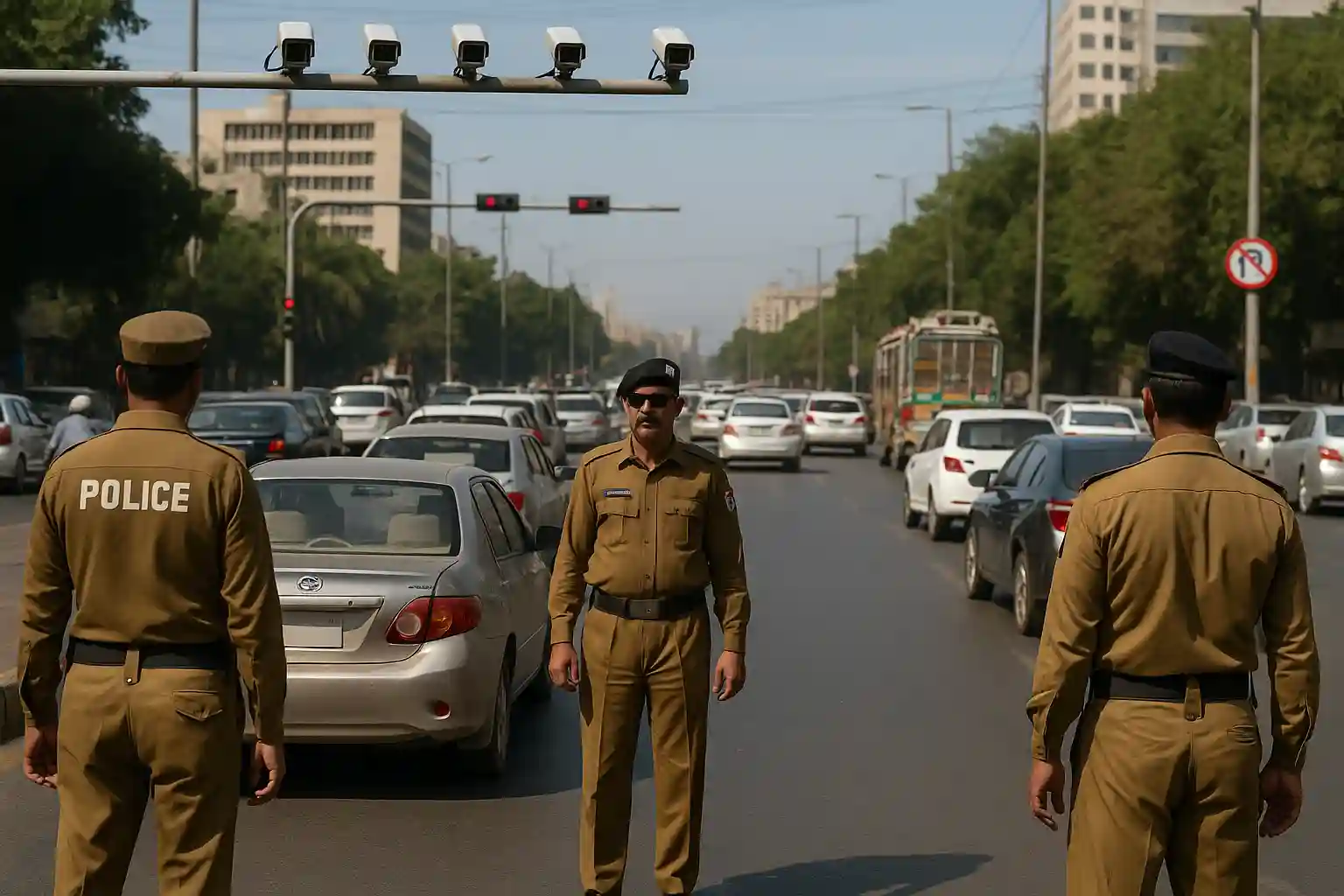
Karachi has taken a major step toward modernizing its urban traffic system with a significant expansion of the E-Challan System. The new update introduces stricter traffic rules, automated violation detection, and an aggressive crackdown on illegal parking across commercial and residential areas. With digital surveillance becoming a core enforcement tool, the city aims to improve mobility, reduce congestion, and promote disciplined driving habits.
Karachi’s growing population and rapid commercial activity have put massive pressure on its road network. Traffic authorities believe that upgrading the E-Challan system, repairing pedestrian bridges, clearing encroachments, and reopening basement parking facilities will play a vital role in ensuring smoother transportation flow.
Why Karachi Expanded the E-Challan System
Commissioner Karachi Hassan Naqvi announced that illegal parking has become one of the city’s biggest contributors to traffic congestion. Digital monitoring by the Traffic Police revealed that vehicles parked on main roads, near shopping centers, and in commercial zones significantly reduce lane width and obstruct emergency support vehicles.
DIG Traffic Pir Mohammad Shah highlighted that improper parking is especially problematic in areas like:
- Saddar
- Tariq Road
- Clifton
- Gulshan-e-Iqbal
The updated E-Challan system now automatically captures such violations and issues fines without requiring manual enforcement.

Key Traffic Updates Announced for Karachi
Authorities shared a list of major developments aimed at improving overall road conditions:
| Update | Details |
|---|---|
| E-Challan Expansion | Automatic challans for illegal parking detected via cameras |
| New Traffic Rule | Stricter enforcement in commercial and high-density zones |
| Illegal Parking Crackdown | Heavy focus on Saddar, Tariq Road, Clifton & Gulshan areas |
| Pedestrian Bridges | Repair work initiated on 20 key pedestrian bridges |
| Encroachment Removal | Ongoing operations in Saddar and major markets |
| Basement Parking | 22 business buildings cleared and reopened for public parking |
| Mall Traffic Guidelines | New entry/exit controls for better peak-hour traffic flow |
| Citywide Monitoring | Enhanced coordination between KMC & Traffic Police |
These updates are part of Karachi’s broader digital transformation in traffic management.

Illegal Parking: Karachi’s Biggest Traffic Obstacle
Illegal parking obstructs traffic flow, blocks lanes, and causes frequent gridlocks during peak hours. Authorities identified three major trouble zones:
- Commercial markets – High traffic and limited space
- Shopping malls – Poor security and traffic control systems
- Roadside vendors – Sudden bottlenecks due to street encroachments
Google Traffic reports and public complaints confirm that most jams originate from poor parking habits. With the new E-Challan expansion, even short-term illegal parking will lead to instant fines via automatic detection.

Pedestrian Bridges Rehabilitation Begins
Karachi Metropolitan Corporation (KMC) has begun rehabilitation of 20 pedestrian bridges, focusing on locations where:
- Footbridges are structurally weak
- Heavy traffic surrounds crossing points
- Safety concerns exist for students and elderly citizens
The goal is to reduce dangerous road crossings and improve pedestrian discipline—an essential element of sustainable traffic management.

Encroachment Removal & Parking Improvements
Deputy Commissioner South confirmed successful operation in Saddar where illegal stalls and roadside vendors were cleared. This has significantly improved mobility on key adjoining roads.
Additionally, 22 commercial buildings have reopened their basement parking lots, which were previously blocked or misused. These spaces will now accommodate:
- Customer parking
- Visitor vehicles
- Office staff vehicles
The move is expected to reduce roadside parking pressure on major business districts such as Preedy Street and Zaib-un-Nisa Street.
Upcoming Traffic Rules for Karachi Drivers
Traffic authorities are preparing new policies targeting:
- Roadside occupation
- Traffic congestion near malls and markets
- Peak-hour parking violations
- Enforcement of lane discipline
The new rules will be enforced with stronger penalties and automated detection tools.
How Karachi’s New E-Challan System Will Work
The upgraded E-Challan process is fully automated:
- Cameras capture the violation (illegal parking or lane misuse).
- ANPR technology scans the vehicle number plate.
- The system checks vehicle registration in the central database.
- An E-Challan is automatically generated.
- SMS notifications are sent to the vehicle owner.
- Printed challans are dispatched to the registered address.
- Drivers can pay fines online or at designated banks.
- Repeat offenders may face higher fines or legal action.
This system minimizes human involvement and eliminates arguments, favoritism, or negotiation attempts.
Karachi Traffic Helplines
For complaints or information, citizens can contact:
- Karachi Traffic Police Helpline: 1915
- KMC Complaint Cell: 1339
- Sindh Police Helpline: 15
- City Traffic Control Room: 021-99205694
FAQs about Karachi Expands E-Challan System 2025:
1. Will the new E-Challan system affect all drivers?
Yes. Any vehicle found violating parking or road rules will automatically receive a challan under the new digital system.
2. Which areas are the first focus of enforcement?
Strict monitoring begins in Saddar, Clifton, Tariq Road, and Gulshan-e-Iqbal.
3. How many pedestrian bridges are being repaired?
A total of 20 bridges are included in the first rehabilitation phase.
4. Can drivers pay the new E-Challan fines online?
Yes. Payments can be made through approved online channels and designated banks.
Conclusion – Karachi Expands E-Challan System
Karachi’s upgraded E-Challan system marks a major technological shift in enforcing road discipline. With automated challans, strict monitoring, pedestrian bridge repairs, and dedicated anti-encroachment actions, the city aims to significantly improve traffic flow and reduce daily congestion. These reforms will gradually create safer roads, faster travel times, and a more organized transportation environment for millions of residents.