
SBP Restricts Cash Dollar Transactions – New Policy Explained
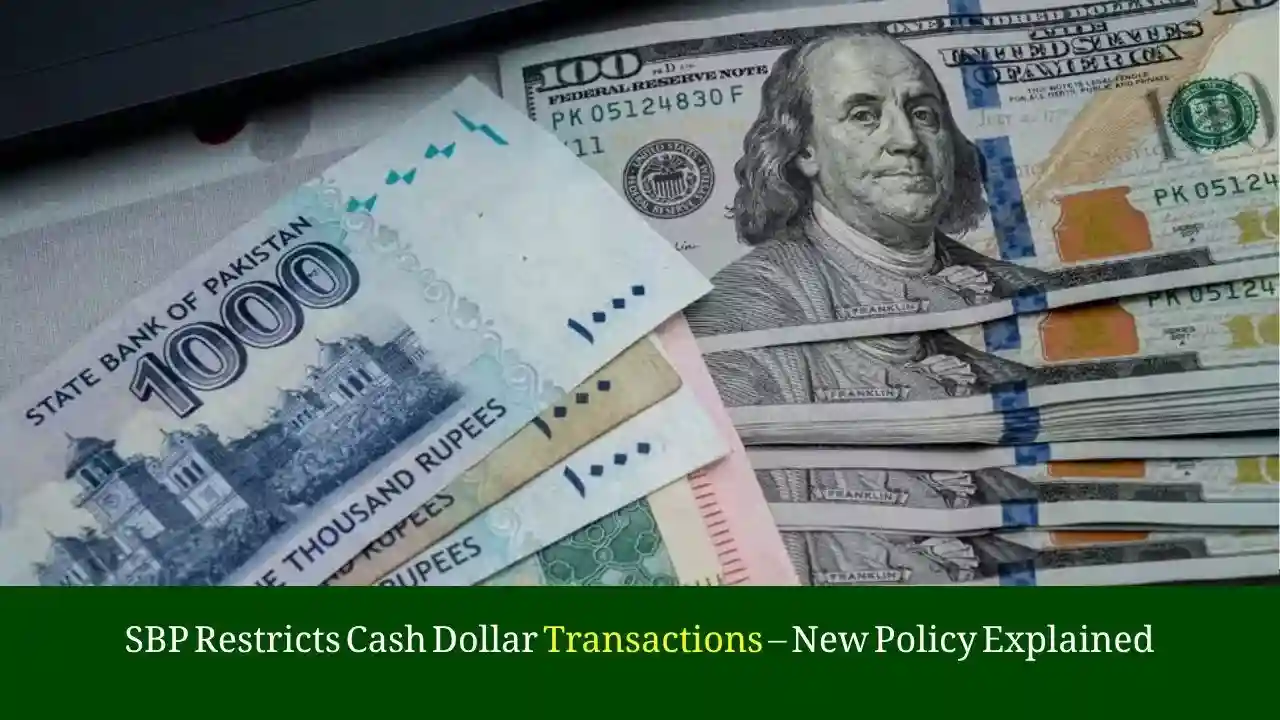
The State Bank of Pakistan (SBP) has officially restricted cash dollar transactions across the country, introducing strict new rules for banks and exchange companies. According to the central bank, the aim is to promote a cashless economy, reduce currency hoarding, and bring greater transparency to foreign exchange (forex) transactions.
This move means that people will no longer be able to buy or deposit large amounts of US dollars in cash. Instead, all transactions must now take place through proper bank accounts, using cheques or account-to-account transfers.
Why SBP Introduced New Dollar Rules
The SBP’s new policy is part of its larger effort to modernize Pakistan’s financial system. Officials explained that the uncontrolled circulation of cash dollars has made it difficult to track illegal currency flows, including money laundering and black-market trading.
By shifting transactions to digital and banking channels, the SBP hopes to:
- Ensure every transaction is traceable.
- Strengthen foreign-currency reserves.
- Prevent smuggling of foreign currency.
- Encourage citizens to use banking channels instead of keeping cash.
The SBP circular issued in November 2025 clearly states that all foreign-currency sale transactions for deposit into Foreign Currency (FCY) Accounts must now be done electronically.
How the New SBP Dollar Transaction Rule Works
Under the revised rules, any individual who wants to purchase dollars for depositing into an FCY account will no longer receive cash. Instead, the exchange company or bank will transfer the funds directly into that account.
Those who do not have an FCY account cannot buy dollars for deposit purposes. They must first open one in their bank to receive the amount through digital transfer.
Exchange companies have also been instructed to stop handing out cash for such transactions. They can only issue crossed cheques or process electronic transfers.
This policy does not completely ban cash purchases of foreign currency for travel or personal needs, but these transactions now require full documentation, biometric verification, and a declared reason for purchase.
Read Also: Breaking News: DigiSkills Launches 2nd Batch of Free Online Courses 2025 – Apply Before 2 December
Key Features of the SBP Dollar Policy
| Category | Details |
|---|---|
| Policy Type | Restriction on cash dollar transactions |
| Effective Date | November 2025 |
| Implemented By | State Bank of Pakistan |
| Applicable To | Banks and Exchange Companies |
| Purpose | Promote cashless economy, regulate forex flows |
| Transaction Method | Account-to-Account Transfers only |
| Cash Limit | Documentation needed for purchases above $500 |
| Biometric Requirement | Mandatory for all buyers |
| Target Group | Residents buying dollars for FCY deposits |
| Exemptions | Travelers, students, and pilgrims (with documents) |
Who Is Affected by the New SBP Rule?
The new restriction affects primarily those who buy dollars to deposit into their foreign-currency bank accounts.
- Residents with FCY accounts can still buy dollars, but only through digital transfers.
- People without FCY accounts can no longer purchase or deposit cash dollars directly.
- Exchange companies must follow strict rules to ensure compliance.
For travelers, students studying abroad, or those performing Hajj and Umrah, the SBP has allowed limited flexibility—but only if they can present relevant documents such as:
- Valid passport and visa
- Travel tickets or education admission letters
- Proof of purpose and identity
Every buyer exceeding a $500 cash limit must also provide biometric verification.
Benefits of the New SBP Dollar Policy
1. Promotes a Cashless Economy
By moving transactions into the banking system, the SBP aims to make Pakistan’s economy more digital and traceable. This helps fight corruption, reduces black-market activity, and strengthens financial transparency.
2. Better Control Over Foreign Exchange
Since every dollar transaction will now be recorded in banking systems, the government can easily monitor inflows and outflows of foreign currency. This improves foreign-exchange reserves and helps stabilize the Pakistani rupee.
3. Encourages Banking Habits
The new rules encourage citizens to open foreign-currency accounts, promoting savings and investment through legal channels instead of cash hoarding.
4. Reduces Illegal Dollar Trading
The policy directly targets hawala and hundi networks that depend on untracked cash movements. With tighter SBP oversight, illegal forex trade will become harder.
Read Also: Great News for Cricket Fans – Two new PSL Teams in HBL PSL 2026: Let’s Explore New Additions
Challenges and Concerns from Exchange Companies
While the SBP’s decision is aimed at reform, it has caused concern among money changers and exchange companies. Many argue that the new system favors bank-owned exchange outlets, which already enjoy regulatory advantages.
Independent exchange companies say they are being restricted from keeping cash dollars in their bank accounts, which affects their liquidity and makes it harder to serve walk-in customers.
Industry representatives also pointed out that:
- Transfers between different banks may take five or more working days to clear.
- Cheque deposits for euros and pounds could take up to 25 days, slowing down operations.
- Smaller exchange companies might lose business to larger, bank-affiliated outlets.
Despite these issues, the SBP maintains that the reform is necessary to modernize Pakistan’s financial ecosystem.
How the Policy Affects Ordinary Citizens
For most ordinary Pakistanis, the SBP cash dollar restriction means they will need to plan their currency purchases carefully.
If you’re a traveler or student, you can still buy foreign currency, but you must:
- Provide proof of purpose (travel, education, or medical).
- Present valid ID and biometric verification.
- Purchase within the SBP-allowed limits.
People who want to keep dollars as savings should now open FCY accounts to comply with the new rule.
Step-by-Step: Buying Dollars Under New SBP Rules
- Open a Foreign Currency Account – Visit your bank and open an FCY account in your name.
- Provide Documentation – Keep your CNIC, travel proof, or other required documents ready.
- Biometric Verification – Complete biometric verification for any transaction above $500.
- Visit Authorized Exchange Company – Use an SBP-approved exchange firm or bank outlet.
- Account Transfer or Cheque – Receive your dollars through account-to-account transfer or a crossed cheque.
- Track Your Transaction – Keep your receipt and transaction ID for future reference.
Why SBP Encourages Banks to Handle Currency Exchange
The central bank’s circular also encourages commercial banks to set up and expand their own currency exchange operations. The goal is to create a regulated and transparent network where currency movement is traceable and compliant with anti-money-laundering laws.
Bank-affiliated exchange companies are expected to benefit the most, as customers will prefer reliable, quicker digital transfers. However, the SBP has assured that all licensed money changers can continue operations under the new framework.
Economic Impact of SBP’s Cash Dollar Restriction
Economists believe this step could have a mixed short-term and long-term impact:
- Short-Term Effects:
Delays in cheque clearing and limited liquidity may temporarily slow down forex trading. - Long-Term Benefits:
Improved monitoring of currency flow will strengthen the financial system, reduce illegal outflows, and support rupee stability.
Financial experts say that as Pakistan moves toward digital banking and electronic transfers, such policies are essential for maintaining control over the economy.
Read Also: Breaking News: Punjab Reissues Revised 9th Grade Smart Syllabus 2025 – All Errors Removed by PECTA
Public Reaction to the New Rule
The reaction among the public and business community has been divided.
- Supporters say the decision will eliminate black-market activities and reduce dollar speculation.
- Critics argue that it could inconvenience small traders and freelancers who rely on quick access to cash dollars.
Social media discussions also show mixed opinions, with many calling for improved digital infrastructure to make transfers smoother and faster.
The Road Ahead for Pakistan’s Forex Market
The SBP’s restriction on cash dollar transactions is just one part of a larger financial reform agenda. The central bank is expected to introduce further measures, such as:
- Real-time digital tracking of forex flows.
- New limits on overseas remittance handling.
- Stronger penalties for unauthorized currency trading.
Experts believe that if successfully implemented, these reforms could make Pakistan’s forex market more transparent and competitive.
Conclusion About SBP Restricts Cash Dollar Transactions:
The State Bank of Pakistan’s restriction on cash dollar transactions marks a major step toward transparency, accountability, and digital transformation in the country’s financial system. While it may bring short-term challenges for exchange companies and frequent travelers, it lays the foundation for a safer, regulated, and cashless economy.
By transferring foreign currency directly into customer accounts, Pakistan is aligning itself with international banking standards — ensuring that every dollar entering or leaving the country is traceable and legitimate.
For citizens, adapting to these new digital and account-based procedures will soon become the norm, reflecting the global shift toward secure, cash-free financial transactions.
FAQs – SBP Restricts Cash Dollar Transactions
1. What is the new rule announced by the State Bank of Pakistan?
The SBP has directed that all dollar sale transactions for deposit into foreign currency accounts must be completed through account-to-account transfer instead of cash payments. Customers will no longer receive physical cash for these deposits.
2. Can I still buy cash dollars for travel or study abroad?
Yes. Travelers, students, and religious pilgrims can still purchase cash dollars, but they must present valid documents, biometric verification, and proof of purpose for any transaction above $500.
3. Who will be affected most by the SBP’s new dollar policy?
Residents who purchase foreign currency to deposit in FCY accounts will be most affected. They must now hold an active account for transfers and cannot use cash for deposits.
4. Why did the SBP impose these cash restrictions?
The new policy promotes a cashless economy, strengthens oversight of foreign-currency flows, and prevents illegal trade or hoarding of dollars through unregistered cash dealings.
5. How will this policy impact exchange companies and buyers?
Exchange companies must now send foreign-currency funds directly to customer accounts. While it increases transparency, it may slow processing times and reduce liquidity for smaller money changers.