Sindh Takes Legal Action Against Parents Refusing Polio Vaccination 2025
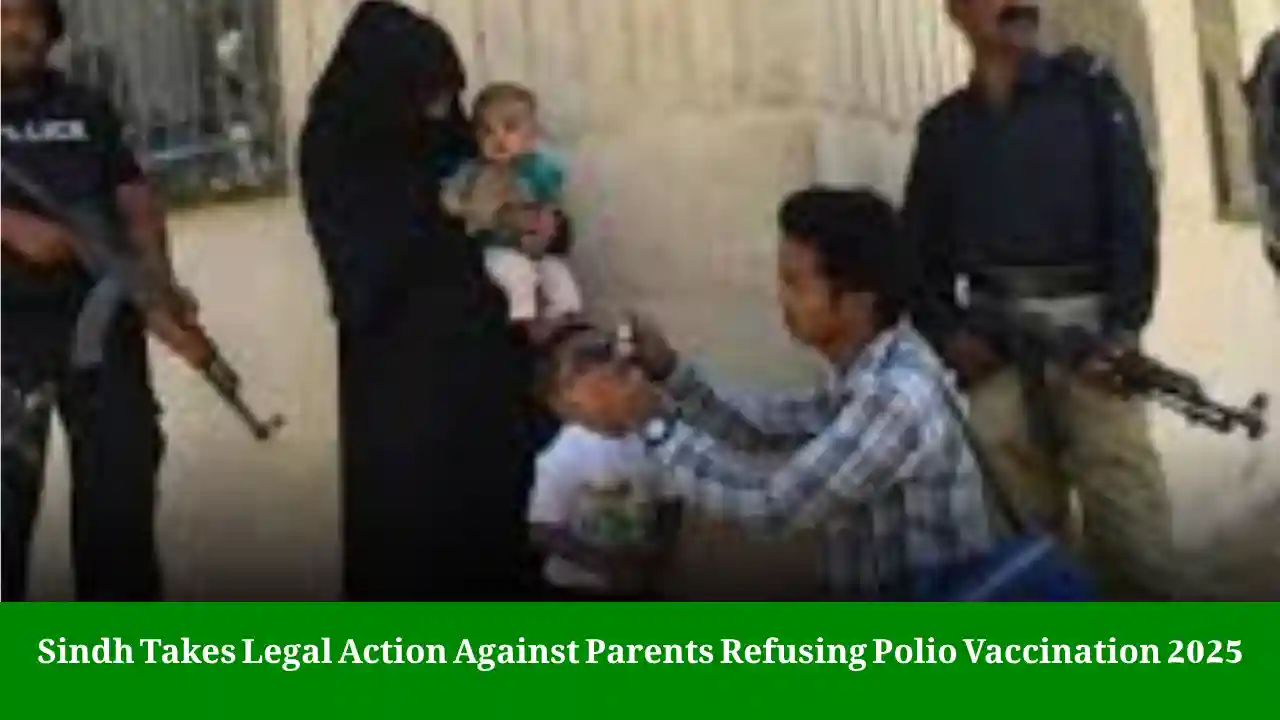
In a major public-health development, the Sindh government has started legal action against parents refusing to vaccinate their children against polio. The decision marks a historic turning point in Pakistan’s decades-long fight to eradicate the deadly virus and protect future generations.
The move comes under the Sindh Immunisation and Epidemics Control Act 2023, which empowers district officials to penalize or even imprison those who deliberately avoid vaccination drives.
Background – Why Sindh Is Taking Action Now
Pakistan is among the last two countries in the world where polio remains endemic. Despite consistent eradication efforts and nationwide campaigns, some families have continued to refuse polio drops due to misinformation, myths, and mistrust of government programs.
Health authorities in Sindh say this persistent refusal not only endangers unvaccinated children but also puts entire communities at risk, as the virus can quickly spread through contaminated water and poor sanitation systems.
To counter this challenge, the provincial government is now using legal powers to enforce vaccination compliance.
The Law – Sindh Immunisation and Epidemics Control Act 2023
The Sindh Immunisation and Epidemics Control Act 2023, passed on August 4, 2023, gives district deputy commissioners full authority to impose fines or jail terms on individuals refusing immunization.
Key Provisions of the Act
| Violation | Punishment |
|---|---|
| Refusing to vaccinate a child | Fine between Rs 50,000 – Rs 100,000 or up to 1 month imprisonment |
| Spreading anti-vaccination propaganda | Fine up to Rs 200,000 and/or legal prosecution |
| Obstructing vaccination teams | Imprisonment up to 3 months and additional fines |
Under the new framework, government officers can take direct legal action without lengthy bureaucratic delays, ensuring swift penalties for vaccine refusal.
Read Also: Pakistan Issues Over 2,400 Visas to Sikh Pilgrims from India for Guru Nanak Birth Anniversary 2025
480 Parents Penalized in Sukkur District
According to Additional Director Dr. Sohail Sheikh, authorities in Sukkur district have already penalized 480 parents who repeatedly refused to vaccinate their children during recent campaigns.
The local administration reportedly gave multiple warnings before taking legal action. When families continued to reject the vaccination teams, fines were imposed under the Act.
Dr. Sheikh said:
“This measure was necessary to protect the health of all children. Vaccination is not optional – it’s a moral and legal duty.”
He further confirmed that similar enforcement will soon begin in other areas, including Karachi, Larkana, Hyderabad, and Mirpurkhas, where vaccination refusal remains high.
Extending the Crackdown – Karachi Next in Line
After Sukkur’s example, the Sindh Health Department is expanding the crackdown to Karachi – a city that houses over 20 million residents and continues to record sporadic cases of polio virus detection in sewage samples.
Officials say that urban awareness campaigns alone are no longer enough, as social-media misinformation has fueled resistance among a small but vocal group of parents.
Therefore, legal enforcement will now accompany health awareness efforts to ensure 100 percent coverage of vaccination targets across all districts.
Misinformation and Anti-Vaccination Campaigns on Social Media
A growing concern for the health department is the spread of false information on social media. Certain individuals and online pages continue to share conspiracy theories that discourage parents from vaccinating their children.
Under the Immunisation and Epidemics Control Act 2023, anyone found guilty of spreading anti-vaccination propaganda may face severe penalties, including prosecution under cybercrime laws.
The government has instructed the Federal Investigation Agency’s Cyber Crime Wing to monitor social platforms and identify offenders spreading false health information.
Why the Crackdown Matters – The Fight Against Polio
Health experts describe Sindh’s action as a turning point in Pakistan’s struggle to eradicate polio once and for all.
Key Reasons for Strict Action
- Persistent Refusal Hotspots: Certain areas continue to show low vaccination coverage due to social resistance.
- Rising Polio Traces: Environmental samples from Karachi and northern Sindh still show traces of wild poliovirus.
- Risk of International Travel Ban: The World Health Organization (WHO) periodically issues warnings to Pakistan to maintain polio-free travel certification.
- Children’s Right to Health: Every child has a constitutional right to access basic healthcare, including vaccination.
By enforcing vaccination through law, Sindh aims to ensure that no child remains unprotected.
Public Reaction – Divided Opinions Among Citizens
The announcement has generated mixed reactions. Many citizens support the move, calling it a necessary step to protect public health. However, some civil-rights activists argue that heavy fines could further alienate poor families who need awareness, not punishment.
Public-health experts counter this criticism, noting that penalties are imposed only after repeated refusals and that most parents comply voluntarily once the importance of vaccination is explained.
Statements from Government Officials
Sindh Health Minister Dr. Azra Pechuho praised district teams for their decisive implementation of the law:
“The days of ignoring polio campaigns are over. Every child in Sindh must be vaccinated, and no one has the right to deny them that protection.”
Meanwhile, senior health officials in Karachi confirmed that coordination meetings with law enforcement have been held to prepare for district-wide action in upcoming drives.
Role of Polio Workers – The Frontline Heroes
Thousands of Lady Health Workers (LHWs) and vaccination teams travel door-to-door across Sindh, often in difficult weather or security conditions. The new law is also expected to enhance their safety by providing legal backing against harassment or threats.
These workers have long been the backbone of Pakistan’s vaccination success, yet they have often faced hostility in remote areas. With new enforcement powers, the government aims to create a safer working environment for them.
Partnership with WHO and UNICEF
The Sindh government continues to collaborate closely with World Health Organization (WHO) and UNICEF, both of which provide technical and financial support for polio eradication.
These international partners have welcomed the government’s stronger stance, noting that enforcement paired with education is the most effective path toward achieving complete eradication.
How Parents Can Ensure Compliance
To avoid penalties and protect their families, parents should:
- Cooperate with vaccination teams during every campaign.
- Keep children’s vaccination cards updated.
- Verify official health-worker IDs to avoid scams.
- Report false information or fake campaigns to the health helpline.
The government has also launched a 24-hour helpline (1166) for vaccination-related queries and complaints.
Health Experts’ Perspective
According to pediatrician Dr. Anum Raza, enforcing vaccination through law is justifiable:
“We have reached a stage where one unvaccinated child can cause an outbreak. Enforcement ensures that everyone contributes to community immunity.”
Dr. Raza added that strict implementation must go hand-in-hand with awareness campaigns, especially in rural areas where myths about vaccination remain common.
The Global Context – How Other Countries Handle Vaccine Refusal
Pakistan’s step mirrors similar measures taken globally:
- Australia introduced the “No Jab, No Pay” policy, denying benefits to parents who refuse vaccines.
- France makes several childhood vaccines mandatory under national law.
- United States schools require vaccination certificates for admission.
These examples show that strong policies, combined with education, can successfully increase vaccination rates and save lives.
Challenges Ahead
Despite the law, challenges remain:
- Rural areas still face limited healthcare access.
- Misleading online campaigns need tighter regulation.
- Health workers must be provided adequate security and incentives.
To overcome these, Sindh’s Health Department is now working with local community leaders and religious scholars to promote vaccination as a shared moral responsibility.
Looking Ahead – Toward a Polio-Free Sindh
The government hopes that this firm legal stance will help achieve a polio-free Sindh by 2026. If successful, the province could set an example for other regions in Pakistan, reinforcing national efforts toward complete eradication of the virus.
Read Also: Punjab Announces School Teaching Interns STIs Jobs 2025 – Monthly Salary Up to Rs.45,000
Conclusion – Protecting Every Child in Sindh
Sindh’s decision to penalize parents refusing polio vaccination shows its commitment to safeguarding public health and children’s futures. By combining awareness, enforcement, and accountability, the province aims to close the last chapter on polio once and for all.
The message is clear: vaccination is not just a choice – it’s a responsibility. Every parent must play their part in building a healthier, polio-free Pakistan.
Trending FAQs About Sindh’s Polio Vaccination Law
1. What is the Sindh Immunisation and Epidemics Control Act 2023?
It is a provincial law that allows fines or imprisonment for parents who refuse to vaccinate their children against diseases like polio and measles.
2. How many parents have been punished so far?
Authorities in Sukkur district have penalized 480 parents, with plans to extend enforcement to other districts.
3. What are the penalties for refusing polio vaccination?
Offenders may face a fine between Rs 50,000 and Rs 100,000 or up to one month in jail.
4. Does the law apply to social-media misinformation?
Yes. Anyone spreading anti-vaccination propaganda online can face legal action under the Act.
5. How can parents verify official vaccination teams?
All teams carry government-issued ID cards, and parents can verify them via the national helpline 1166.